
Dental implants — replacing missing teeth
How Many Dental Implants Do You Need to Replace Multiple Missing Teeth?
Replacing several teeth does not always mean an implant for every gap. See how the number, position and final design are planned together.
Explore your tooth replacement options
If you are considering replacing a tooth or several teeth, a £30 consultation gives you a chance to explain what matters most, ask questions and explore the options with our team.
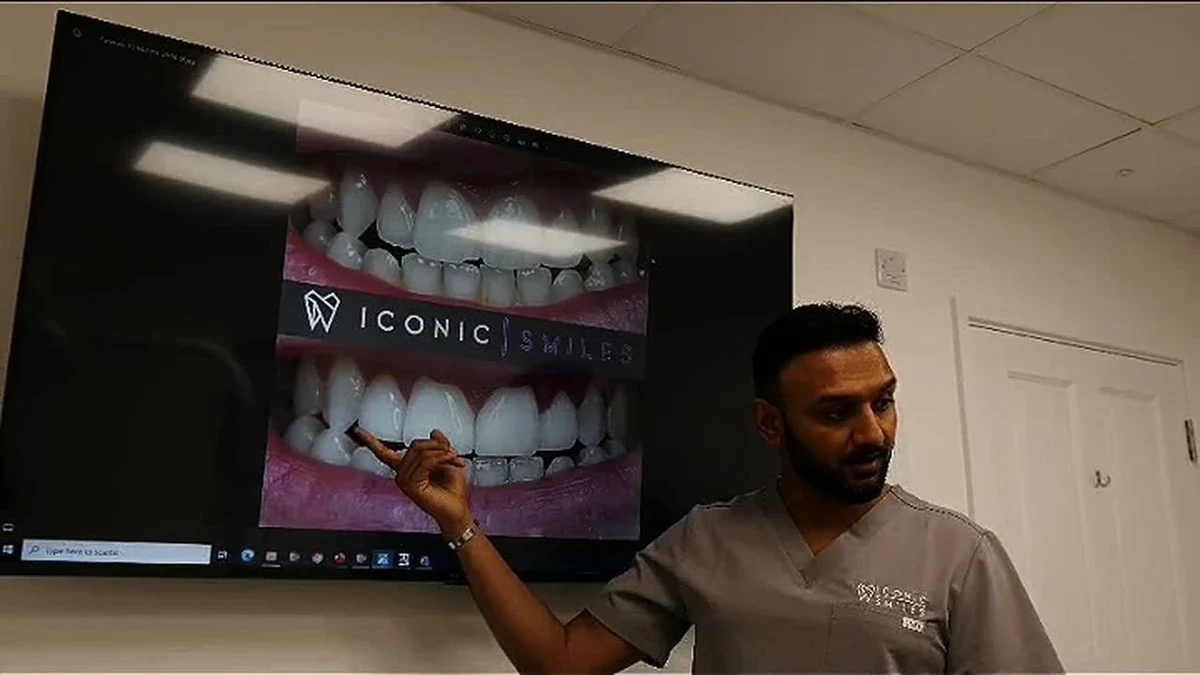
Count the replacement design before the fixtures
You do not always need one implant for each missing tooth. A single implant may carry a crown, while a smaller number of implants can sometimes support several teeth in a bridge or denture. The number and positions depend on the gaps, available bone and final replacement being planned. [1]
A full arch is a specific planning problem
A systematic review examined implant number for complete-arch prostheses with at least five years of follow-up. Its scope is full-arch rehabilitation; it should not be used as a formula for every small gap. Implant positions and the restoration need to be planned together. [2]
Four-versus-six evidence is not a universal rule
A separate review assessed fixed complete restorations in the upper jaw supported by four or six implants. Jaw, prosthesis design, complication definitions and follow-up matter when interpreting comparisons. Ask why a proposed number and distribution are appropriate for your anatomy and intended teeth. [3]
More implants do not remove the need for care
The plan still needs cleaning access, tissue monitoring, review and provision for technical complications. Ask whether the proposal is fixed or removable and how it can be maintained. An implant count or package label does not by itself describe the whole treatment commitment. [4][5]
The number of missing teeth is not the implant count
Three missing teeth do not necessarily require three separate implants. Depending on the location and supporting bone, a bridge may be supported by fewer implants than replacement teeth. At the other extreme, the span, position of the teeth, available space and biting forces may make a seemingly simple plan unsuitable.
For a full arch, the team needs to consider the type of replacement, where it can be supported, the available bone and your cleaning routine. Parts may need replacing as they wear. Different plans need different support, so the number of missing teeth cannot be converted into one suitable implant count for everyone.
Ask to see how the final tooth positions determine the proposed implant sites. The treatment proposal should explain what would change if an implant cannot be placed where originally planned, whether additional grafting is considered and what alternatives exist. Compare the entire restoration and maintenance pathway rather than just the surgical count.
Guidance: academy.iti.org
Research and guidance
- Dental implants - Overview | Guy's and St Thomas' NHS Foundation Trust
- Optimal number of implants for complete-arch implant-supported prostheses with a follow-up of at least 5 years: A systematic review and meta-analysis.
- Outcomes that may affect implant and prosthesis survival and complications in maxillary fixed prosthesis supported by four or six implants: A systematic review and meta-analysis.
- Recommendations for Implant-Supported Full-Arch Rehabilitations in Edentulous Patients: The Oral Reconstruction Foundation Consensus Report.
- Prevention and treatment of peri-implant diseases-The EFP S3 level clinical practice guideline.
Your next step, when you’re ready
We would be pleased to welcome you for a £30 consultation at your preferred Iconic Smiles practice. Bring your questions, and we can talk through the options that may suit you.
Any additional investigations and their fees will be explained before you decide.