
Dental implants — replacing missing teeth
Implants Between Teeth: Protecting Roots
A dental implant replacing a missing tooth sits between neighbouring roots, bone and gum tissue that must remain healthy.
Explore your tooth replacement options
If you are considering replacing a tooth or several teeth, a £30 consultation gives you a chance to explain what matters most, ask questions and explore the options with our team.
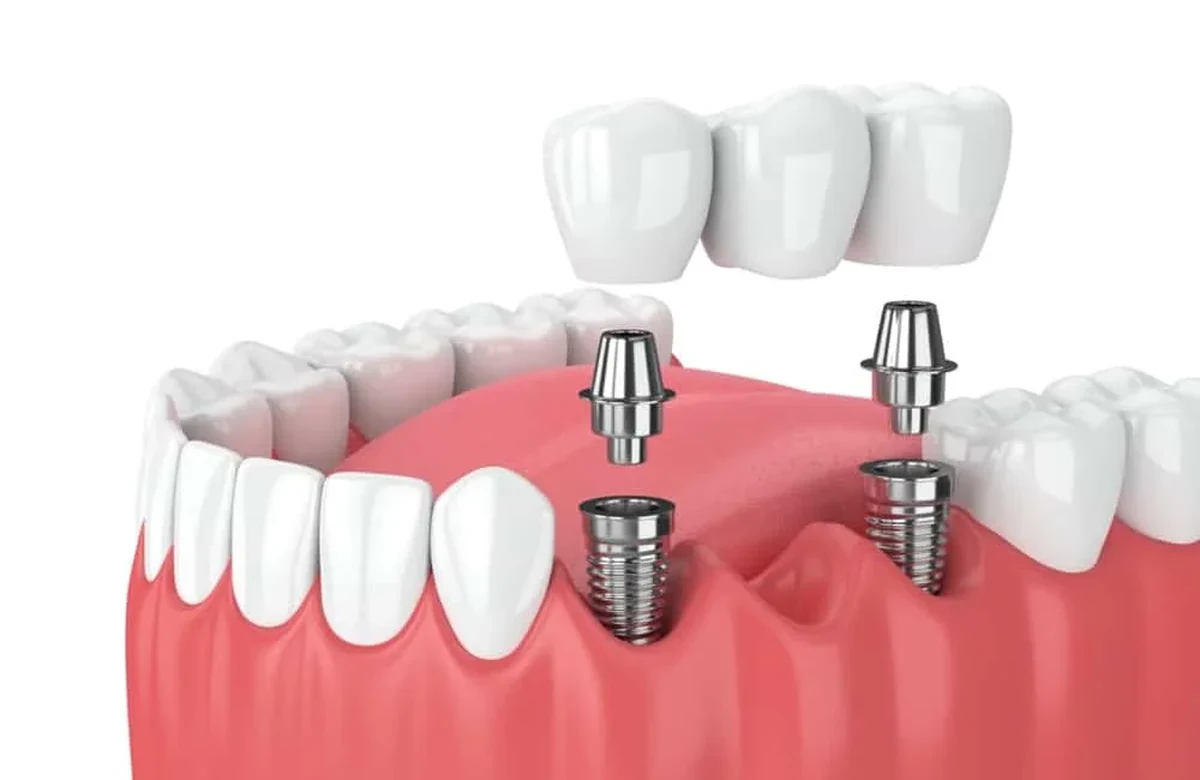
An implant between natural teeth needs space for both its supporting fixture and a well-shaped crown, while protecting neighbouring roots, bone and gums. Avoiding direct contact with a root is only part of the assessment. The final replacement also needs cleaning access and suitable gum contours. A narrow or crowded gap may make another option preferable.
The critical anatomy is below the gum
The visible gap can differ greatly from the space between roots. Measurements and relevant imaging help assess the implant corridor. A rotated canine or tipped premolar can reduce that space beneath an apparently wide gap. The bone boundaries towards the lip and palate also matter; a narrower implant does not remove the need to assess them.
The effect of restorative contacts
The dental laboratory needs enough space to create a realistic replacement crown and contacts that do not catch food. A restoration forced into an undersized gap may be excessively triangular, overcontoured or hard to clean. These are functional limitations as well as cosmetic issues. The team should demonstrate what crown proportions are achievable with the existing spacing and whether orthodontic movement would allow a less compromised result.
Gum levels make the aesthetic challenge greater
Around a front tooth, the height and thickness of the gum margin and papillae contribute to a natural appearance. Replacing one tooth beside healthy neighbours can be more visually demanding than replacing several. Patients may have a high smile line or thin soft tissues that expose small asymmetries. The dentist may propose conservative soft-tissue management or an alternative bridge if the expected implant appearance is less predictable than the patient assumes.
If the roots are too close
Orthodontics may move the adjacent teeth or alter root angulations to create a planned implant corridor. This requires cooperation because an implant cannot later be shifted orthodontically. Another option is an adhesive bridge bonded to suitable enamel, often avoiding alteration of the bone. A removable temporary can maintain the gap while treatment is coordinated. The clinician should compare treatment times, maintenance and the extent of any irreversible preparation.
What good planning should demonstrate
Ask to see a representation of both the planned crown and the supporting implant relative to adjacent roots. The dentist should explain whether the chosen trajectory allows screw-retained or cement-retained restoration and how excess cement risk or screw-access position would be managed. The strongest implant plan protects the neighbouring natural teeth as actively as it replaces the missing one.
Protect the two teeth you are not replacing
For example, an implant may be considered between a healthy central incisor and canine whose roots converge beneath the gap. The intended crown might also need more width near the gum than the site can accommodate. Proceeding simply because a drill can pass could threaten neighbouring structures or leave a bulky restoration. Orthodontic root movement may improve the space, while an adhesive bridge could avoid surgery. Compare the commitment to movement with the cleaning and maintenance of the bridge, alongside implant dimensions.
The small gum peaks between teeth also affect appearance. Bulky crown contours may hide dark contact spaces in a photograph while obstructing floss. A model can show the intended crown, where it emerges through the gum and the cleaning route. The replacement needs to respect the healthy teeth beside it; if the anatomy cannot support that reliably, an alternative to implant surgery may be the more conservative choice.
A practical measurement question for the first visit
A useful consultation can distinguish three different widths: the visible gap between crowns, the distance between adjacent roots at the planned implant depth, and the amount of bone available on the cheek and tongue sides. These measurements are related but not interchangeable. If the gap is wide at the gum yet narrows around converging roots, simply ordering a slimmer implant may leave insufficient restorative room or compromise the desired emergence profile. Ask the team to compare a proposed implant-and-crown design with an adhesive bridge and, where appropriate, limited orthodontic root uprighting. The decision should include how the patient will floss or use an interdental brush around the final restoration. No numerical clearance should be promised without reviewing that individual's imaging and tooth anatomy.
Your next step, when you’re ready
We would be pleased to welcome you for a £30 consultation at your preferred Iconic Smiles practice. Bring your questions, and we can talk through the options that may suit you.
Any additional investigations and their fees will be explained before you decide.