
Dental implants — replacing missing teeth
What Can You Eat in the First Week After Dental Implant Surgery?
Soft foods can protect a healing implant site, but the right diet depends on the surgery and any temporary teeth.
Explore your tooth replacement options
If you are considering replacing a tooth or several teeth, a £30 consultation gives you a chance to explain what matters most, ask questions and explore the options with our team.
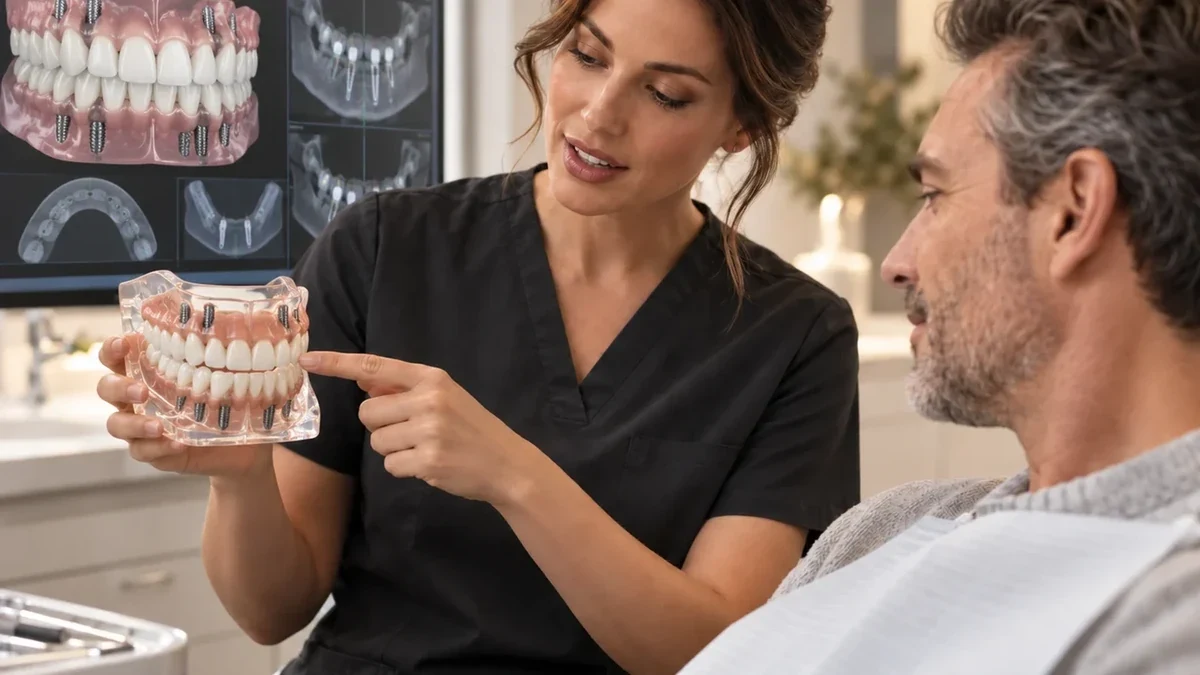
Plan soft foods for the first week after implant surgery, following the restrictions for your particular operation and temporary teeth. Suitable meals may include soft pasta, fish, tofu or well-cooked vegetables as comfort allows. Grafting or a full-arch temporary bridge can mean a different, sometimes longer, period of dietary care.
The real aim of a post-implant diet
The aim is to protect the wound, blood clot and temporary restoration from excessive chewing forces or irritation. Texture, temperature, crumbs and the force needed to bite all matter. A straightforward implant may recover differently from a large graft or several implants carrying an immediate bridge. Before surgery, understand the diet your team expects and any limits on using the new teeth; their specific instructions take priority over general food lists.
A realistic first-day menu
Once the local anaesthetic has worn off enough for you to avoid biting your cheek or tongue, many people tolerate cool or lukewarm, easy-to-swallow foods. Examples can include yoghurt, scrambled eggs, smooth soup that is not hot, porridge that has cooled and soft mashed vegetables. Eat slowly on the comfortable side if your dentist has advised this. Avoid treating soup as automatically safe: a very hot bowl may irritate tissues, and a chunky soup can require chewing. Hydration matters, but avoid vigorously rinsing or creating suction if your team has advised against it.
Days two to seven are about texture, not bravado
You may gradually widen your food choices as tenderness and swelling settle. Soft pasta, fish, tofu, banana, well-cooked lentils and tender vegetables are often easier than crusty bread, nuts, popcorn or hard raw carrots. Foods with small seeds or sharp fragments can lodge around stitches and make cleaning awkward. A person with a fixed provisional full-arch bridge may need a much more prolonged soft-food period than somebody with an implant entirely covered under the gum. Chewing pain is a signal to reassess, not something to overcome by pressing harder.
Nutrition still matters
A soft diet still needs enough energy, protein and fluids. Lentils, softer beans and tofu may suit a vegan diet, alongside other foods you can manage. Dietary restrictions need particular care with diabetes, swallowing difficulties, older age or another relevant medical condition, so the advice may need tailoring. Supplement drinks can help selected people meet nutritional needs, but no particular protein shake has been shown to make an implant bond to bone faster. Claims that a supplement guarantees integration should not guide your choice.
Protect the site while keeping your mouth clean
Food restriction is only one part of aftercare. Continue cleaning the rest of your teeth, and follow the exact instructions for brushing near the wound, prescribed rinses and any temporary denture. Do not probe the healing cap with a fingernail or try to remove trapped food using a sharp toothpick. A gentle approach matters more than force. Some swelling and bruising are expected, but new or worsening swelling, fever, unpleasant discharge or escalating pain merits a prompt call to your treating clinician. Severe breathing or swallowing difficulty requires emergency help.
The questions to settle before going home
Before going home, establish whether you may chew on that side, whether the temporary tooth is deliberately kept out of contact and how long the soft diet should last. You should also know what to do if a temporary tooth loosens, when normal brushing can resume and whom to contact outside opening hours. Implant procedures vary, so another patient's menu may not suit your surgery. The European Federation of Periodontology similarly emphasises individual risk assessment and ongoing care.
A practical seven-day food plan
Before treatment, arrange soft meals you enjoy and can prepare easily. Confirm whether the plan involves an extraction, graft, several implants or an immediate bridge and what loading restrictions follow. Check food temperature before eating, and keep up fluids and prescribed medicines. Persistent numbness, new pain or a temporary tooth rubbing the wound can make eating difficult and should prompt advice. Food planning supports healing alongside symptom checks and review appointments.
Sources and professional guidance
Applying the information:
Your next step, when you’re ready
We would be pleased to welcome you for a £30 consultation at your preferred Iconic Smiles practice. Bring your questions, and we can talk through the options that may suit you.
Any additional investigations and their fees will be explained before you decide.