
Dental implants — replacing missing teeth
Guided Implant Surgery: What Digital Planning Really Does
Guided implant surgery uses a preoperative plan and a physical or navigational aid to support placement in a selected position.
Explore your tooth replacement options
If you are considering replacing a tooth or several teeth, a £30 consultation gives you a chance to explain what matters most, ask questions and explore the options with our team.
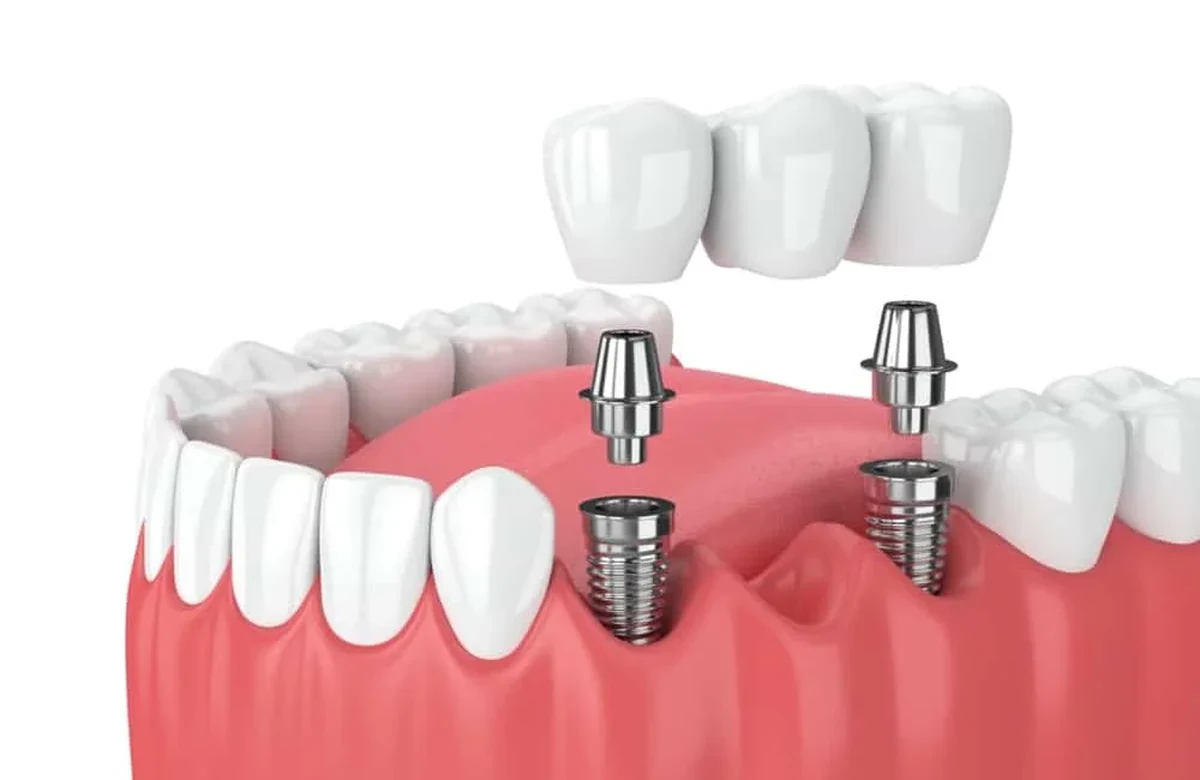
Guided implant surgery uses a plan made before the operation and a physical guide or navigation system to help transfer the intended position into the mouth. It supports planning around the future tooth and surrounding anatomy. Accuracy still depends on the records, guide fit, access, bone and the clinician's judgement.
Plan the tooth before planning the fixture
A successful restoration must be functional, aesthetic where relevant and cleanable. Appropriate records can help identify the intended crown position and assess whether bone, nerves and other anatomical structures permit a sound implant trajectory. Placing an implant wherever bone happens to be available may complicate the final prosthesis.
How a guide is developed
Where needed, three-dimensional imaging and surface records are matched in software to relate the planned tooth to the underlying anatomy. A guide or navigation plan then helps transfer that design. Accurate matching, manufacturing, stable support from teeth or tissue and correct technique all affect how closely surgery follows it.
What a guide cannot eliminate
Bone quality, restricted mouth opening, local anatomy, surgical access and unexpected findings can still require modification. Guided placement is not synonymous with flapless treatment, immediate loading or an absence of complications. The clinician must be prepared to depart from the digital trajectory when safe judgement calls for it.
Compare approaches on clinical grounds
A surgical guide can help transfer a planned implant position to your mouth. Whether it adds useful control depends on the number of implants, complexity and nearby anatomy. The team also needs an alternative if the guide does not fit correctly or the implant is less stable at placement than expected.
Restoration and maintenance shape success
After healing or any carefully selected immediate provisional stage, crown or bridge contours must permit cleaning and functional loading. The guide supports placement, but infection risk, gum health, smoking, restorability and maintenance influence the longer-term result. Patients need an aftercare plan beyond the surgical visit.
Digital planning has two separate jobs
First, the intended crown is planned in the context of the neighbouring teeth, bite and gum. Second, the surgical team assesses how that crown can be supported within the available bone without compromising anatomical structures. Combining surface scans with three-dimensional radiographic information can help relate the visible tooth to what is beneath the gum. That does not mean every implant patient automatically needs CBCT: exposure must be justified for the clinical question, and a small, straightforward site may be assessable using more limited records. The key is appropriate imaging rather than maximum technology.
How a guide transfers a plan into the mouth
A printed surgical template may locate on remaining teeth, gums or other supports, depending on the case. Its sleeves or reference features help transfer the planned drilling trajectory. Accuracy depends on the fit of the guide, image-registration quality, available space for instruments and how steadily the guide is supported. Some systems use dynamic navigation rather than a static guide. Neither turns an operation into a fully automated procedure. The dentist must still assess bone quality, tissue response and any unexpected findings during surgery.
Decide whether the extra planning changes your outcome
A guide can have particular value when several implants must relate to each other, when available bone is limited or when the final crown position is sensitive to small errors. It may offer less advantage in a straightforward site where an experienced clinician can place an implant accurately using conventional techniques. Ask what specific risk the guide is intended to reduce in your case; 'guided' should not be treated as an independent guarantee of safety, an incision-free procedure or immediate teeth. If the guide does not seat correctly, a responsible surgical plan needs an alternative.
The aim is a restoration you can maintain
A precisely positioned implant is only one part of success. The definitive tooth must have a cleanable contour, sound contacts with adjacent teeth and a bite that does not overload it. A crown placed too deep against the gum may trap plaque; an awkward access channel can make later repairs harder. The final plan should show whether a temporary crown will be used, when the restoration may be loaded and how the implant will be monitored over time. For a first-time implant patient, these questions link sophisticated planning to tangible benefits rather than to the branding of the software.
3D Printed Surgical Guides: Checks Before Implant Surgery
A guide must fit reproducibly and the planned drilling path still requires anatomical safety margins.
Choosing useful records and checking the printed guide
The plan may combine digital and conventional records or use selected imaging or referral where necessary. Further scans may add no benefit if the clinical question is already answered. A printed guide still needs checks of its support, sleeve alignment, access with the mouth open and position during surgery.
The guide must seat fully on stable supports and allow the intended drill or sleeve to work without collision. The match between surface scans and CBCT needs verification, and drilling still requires anatomical safety margins. The team should have a safe alternative if the guide is unstable or cannot be used as planned.
Your next step
Areas we serve: Hertfordshire · Bedfordshire · Buckinghamshire · Essex. Our actual clinics are in Hatfield, Cheshunt and Friern Barnet; Bedfordshire, Buckinghamshire and Essex are patient catchment areas, not additional clinic sites.
Further clinical details: How digital planning is used for dental implants
A useful role for digital planning
Digital planning helps your dentist choose where an implant should sit before surgery, taking account of the bone and the replacement tooth it will support. Iconic Smiles uses digital imaging and guided planning. Research comparing guided and freehand placement has found greater accuracy with guidance, although the right approach still depends on your mouth and the planned restoration. [1][2]
Measure the endpoint that matters
Placing an implant accurately is one part of treatment. How well it heals, how comfortably the replacement tooth works and how healthy the surrounding gums remain are separate questions. European Federation of Periodontology (EFP) guidance recommends prevention from the planning stage onwards, followed by supportive care. [3]
Ask how the workflow connects
Your dentist should be able to show you how the scan affects the implant position, the design of your new tooth or the way surgery is carried out. You should also know what the alternative would be if the planned approach proves unsuitable, and who will make and fit the replacement tooth. These are the decisions that give the technology its value. [4]
What matters here:
The aim is a replacement tooth that fits your smile, works with your bite and can be kept clean. Planning therefore needs to consider your gums and future care alongside the implant position. [3]
Where the digital plan helps—and where it does not
Digital scans can help the dentist plan the position of an implant in relation to the tooth that will eventually sit on top of it. That matters because a fixture that fits the bone is not necessarily in the best position for a natural-looking crown, a comfortable bite or cleaning. The plan needs to work backwards from the proposed restoration and account for adjacent teeth, available space and nearby anatomy.
You may see a three-dimensional scan or a computer-designed surgical guide during your consultation. The team should explain what the extra imaging adds in your case and whether a simpler assessment could answer the same question. A scan or guide can help with planning; it cannot guarantee that complications will be avoided.
When research reports more accurate placement, it means the implant ended up closer to its planned position. That is useful information, but it does not by itself show that implants will last longer for every patient. Your dentist should explain what the evidence means for the approach being proposed for you.
Guidance: academy.iti.org
Research and guidance
- NHS: dental treatment information — background reading
- Digital Dentistry & Dental Technology | Iconic Smiles
- Comparing the clinical outcomes of guided and freehand dental implant surgery: An umbrella review of systematic reviews and meta-analyses.
- Prevention and treatment of peri-implant diseases-The EFP S3 level clinical practice guideline.
- Dental implants - Overview | Guy's and St Thomas' NHS Foundation Trust
Your next step, when you’re ready
We would be pleased to welcome you for a £30 consultation at your preferred Iconic Smiles practice. Bring your questions, and we can talk through the options that may suit you.
Any additional investigations and their fees will be explained before you decide.