
Invisalign and teeth straightening
Invisalign for one crooked front tooth: is treatment worth considering?
One tooth can be the only one bothering you, but moving it safely may require space or adjustments to nearby teeth. The right plan depends on the bite as much as the photograph
Talk to us about straightening your teeth
You might have a particular change in mind, or simply want to know what is possible. At a £30 consultation, we can talk through your goals and explain how the next steps are planned.
Please confirm the £30 planned-treatment consultation fee when booking. Scans, additional investigations and emergency assessments may have separate fees.
ICONIC SMILES · DIAMOND APEX
Invisalign care. Diamond Apex experience.
Choose Iconic Smiles, a Diamond Apex Invisalign provider serving Hertfordshire and North London, for individually planned clear aligner treatment.
What does Diamond Apex Invisalign Provider mean?
Diamond Apex is an Invisalign provider tier recognising high annual treatment volume. It reflects extensive experience with the Invisalign system. Your treatment is planned around your teeth, bite and goals, with clinical reviews and retention discussed from the outset.
The short answer: One tooth can be the only one bothering you, but moving it safely may require space or adjustments to nearby teeth. The right plan depends on the bite as much as the photograph.
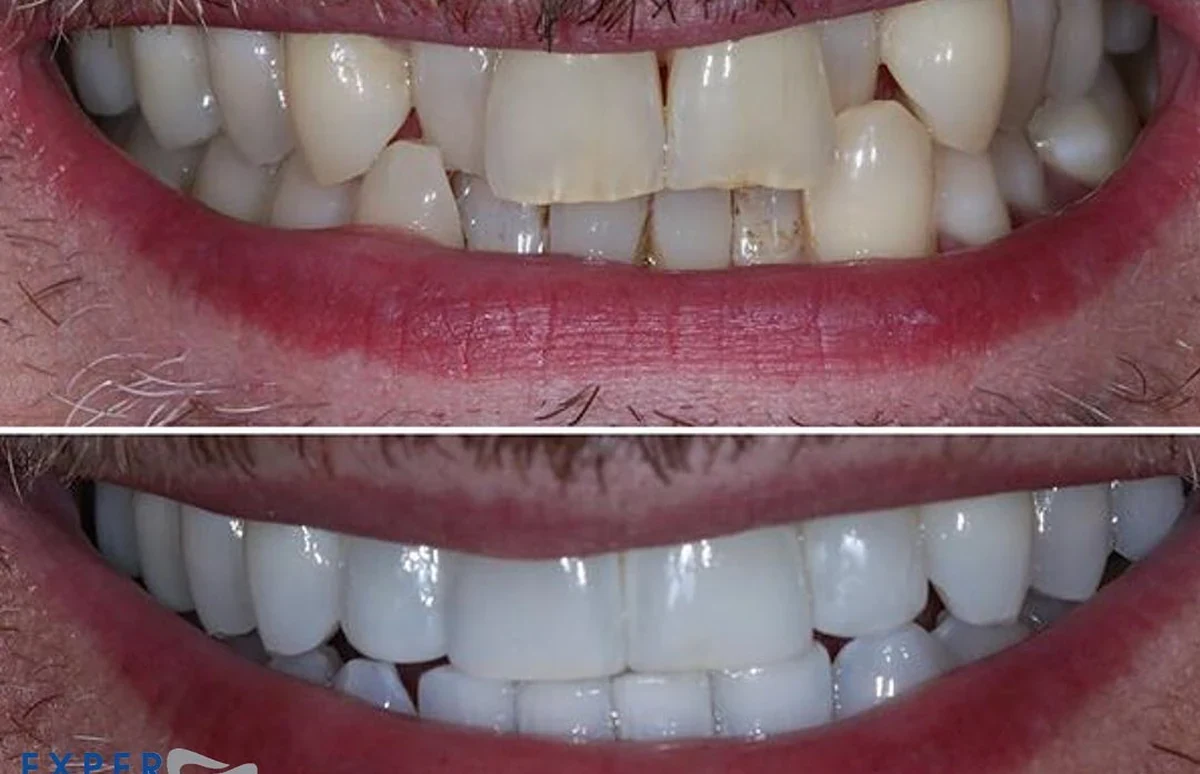
Sometimes it really is just one tooth. Perhaps an upper incisor sits slightly behind its neighbour, or a lower front tooth catches the light because it has turned over the years. Your smile looks entirely normal to other people, but that one detail bothers you in photographs.
It is reasonable to wonder whether Invisalign is an excessive answer to such a small concern. Equally, you may be reluctant to have the tooth reshaped or covered with bonding when you would prefer to keep its original surface. The answer begins with a simple distinction: a tooth may look like the only problem, but moving it safely may involve its neighbours and the way both arches meet.
Can Invisalign move just one tooth?
Invisalign aligners can be used to plan movement of selected teeth, including a crooked front tooth, where appropriate. But an aligner is not usually a tiny appliance gripping only that one tooth. It fits over an arch, using its contact with other teeth to help guide the intended movement. Even when the visible goal is a single incisor, other teeth may need small adjustments to create room or maintain a suitable bite.
This is why it is more helpful to ask about the scope of treatment than whether you can buy 'Invisalign for one tooth'. Your clinician may suggest a limited plan with a modest objective or explain why a broader plan would be clinically preferable.
If the tooth has shifted slightly after previous orthodontics, the situation may be different from a tooth that has always been crowded. Both need assessment, but the causes and retention arrangements may differ.
Why does one crooked tooth sometimes need space?
Imagine a front tooth that has rotated a little. Its widest part may no longer be lined up with the neighbouring teeth. To turn it into the desired position, the clinician needs room for that tooth to occupy without pushing its neighbours into an unfavourable arrangement. Sometimes the necessary space can be gained with small adjustments to other teeth. Occasionally controlled enamel reduction between selected teeth is considered. Other cases require a more involved orthodontic plan.
A photograph cannot show the root positions, the available bone or how the tooth meets its opposite number. The amount of visible overlap is therefore not a reliable measure of how straightforward the correction will be.
Ask your dentist to explain where the space would come from. If a digital animation shows your tooth swinging neatly into place, that is an opportunity to discuss the underlying plan, not proof that the movement is guaranteed.
What if the crooked tooth is a canine?
Canines often have long roots and an important role in guiding jaw movements. A canine that sits high, turns towards the cheek or is unusually prominent may need more complex movement than a slightly rotated incisor. There may also be a question about how its final position will affect neighbouring teeth and the bite.
Clear aligners can sometimes be part of a canine treatment plan, but attachments or alternative mechanics may be required. In some circumstances fixed braces are a more appropriate option. The clinical recommendation should be based on what the tooth needs to do, not simply whether it appears in the front of the smile.
Would bonding be easier than Invisalign?
Bonding can change the visible outline of a tooth without moving its root. If the concern is only a small difference in edge length or shape, a conservative composite addition may be worth considering. It can sometimes make an almost-straight tooth appear more balanced.
But bonding cannot reposition a significantly crooked tooth. Adding material to disguise a rotated or protruding incisor can create an unnatural width or excessive thickness. It may also make cleaning more awkward or introduce bite contacts that were not there before.
Conversely, orthodontics requires time, consistent aligner wear and retention even when the aesthetic change is small. The most tooth-preserving option depends on the starting position and the desired result, not on the popularity of either treatment.
What about a veneer on the one tooth?
A veneer can alter shape, colour and the apparent position of the visible surface. It may be appropriate for some restorative situations, but preparing a healthy tooth simply to disguise a positional problem deserves careful consideration. Tooth preparation may be irreversible, and the restoration will eventually need maintenance or possible replacement.
If tooth preservation is a priority, ask whether modest orthodontic movement would address the concern before irreversible cosmetic work is considered. A single veneer can also be difficult to match perfectly with natural neighbouring teeth, particularly where shade or translucency differs.
You are not obliged to choose a treatment at all. If the tooth is healthy and the difference is minor, leaving it as it is remains a reasonable option.
How long does limited Invisalign take?
The answer depends on the planned movement and how the teeth respond. A small cosmetic change may sometimes need a shorter course than comprehensive bite correction, but there is no reliable duration based solely on 'one tooth'. Rotations, space requirements, attachment design, wear habits and refinements all affect timing.
Aligners need to be worn consistently according to your clinician's instructions. They should normally be removed for meals and cleaning, and appointments are needed to check progress and make changes if necessary. A short-looking treatment is still real orthodontic care, with the need to protect your teeth and gums throughout.
Ask for a realistic estimated range, what might extend the plan and how you will know when the agreed objective has been met.
How much would it cost?
Iconic Smiles publishes Invisalign from £2,400. This is a starting price for Invisalign treatment, not a guaranteed fee for correcting one tooth. Some apparently modest changes are technically involved, and the final quotation should reflect assessment, treatment design, appliances, reviews, any additional aligners and retention.
It is worth asking whether a particular proposal is for limited cosmetic alignment or a more comprehensive correction. If the objectives differ, the prices are not directly comparable. The lower fee might deliver a perfectly acceptable, intentionally limited change — or it might leave something unaddressed that matters to you.
What will it feel and look like during treatment?
Aligners are clear and removable, but they are not completely invisible. Some plans use tooth-coloured attachments, and the aligners may be noticeable at close range. You may feel pressure or tenderness after changes, and your speech can take a little time to settle when you begin wearing them.
Because aligners are removable, you need to build wearing and cleaning into your day. If you work long shifts or snack frequently, this practical side deserves thought. The right plan is one you can realistically follow.
The part you cannot skip: retainers
Teeth that have been moved can shift again. This is particularly relevant if a tooth has previously become crooked after braces or retainers stopped being worn. A finished alignment is not a permanent state that can be taken for granted.
Your clinician should explain what retainer is recommended, how it should be worn and what happens if it breaks or no longer fits. For somebody correcting one small tooth, the ongoing commitment can feel greater than expected. That is worth understanding before you begin.
How do you decide whether such a small change is worth it?
Ask yourself what you would feel differently if that tooth were straighter. Would you be more comfortable in photographs, or is the concern something you notice only when studying your teeth in a mirror? Either answer is valid. What matters is whether the possible benefit is worth the cost, time and retention for you.
At the consultation, ask your clinician to describe the smallest clinically reasonable option, any broader concerns they have identified and what would remain unchanged. If they recommend doing nothing, that can be just as thoughtful as offering treatment.
Iconic Smiles' £30 planned-treatment consultation offers a way to explore that choice, with any additional diagnostic work explained separately. You can arrive saying, quite simply, 'I like my smile, except for this one tooth.' That is enough to begin an honest conversation.
Questions patients often ask
Can one crooked tooth be corrected without treating the bottom teeth? Sometimes, but the relationship between the arches must be checked before choosing a one-arch plan.
Will the tooth stay straight when Invisalign finishes? It may move again without appropriate retention. Your clinician will recommend a retainer plan based on your case.
Could bonding make a small tooth look straighter without braces? It can sometimes improve the apparent shape, but it does not reposition the root or correct significant malalignment.
Do I need Invisalign if nobody else notices the tooth? Not necessarily. Treatment is optional when the issue is cosmetic; your own preference and a balanced discussion of benefits and risks should guide the decision.
When the concern is only one tooth
A limited correction should still be planned around the way the rest of your teeth meet. Explore Invisalign treatment alongside conservative bonding before deciding which option would achieve what you want.
Independent patient information: British Orthodontic Society: adult and limited orthodontic treatment · NHS: retainers and orthodontic aftercare. These explain general clinical considerations; a personal recommendation requires assessment.
Your next step, when you’re ready
We would be pleased to welcome you for a £30 consultation at your preferred Iconic Smiles practice. Bring your questions, and we can talk through the options that may suit you.
Please confirm the £30 planned-treatment consultation fee when booking. Scans, additional investigations and emergency assessments may have separate fees.