
Invisalign and teeth straightening
Missing Lateral Incisors: Braces, Bonding or Implants?
Some people never develop one or both upper lateral incisors—the smaller teeth immediately beside the two central front teeth.
Talk to us about straightening your teeth
You might have a particular change in mind, or simply want to know what is possible. At a £30 consultation, we can talk through your goals and explain how the next steps are planned.
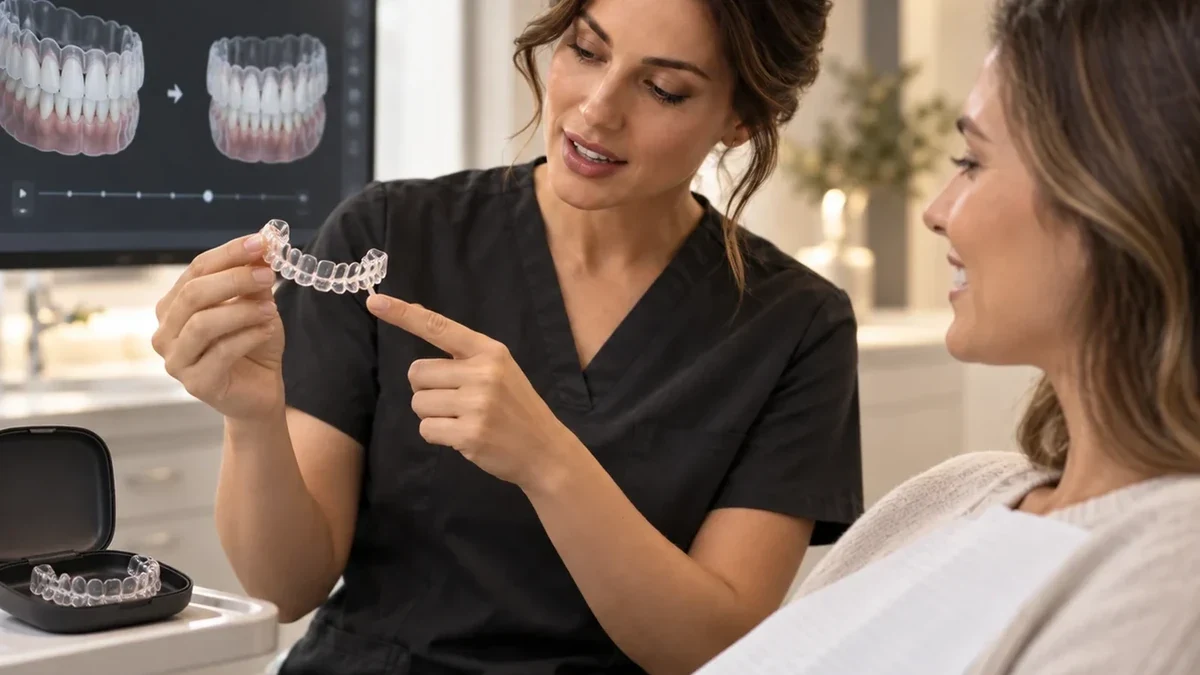
Missing upper lateral incisors can be managed by closing the spaces with orthodontics or creating room for replacement teeth. These are the smaller incisors beside the two central front teeth, and some people never develop one or both. Canines can move forward into their places, sometimes with reshaping or bonding, while maintained gaps can support a bridge or later implant. Bite, tooth sizes, gum levels, appearance, age and future treatment preferences guide the choice.
Closing the gaps means designing a new tooth arrangement
A canine moved into a lateral-incisor position may need changes to its tip, width, contour or colour. Selected reshaping and composite can help, and the first premolar behind it may also need refinement. Tooth movement must control roots and contacts as well as close the space. Using your own teeth avoids a separate replacement tooth, with careful finishing still needed for a proportionate smile and functional bite.
Opening space prepares for a different long-term plan
Orthodontics can position the natural teeth and roots to create a suitable gap for a resin-bonded bridge or, at an appropriate age, a dental implant. The root spacing matters as much as the crown spacing. A beautiful-looking gap in a photograph may still leave insufficient room for a fixture beneath the gum. For a teenager whose jaws and teeth are still developing, placing an implant too early can create an aesthetic step as neighbouring teeth continue to erupt. Temporary options may be used while growth and treatment choices are reviewed.
Factors that usually shift the recommendation
Canine colour and size affect the amount of restorative adjustment needed. Upper protrusion or other space-related bite findings may favour closure, while another jaw or bite pattern may favour keeping space. Smile-line height changes how visible gum differences will be. The clinician considers these features together, including symmetry during speech and movement, rather than select the plan from one measurement.
Compare future maintenance, not only treatment duration
Closure may require more tooth movement and finishing of natural tooth shapes. Opening may involve a different or shorter movement plan, followed by a replacement that needs maintenance. An implant remains fixed in bone and cannot move orthodontically; a resin-bonded bridge may be suitable as an interim or definitive option in selected cases. Compare the procedures, costs, reversibility and continuing care over the coming years.
What does the research support?
Reviews of missing upper lateral-incisor management describe both space closure with canine substitution and prosthetic replacement as acceptable in selected patients. Evidence comparing them directly has limitations, and visual outcomes depend heavily on the quality of orthodontic finishing and restorative detailing. A 2024 clinical review explains how careful space closure combined with conservative cosmetic work can deliver favourable function and aesthetics. These findings should inform discussion, not become a blanket promise that one strategy always looks better or lasts longer.
A consultation that starts with the end result
Ask the orthodontic team to show how the smile and bite are expected to look after closure and after opening the space. Request discussion of gum levels, any bonding needed, whether retainers will be required and what tooth replacement would involve if space is kept open. This is precisely the kind of problem that benefits from orthodontic and restorative clinicians planning together. The first appointment should establish the goal for each tooth before anyone begins moving them.
Evidence and further reading
Agreeing the role of each tooth
Closing and opening the space lead to different long-term care. Compare the expected tooth shapes, gum levels, retention and any replacement needed before deciding which route suits your smile and bite.
Iconic Smiles practices are in Hatfield and Cheshunt in Hertfordshire, and Friern Barnet in North London. If travelling from Bedfordshire, Buckinghamshire or Essex, confirm the actual practice for each appointment.
Your next step, when you’re ready
We would be pleased to welcome you for a £30 consultation at your preferred Iconic Smiles practice. Bring your questions, and we can talk through the options that may suit you.
Any additional investigations and their fees will be explained before you decide.