
Dental implants — replacing missing teeth
Flexible partial dentures: benefits and drawbacks
Flexible partial dentures are often advertised as discreet, lightweight and comfortable because they can use tooth-coloured or gum-coloured flexible components instead of conventional metal clasps.
Explore your tooth replacement options
If you are considering replacing a tooth or several teeth, a £30 consultation gives you a chance to explain what matters most, ask questions and explore the options with our team.
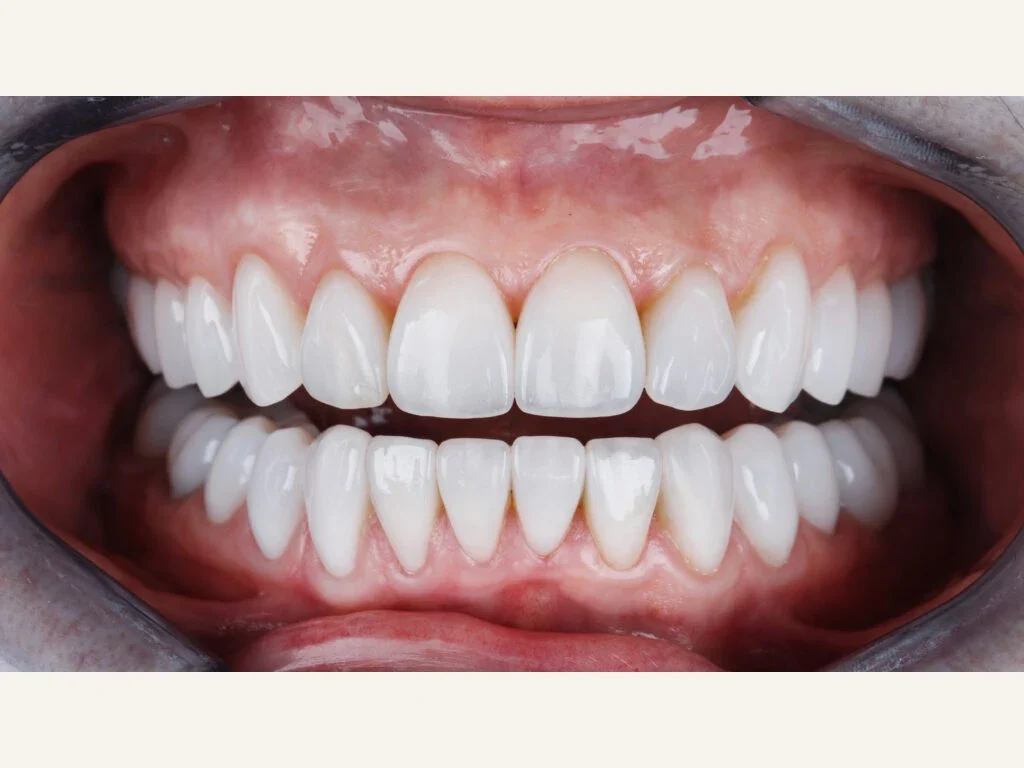
Flexible partial dentures can offer discreet clasps and a lightweight feel in selected cases, but need assessment of support and maintenance as well as retention. Flexibility does not automatically help a denture carry chewing forces or stay clean as tissues change. Compare the proposed design with acrylic, metal frameworks, bridges or implants where appropriate.
What flexible dentures are made to do
Many use heat-moulded plastics to form a relatively thin base and gum-coloured clasps. Their flexibility lets them engage selected tooth contours, with behaviour varying by product. The dentist still checks where the appliance rests on teeth and tissues and how it moves during chewing. A less visible clasp or comfortable first fitting cannot establish long-term suitability alone.
Support is not the same as retention
Retention stops an appliance lifting out; support resists it moving into the tissues under biting force. A flexible clasp may hold a denture in place without giving the same rigid support as a carefully designed metal rest. If chewing forces are transmitted unfavourably to the gum, the appliance can feel unstable or create pressure areas. The patient should ask how the proposed denture is supported, not merely whether it will stay in during conversation. The dental team should assess the remaining teeth, bite, ridge shape and whether the appliance replaces front or back teeth. Different gaps need different designs.
Appearance advantages have limits
Gum-coloured clasps can be discreet, but the artificial teeth must still match size, colour and position. A bulky flange may affect lip support or speech even if it is made from flexible material. In some mouths a metal-framework denture can be shaped to show little visible metal, and an adhesive bridge may avoid a removable appliance altogether. The best aesthetic result is often determined by where support and retention can be placed, rather than material colour alone. Ask to see the intended clasp locations and whether a trial is available before the denture is finished.
Cleaning, staining and laboratory repairs
Thermoplastic materials may have different surface and repair properties from conventional acrylic. Depending on the product, adding teeth, relining or repairing cracks may require specialised laboratory techniques and may be less straightforward than with standard acrylic. Patients should receive material-specific cleaning instructions; abrasive household methods or inappropriate hot water can damage an appliance. Gum health and the cleanliness of supporting teeth are critical regardless of denture type. A design that is difficult to remove or leaves plaque around clasped teeth undermines the intended advantages of a comfortable-looking flexible plate.
When fixed replacement may be preferable
For a single missing front tooth, a resin-bonded bridge may be considered if the neighbouring teeth and bite provide suitable conditions. A dental implant can replace a tooth independently of adjacent teeth in selected patients, but involves surgery, bone assessment and maintenance. For several missing back teeth, a rigid partial denture may distribute forces more predictably. No option is automatically best. The dentist should explore whether the patient prioritises lower initial cost, avoiding surgery, discreet appearance, chewing stability or future repairability, then explain the implications of each.
Choose flexibility only when it serves the design
Compare the appropriate flexible, acrylic, metal and fixed options by what supports the bite, how they are cleaned and serviced, and the likely effect of later gum or tooth changes. Include possible replacement costs. The design should provide proportionate appearance and function with an upkeep routine you can manage.
Evidence and further reading
The practices are in Hatfield and Cheshunt in Hertfordshire, and Friern Barnet in North London. If travelling from Bedfordshire, Buckinghamshire or Essex, use the actual clinic address on your confirmation.
Your next step, when you’re ready
We would be pleased to welcome you for a £30 consultation at your preferred Iconic Smiles practice. Bring your questions, and we can talk through the options that may suit you.
Any additional investigations and their fees will be explained before you decide.