
Repairing your teeth
Root Canal Treatment: What Happens and Why?
Root canal treatment removes inflamed or infected pulp tissue from inside a tooth, disinfects the root canal system and seals it to help retain a tooth that might otherwise need extraction.
Talk through your options for repairing teeth
If you would like to understand how a tooth might be repaired or protected, a £30 consultation offers time to discuss your concerns and what an individual assessment may involve.
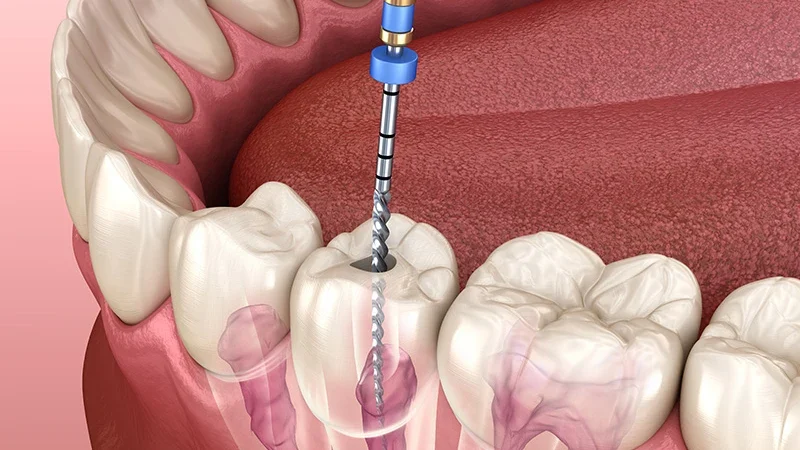
Root canal treatment removes inflamed or infected pulp tissue from inside a tooth, disinfects the root canal system and seals it to help retain a tooth that might otherwise need extraction. Local anaesthetic usually controls procedural pain, although discomfort afterwards and a final protective restoration may need planning.
When root canal treatment is considered
Deep decay, cracks, trauma or previous dental work can inflame or infect the pulp. Symptoms may include prolonged temperature sensitivity, biting pain, spontaneous aching or swelling, but some affected teeth cause little pain. A clinical examination, sensibility tests and appropriate radiographs help establish whether root canal treatment is indicated and whether the tooth can still be predictably restored.
What actually happens during treatment
The tooth is numbed and normally isolated with a dental dam to reduce contamination. Access is made through the crown, the canal anatomy is located, and instruments and irrigants are used to clean the internal spaces before a root filling seals them. Complex anatomy, extensive infection or a previous unsuccessful root treatment can affect the number of appointments and may warrant further assessment.
Does it hurt, and what is normal afterwards?
Local anaesthetic is used to control pain, although an acutely inflamed tooth can be harder to numb. Tell the team if you feel pain so they can reassess it. Some tenderness on biting for several days can occur afterwards. Increasing swelling, fever, spreading infection, severe uncontrolled pain or deterioration needs prompt advice. Antibiotics do not routinely replace drainage or definitive dental care.
The definitive restoration is essential
A technically successful root filling does not rebuild weakened tooth walls or restore a damaged bite. Depending on remaining structure, a direct restoration, onlay or crown may be appropriate. Delaying a final seal can allow leakage or fracture. Back teeth carrying substantial loads deserve careful assessment of cusp coverage and how the opposing teeth contact the restoration.
Success, limitations and alternatives
Outcome depends on the original diagnosis, canal complexity, restoration quality and periodontal support; it cannot be guaranteed. Persistent or recurrent disease may need reassessment, endodontic retreatment, apical surgery or extraction. Extraction changes the replacement discussion and can affect neighbouring teeth and bone, so those implications should be discussed before sacrificing a restorable tooth.
Questions to ask about your own tooth
Before treatment, understand whether the tooth is restorable, what the X-ray contributes and whether an onlay or crown is planned afterwards. Include likely visits and the alternatives if healing does not occur. The estimate should distinguish root-canal treatment, the final restoration and any further investigation.
Saving a natural tooth can preserve useful options
Root canal treatment removes infected or inflamed tissue from inside a tooth while aiming to retain the tooth in the mouth. It is often considered when deep decay, a crack or trauma has affected the pulp. The dentist first needs to establish whether the tooth can be restored and whether the root system is treatable. An attractive crown placed on an unrestorable foundation is unlikely to succeed, while extracting a maintainable tooth simply to substitute an implant may be unnecessarily destructive. The diagnosis and structural outlook should be explained before a choice is made.
What usually happens during treatment
The tooth is numbed and isolated, often with a rubber dam, to control the treatment environment. The clinician finds the canals, cleans and shapes them with instruments and irrigating solutions, then seals them. Complex roots or infection can require several visits or referral to an appropriately trained practitioner. X-rays help assess the roots and surrounding tissues alongside clinical judgement. Temporary protection may be needed between appointments, with the final restoration and its cost agreed separately if it is not included.
The final restoration is not an optional detail
A back tooth that has lost a large amount of its structure may need cuspal coverage, often with an onlay or crown, to help protect it from fracture. The appropriate restoration depends on how much healthy tooth remains, the bite and existing cracks. A root-filled front tooth with good remaining structure may need a different approach. A temporary filling is not a substitute for an agreed long-term restoration. Ask about the estimated prognosis for the tooth and what findings could change the plan after the canals are opened.
Recovery and future care
It is common to have some temporary tenderness after root canal treatment, especially when biting, but severe swelling or worsening symptoms require review. The tooth still needs brushing, interdental cleaning and routine assessment because decay or gum disease can affect it like other teeth. Root treatment does not make a tooth indestructible and cannot guarantee that every infection will heal. If the tooth cannot be retained, a bridge, implant or removable option can be discussed later. The immediate aim is an informed decision about preserving a useful natural tooth.
Your next step, when you’re ready
We would be pleased to welcome you for a £30 consultation at your preferred Iconic Smiles practice. Bring your questions, and we can talk through the options that may suit you.
Any additional investigations and their fees will be explained before you decide.