
Repairing your teeth
Root Canal or Extraction? Comparing Long-Term Options
Wondering whether to save a troubled tooth or have it removed? Learn what matters for its long-term outlook and how to weigh the different ways forward.
Talk through your options for repairing teeth
If you would like to understand how a tooth might be repaired or protected, a £30 consultation offers time to discuss your concerns and what an individual assessment may involve.
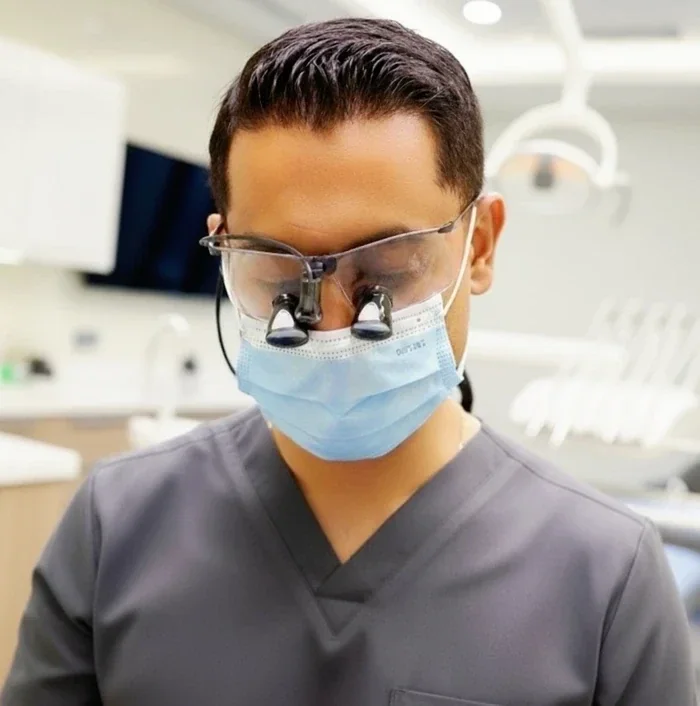
The first question is whether the tooth can be retained
Root canal treatment aims to keep a tooth by treating infection inside its canal system. Extraction removes it, leaving a separate decision about the gap. The right choice depends on the diagnosis, whether the tooth can be reliably repaired and its gum support. [1][2]
Saving a tooth requires a complete plan
Endodontic care includes evaluation, appropriate treatment and reassessment. The ESE guideline emphasises history, case evaluation, asepsis and clinician training. Treating the canals is only part of deciding whether the tooth can remain useful; the clinician should explain the proposed final restoration and follow-up. [2]
Failure does not automatically mean an implant
If root canal treatment is unsuccessful, further assessment may identify whether treatment can be repeated. Extraction may be appropriate when the tooth cannot be retained. An implant is one possible later replacement, alongside a bridge, a denture or, in selected circumstances, no replacement. [1][3]
Compare the whole pathway
Ask what is wrong with the tooth, what would most change its prognosis and what each option involves. Discuss the consequences of leaving the space, any preparatory care for replacement and the total expected cost. The comparison should cover reasonable alternatives and the likely burden of further treatment, not only the price of the first appointment.
Compare outcomes that mean the same thing
Published results may describe tooth retention, implant retention, restoration survival or freedom from further intervention. Those are different outcomes in different populations. Do not compare unrelated percentages as if they prove that extracting a tooth produces a better result. Ask which evidence applies to the diagnosed condition and how the individual options will be reviewed. Read the supporting clinical study · Read the supporting clinical study (2)
What would justify a different choice?
An older front tooth that darkened after an injury may need assessment even without pain. If its canals have narrowed or calcified, the dentist may consider nerve-response tests, imaging and microscope magnification. A limited-field 3D X-ray is considered only when justified, and specialist referral may help with a difficult canal.
What actually happens during treatment
The tooth is numbed and normally isolated with a dental dam to reduce contamination. Access is made through the crown, the canal anatomy is located, and instruments and irrigants are used to clean the internal spaces before a root filling seals them. Complex anatomy, extensive infection or a previous unsuccessful root treatment can affect the number of appointments and may warrant further assessment.
Alternatives when root canal treatment is uncertain
Before starting root canal treatment, understand what the alternatives would be if the tooth did not heal as hoped. Depending on the findings, these can include repeat treatment through the tooth, suitable surgery at the root tip, monitoring, a temporary stage or extraction and replacement. An X-ray shadow alone does not decide which step is appropriate.
The sequence from records to treatment
The plan starts by establishing why root canal treatment is needed and whether the tooth can support a useful final restoration.
Retention is a clinical choice with an intended purpose
Keeping a tooth may preserve a useful natural structure, but it should still have a reasoned prognosis and a plan. Ask what treatment is needed, what role the tooth will have and which limitations remain. A decision to retain every tooth regardless of condition is not automatically conservative if it leaves disease or symptoms unmanaged. Conversely, extraction should not be justified simply because implants are available. Consent requires an explanation of realistic options, benefits and material risks. The appropriate balance comes from the tooth’s findings and the wider reconstruction rather than a slogan about always saving or always replacing.
The clinical decision at the next appointment
If a crowned tooth needs root canal treatment, the dentist checks the crown edges, decay, access direction and whether a rubber dam can isolate the tooth. For example, a crowned molar may need nerve treatment for a reason unrelated to its visible colour. Access through the crown may preserve sound ceramic in selected cases, but the crown’s integrity and the final seal of the access opening still need assessment.
Options for changing the colour of a root-treated tooth
If a root-treated tooth is dark, its current root treatment and suitability for internal whitening need checking before cosmetic work. Depending on the appearance concern, options may include accepting the colour, whitening, tooth movement, a small composite addition or a partial ceramic covering. Veneers or a more opaque crown need justification for any extra preparation and should not be automatic.
What if the immediate approach is unsuitable?
Early placement after soft-tissue healing or delayed placement after further bone healing may offer a more controlled pathway. Ridge preservation procedures can sometimes be discussed at the extraction appointment, subject to individual anatomy and evidence. A staged choice is not treatment failure; it may be the more appropriate route to a natural gum margin and correctly positioned final crown.
When a crown might be justified
If the tooth has extensive previous restorations, cracks or inadequate remaining structure, a crown may be appropriate for reasons beyond colour. A sound, minimally restored tooth generally deserves a conservative comparison first. The clinician should distinguish aesthetic masking from structural reinforcement and explain how much preparation each option involves. A crown is not a universal cure for discolouration or a guarantee against future fracture.
Assess the tooth before the implant
The ESE guideline stresses diagnosis, case evaluation and reassessment when managing pulpal and apical disease. Ask the clinician to explain the evidence for the diagnosis and the reason for recommending retreatment, another approach or removal. The appropriate decision depends on the actual tooth and surrounding tissues. Read the supporting clinical study
Technical details specific to this decision
Completing canals in one sitting may be appropriate where the clinician can clean, shape and seal predictably. Persistent drainage or complex anatomy can support a staged approach. The number of visits does not establish whether disinfection and coronal sealing are adequate.
When root canal treatment is considered
Deep decay, cracks, trauma or previous dental work can inflame or infect the pulp. Symptoms may include prolonged temperature sensitivity, biting pain, spontaneous aching or swelling, but some affected teeth cause little pain. A clinical examination, sensibility tests and appropriate radiographs help establish whether root canal treatment is indicated and whether the tooth can still be predictably restored.
Root canal decisions for a tooth supporting a bridge
For a tooth supporting an existing bridge, discuss access for root canal treatment, the condition of any post and core, the outlook for the supporting tooth and whether preserving the existing bridge remains sensible.
Compare extraction and implants as a complete alternative
Replacing a tooth is not a way to avoid all biological and technical risk. NHS implant information describes possible grafting, integration failure and later component wear or loosening, alongside alternatives such as bridgework and removable replacement. Ask how these commitments compare with the realistic treatment needed to retain the tooth. A pooled implant survival rate does not by itself answer whether extraction is appropriate for an individual tooth. The comparison should include the surgical burden, temporary period, definitive restoration, ongoing care and consequences if either chosen route later needs further intervention. NHS patient information
Why a narrowed root canal needs careful assessment
A narrow canal may reflect calcification and require careful imaging and enhanced magnification rather than drilling deeper without orientation.
What can cause a root-treated tooth to darken?
Discolouration may arise from dentine and remnants inside the pulp chamber; external whitening may not correct it.
Can a root canal be treated through an existing crown?
Access through a well-fitting crown can sometimes avoid replacing sound ceramic, but crown integrity and isolation control matter.
Research and guidance
Your next step, when you’re ready
We would be pleased to welcome you for a £30 consultation at your preferred Iconic Smiles practice. Bring your questions, and we can talk through the options that may suit you.
Any additional investigations and their fees will be explained before you decide.