
Repairing your teeth
Same-day full-arch implants: understanding temporary teeth
Find out what temporary fixed teeth may involve when planning full-arch implant treatment, and what alternatives are available.
Talk through your options for repairing teeth
If you would like to understand how a tooth might be repaired or protected, a £30 consultation offers time to discuss your concerns and what an individual assessment may involve.
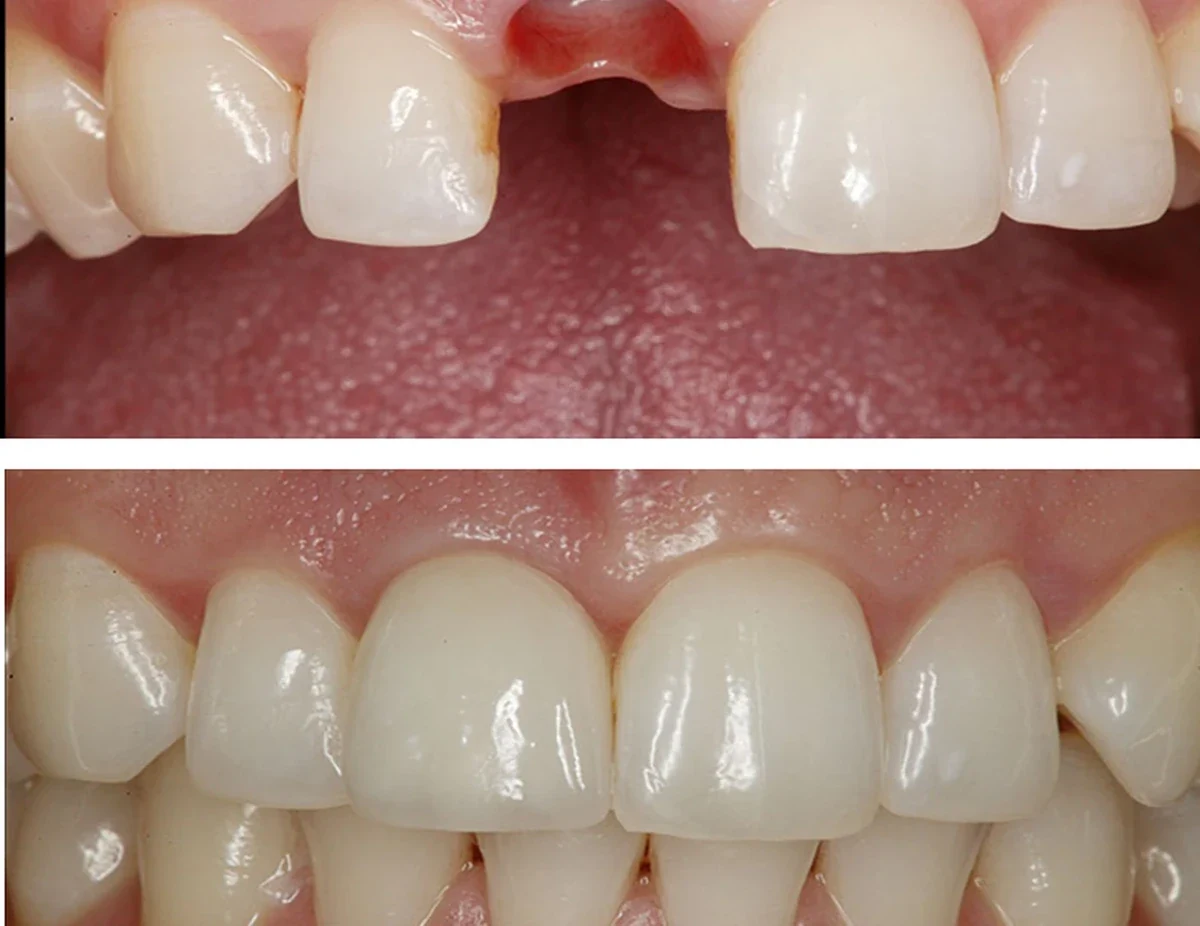
Same-day full-arch implant treatment may provide fixed temporary teeth while you heal; the final bridge is usually a later stage. Before choosing this approach, understand how suitability is assessed and what temporary arrangement would be used if immediate fixed teeth were unsuitable.
Fixed teeth do not mean healing is complete
Fixed temporary teeth can restore your smile soon after surgery, while healing is still at an early stage. Your plan will include limits on eating and instructions for cleaning and review. Placing implants and deciding when they can carry teeth are separate decisions, and you should know how the temporary bridge leads to the later restoration. [1][2]
Distinguish integration concerns from bridge problems
Before treatment, the team should explain both healing risks and possible problems with the temporary bridge. An implant not joining to the bone is different from a chipped bridge or loose connecting screw. If movement, chipping or a sudden change occurs during your planned care, contact the treating team so they can identify the affected part. A description of loose teeth alone cannot tell them which component needs attention. [2][3]
Personal risk should be discussed before treatment
Medical history, oral condition and habits belong in the assessment. A systematic review of observational studies found smoking associated with early implant failure, but its group comparisons do not predict one individual’s outcome. Tell the team accurately about smoking and other relevant exposures. Ask which factors can be modified and whether they change timing or complexity. Do not alter prescribed medicines independently to try to improve healing; obtain the appropriate instruction from the clinicians responsible for your care. [4][2]
Compare recovery with the instructions for your procedure
Plan for some discomfort, swelling, bruising and postoperative bleeding, with recovery advice tailored to the extent of surgery and any additional procedures. You will receive instructions for your operation and contact details if recovery worries you. Increasing pain, spreading swelling, fever, pus or an unexpected bridge problem needs advice from the treating service; a general online timetable should not delay that contact. [5][6]
Persistent altered sensation should be reported promptly
Local anaesthetic produces temporary numbness, but altered sensation continuing beyond the expected recovery needs advice. Oral-surgery guidance recommends contacting the service about ongoing numbness after the anaesthetic should have worn off. Report the area affected and the time course rather than wait for a distant routine appointment. A general article cannot establish the cause or prognosis, and it should not be used to recommend self-treatment for a possible nerve-related concern. [7]
Bleeding that does not settle needs urgent attention
Follow the pressure instructions supplied after surgery. Guy’s and St Thomas’ advises emergency-department assessment if bleeding continues despite its stated pressure measure. If your own instructions do not resolve the problem, obtain urgent help rather than repeatedly disturb the wound or assume the bridge prevents a complication. Tell the clinical service about the operation and relevant medicines. Do not independently stop prescribed anticoagulants or start leftover medication in response to a postoperative problem. [5]
Know the infection emergency threshold
Call 999 or go to A&E if swelling makes breathing, speaking or swallowing difficult. Significant mouth swelling or eye symptoms such as painful swelling or affected vision also require emergency attention under NHS dental-infection advice. These symptoms should not wait for a planned implant review. For concerns that do not meet that threshold, seek the appropriate urgent dental assessment rather than try to decide from the appearance of the temporary teeth alone whether the tissues are safe. [6]
Keep the review and repair route clear
Before surgery, confirm your review date, the limits of the temporary teeth and whom to contact during the day or out of hours. During your care, report a changed bite, sharp or broken area, or difficulty cleaning. Do not remove, reshape or tighten the bridge yourself. Knowing how the team would assess and manage a complication is part of understanding the treatment before you choose it. [5]
In practical terms:
When weighing up same-day treatment, include the temporary teeth, recovery, reviews and arrangements for urgent help. A fixed bridge does not mean healing is complete or that symptoms can be ignored.
Further clinical details: If same-day fixed teeth are unsuitable: temporary options
An alternative sequence should be part of planning
If same-day fixed teeth are unsuitable, you may still be able to have implant treatment with a different temporary arrangement. Suitability can depend on your health, the site and the stability achieved during surgery. International Team for Implantology (ITI) guidance recommends agreeing an alternative beforehand, so you know what teeth you would wear and how the later stages would work. [1]
Separate the type of temporary from the long-term goal
A removable temporary, an early fixed prosthesis and a later definitive bridge are different arrangements. The temporary option may be chosen to support appearance and function while the site is managed according to the clinical plan. Its use does not, by itself, determine the final prosthesis. Ask the team to distinguish the restoration for the immediate period from the intended long-term replacement and to explain what must happen before a transition can be considered. [2]
Understand a staged fixed pathway
Implants can be placed first and fitted with replacement teeth later. NHS information describes assessment, possible grafting, placement and restoration as separate stages. If this suits your case, the team should explain how your appearance and daily needs will be managed while you heal, what the timing aims to achieve and what will be checked before moving on. [2]
Discuss a removable temporary in practical terms
If a removable replacement is appropriate, ask about putting it in and taking it out, cleaning, expected adjustments and instructions around the surgical site. The fit and use need to be considered with the actual procedure; a previous denture should not automatically be assumed suitable unchanged. Explain work, social and eating concerns before the operation. The team can then discuss realistic temporary arrangements rather than discover afterwards that the patient understood a very different period without fixed teeth. [2]
Compare the burden as well as the appearance
Each temporary option has practical demands. A discreet removable tooth may need adjustments, cleaning and reviews. A fixed bridge needs suitable support and may come with restrictions during healing. Compare the routines and compromises that fit your mouth and priorities, rather than assuming one type is always easier. [3]
Consider whether another definitive option is reasonable
If the preferred implant pathway is unsuitable or its burden does not fit your priorities, discuss the appropriate non-implant alternatives. The NHS implant information includes different denture designs, tooth-supported options and, in suitable circumstances, no treatment among possibilities. A remaining-tooth assessment is important before assuming a whole arch must follow one package. Ask what each route preserves or changes, how it would be maintained and what the next decision would be if the initial approach did not meet the goal. [2]
Agree the logistics and cost before consent
The written plan should identify the expected temporary, the alternative if findings change, the visits needed and what is included in the estimate. Clarify who adjusts the temporary and how concerns are managed outside planned reviews. At Iconic Smiles, confirm the clinicians and locations involved in the surgical and restorative stages. The patient should leave the planning discussion knowing how they will be supported through the interim period, including an honest explanation of which features cannot be guaranteed in advance. [4][5]
The main consideration:
You should know how the alternative temporary teeth would be used, reviewed and paid for, just as clearly as the preferred same-day bridge.
Research and guidance
- Implant Placement and Loading Protocols - Consensus Statements - ITI ITI â International Team for Implantology
- Dental implants - Overview | Guy's and St Thomas' NHS Foundation Trust
- Primary professional guidance — access.archive-ouverte.unige.ch
- Dental Team | Meet the Iconic Smiles Clinicians
- Dental Practices in Hertfordshire & London | Iconic Smiles
- Smoking in relation to early dental implant failure: A systematic review and meta-analysis.
- Dental implants - After having a dental implant | Guy's and St Thomas' NHS Foundation Trust
- Dental abscess — NHS
- Post-operative mouth care following oral surgery - Advice Sheet | Hull University Teaching Hospitals NHS Trust
Your next step, when you’re ready
We would be pleased to welcome you for a £30 consultation at your preferred Iconic Smiles practice. Bring your questions, and we can talk through the options that may suit you.
Any additional investigations and their fees will be explained before you decide.