Replace missing teeth with a fixed, carefully planned solution.
Dental implants can restore function and support natural-looking single-tooth, multiple-tooth or full-arch treatment.
Fixed replacement options
Digitally planned
Single to full-arch care
Long-term maintenance
The essentials
What are dental implants?
Dental implants are titanium fixtures used to support replacement teeth. Depending on the case, they can restore a single tooth, several teeth or a full arch, with planning based on bone, bite, restoration and long-term maintenance.
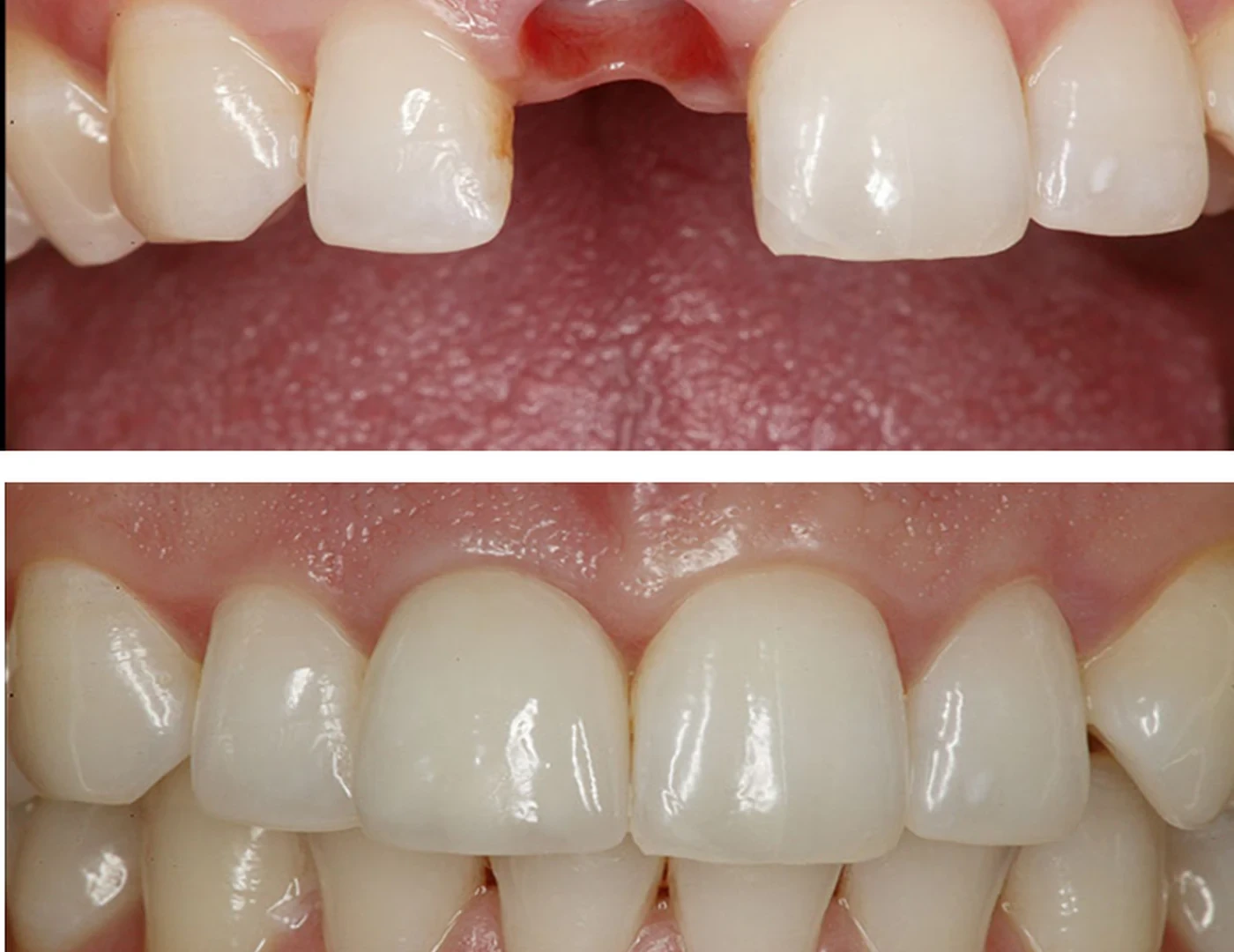
Before (top) · After (bottom) Open image to enlarge ↗
The process
A clear, considered process.
We assess the missing teeth, gums, bite and available bone before agreeing the replacement options and treatment stages.
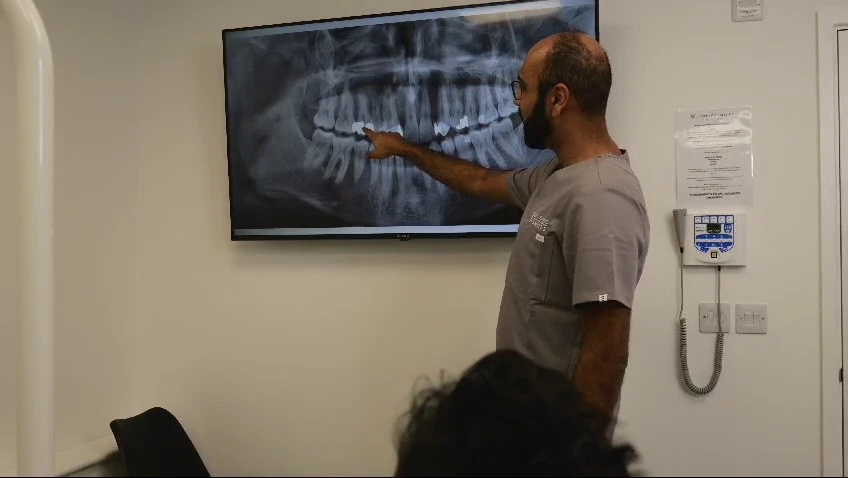
01ConsultationDetailed assessment, X-rays and 3D imaging.
02Treatment planningA personalised plan for your needs.
03Implant placementPrecision and care, using advanced techniques.
04Healing and integrationTime for the implant to securely bond with your bone.
05Final restorationThe definitive crown, bridge or full-arch restoration is fitted and reviewed.
Replacement options
A plan for the teeth you need to replace.
Single implant
An implant can support a crown to replace one missing tooth. We assess the space, neighbouring teeth and available bone.
Multiple implants
Where several teeth are missing, individual crowns or an implant-supported bridge may be considered, depending on their position and your assessment.
Implant bridges
A bridge replaces a group of missing teeth using implants for support. The number and position of implants depend on the treatment plan.
Full arch
For an upper or lower jaw with no remaining teeth, implants may support a full set of replacement teeth. Fixed and removable options require individual assessment.
Full mouth
When both jaws need treatment, we plan the upper and lower replacements together, considering your bite, oral health and the stages of care.
Suitability, timescales and fees are confirmed after a clinical assessment.
Digital planning
Plan with more information.
We use 3D CBCT imaging, digital planning and guided implant systems to support diagnosis, surgical planning and precise implant positioning.
With good planning, careful placement, excellent oral hygiene and regular maintenance, dental implants can last many years. Many well-maintained implants last 10–20 years or longer.
Is the procedure painful?+
Implants are placed under local anaesthetic. Most patients report pressure rather than pain, and IV sedation is available for suitable nervous or complex patients.
Am I suitable for dental implants?+
Suitability depends on bone volume, oral and general health, smoking, hygiene and the condition of the remaining teeth. A clinical assessment and CBCT scan help us plan safely.
How long does the treatment take?+
Simple single-tooth cases may be completed in a few months. Grafted, complex or full-arch cases can take longer because we allow time for bone and implant integration.
What’s the cost?+
The fee depends on the number of implants, restorations, grafting requirements and complexity. We provide a clear written estimate and explain finance options before treatment begins.