
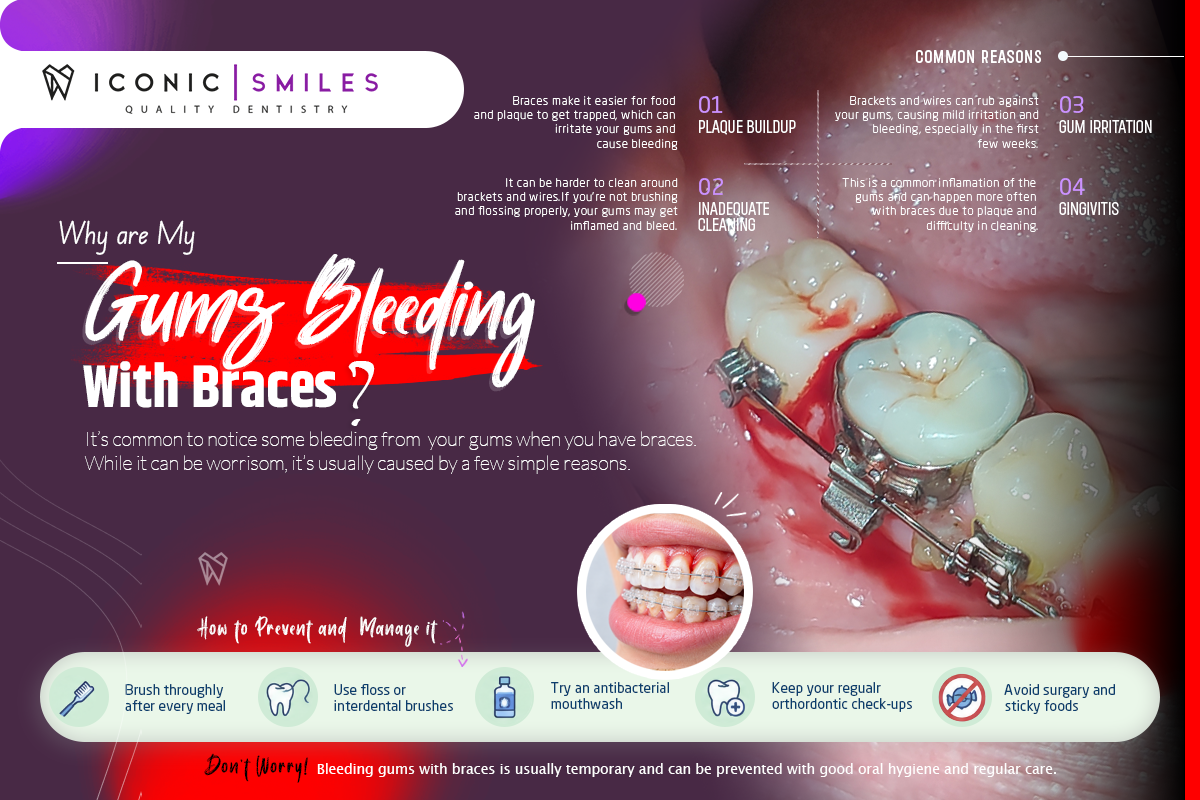
Braces can make gum care harder, but they should not make healthy gums bleed routinely. The usual reason is plaque collecting around the brackets, wires and gumline. That irritates the gums and can cause gingivitis: redness, swelling and bleeding, especially when brushing.
A small area can also become sore if a bracket or wire rubs against it. That is different from gums that bleed repeatedly across several teeth. If the bleeding keeps happening, or your gums are swollen or tender, it is worth having them checked rather than simply waiting for it to settle.
Why does this happen more often with fixed braces?
Fixed braces create extra ledges and tight spaces where plaque can sit. Cleaning is still perfectly possible, but it takes more care than it did before treatment. The area just above and below each bracket is particularly easy to miss.
If plaque remains at the gumline, the tissues become inflamed. This can happen quite quickly. Smoking and poorly controlled diabetes can also make gum disease more likely or more difficult to control.
Can the brace itself irritate my gums?
Yes. A wire end, bracket or band can occasionally rub the cheek or gum and cause a sore spot. Orthodontic wax can help with minor rubbing, but a part of the brace that repeatedly traumatises the tissue should be checked by the orthodontic team.
Can braces cause gum disease?
Not directly. Braces do not create gum disease, but they make plaque removal more demanding. If plaque is left around the teeth and gums, gingivitis can develop. In someone who is susceptible to periodontitis, uncontrolled inflammation is more important because the supporting tissues around the teeth can be affected.
Persistent bleeding, puffiness, gum recession, bad breath, increasing spaces or teeth that feel mobile all justify a dental review.
How should I clean around braces?
The aim is simple: clean the tooth surface, the gumline and the areas around every bracket and under the wire. Most patients do best with a normal or electric toothbrush plus an interdental or single-tufted brush for the awkward areas.
- Brush at least twice a day with fluoride toothpaste. Many patients with fixed braces also find it helpful to clean after meals.
- Angle the brush so you clean above and below each bracket, not just across the front of it.
- Use an interdental or single-tufted brush under the wire and around the bracket edges.
- Clean between the teeth daily using the method your dental or orthodontic team has shown you.
- After brushing, spit out the toothpaste rather than rinsing straight away with water.
If you have been advised to use a fluoride mouthrinse, use it at a different time from brushing. An antiseptic mouthwash is not a replacement for brushing and interdental cleaning, and products such as chlorhexidine are usually best reserved for specific situations.
Does diet affect bleeding gums?
Diet is more important for protecting the teeth than for explaining the bleeding itself. Frequent sugar exposure raises the risk of decay and white-spot demineralisation around brackets. Hard or sticky foods can also damage the appliance. For the gums, plaque control remains the key issue.
When should I get it checked?
Arrange a dental or orthodontic review if the bleeding is happening regularly, the gums stay swollen or sore, or you notice recession, bad breath, increasing spaces or mobility. Gingivitis often causes little or no pain, so pain is not a useful test of whether the gums are healthy.
Seek urgent dental advice if there is severe or rapidly increasing swelling, uncontrolled bleeding, marked facial swelling, difficulty swallowing or breathing, or you feel acutely unwell.
Can gum problems delay orthodontic treatment?
They can. Significant inflammation makes the mouth harder to keep clean and can make treatment less predictable. If gum health is poor, the orthodontic team may slow or pause active treatment while the inflammation is brought under control.
Bleeding gums and braces at Iconic Smiles
If your gums are bleeding with braces, the useful question is not simply how to stop the bleeding. It is why they are bleeding. At Iconic Smiles we can assess the gums, check your cleaning around the appliance and arrange hygiene or periodontal care where needed, working alongside the clinician providing your orthodontic treatment.
Useful FAQs
Should I stop brushing if my gums bleed?
No. Be gentle, but keep the area clean. Stopping brushing usually allows more plaque to accumulate. Persistent bleeding should be assessed.
Are bleeding gums always gum disease?
No. A bracket or wire can cause local trauma, but repeated bleeding during brushing is commonly linked to gingival inflammation.
Can mouthwash replace flossing or interdental cleaning?
No. Mouthwash may have a role in selected cases, but it does not remove plaque physically.