
Choosing dental care
Gum recession without active gum disease: what can be treated?
Receding gums can expose tooth roots without an active gum infection. A careful examination helps identify the cause and possible treatments.
Get answers before you decide
Choosing dental care should feel straightforward. A £30 consultation gives you the opportunity to explain your wishes, ask about our approach and understand your options.
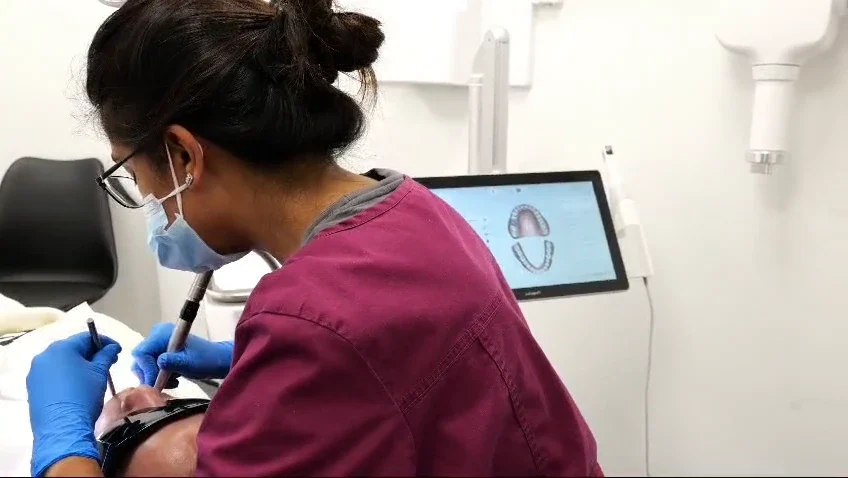
Gum recession can sometimes be treated without active gum disease being present. Exposed roots alone do not establish an infection. The suitable response depends on tissue shape, tooth position, sensitivity and whether the recession is changing.
Comparing non-surgical care and gum grafting
The examination checks gum thickness and firmness, tooth position, any trauma and whether grafting has a useful role. Options can include tailored cleaning advice, cleaning below the gumline where needed, reassessment, specialist gum care, selected soft-tissue surgery or restoration after stability. The limits of covering the exposed root need explaining before treatment.
Recession around one lower canine
For example, a lower canine may have isolated recession and thin surrounding gum, while the gum pockets elsewhere remain shallow.
Why complete root coverage has limits
Thin gum shape or tooth position can contribute to isolated recession despite normal pocket depths. The dentist distinguishes an appearance concern from sensitivity or continuing tissue loss. Complete root coverage with a graft is less predictable when supporting tissue between the teeth has been lost.
Your next step
Areas we serve: Hertfordshire · Bedfordshire · Buckinghamshire · Essex. Our actual clinics are in Hatfield, Cheshunt and Friern Barnet; Bedfordshire, Buckinghamshire and Essex are patient catchment areas, not additional clinic sites.
Deciding which improvement matters to you
Before choosing treatment, clarify the cause, the intended benefit and how much change is realistic.
- Is the recession stable, and does it need treatment for sensitivity, appearance or progressive loss?
- How do cleaning changes, desensitising care, grafting and restoration compare for this site?
- How much root coverage is realistic, and how will the area be monitored?
An individual plan should explain the findings, any uncertainty and the reasonable alternatives. Include the expected healing or maintenance and how a change in recession would be reviewed.
Gum Grafts for Exposed Roots: Aesthetic and Functional Goals
Soft-tissue grafting may thicken tissue or cover selected roots, but complete coverage is not always attainable.
Donor tissue, root coverage and alternatives
Grafting assessment considers support between the teeth, the boundary between attached gum and more mobile tissue, and suitable donor tissue. Compare non-surgical care, any needed gum treatment, selected grafting and later restoration, with expected healing and limits explained.
One possible reason for assessment is an exposed canine root with recurring sensitivity.
A graft may thicken tissue or cover part of a root in selected sites, but recession shape and support between teeth limit the attainable height. Non-surgical desensitising care may also address sensitivity. Donor-site effects and the healing process need discussion before consent.
Receding Gums: Planning Cosmetic Treatment Around Exposed Roots
The height and thickness of gingiva influence aesthetics and durability of restorations close to the root surface.
Alternatives and clinical trade-offs
Before changing crown shapes, distinguish thin tissues, abrasive wear and inflammatory gum disease. Cleaning advice, treatment below the gumline where needed, review and specialist assessment may help establish stability. Selected grafting or restorative treatment can then be compared according to the findings.
For example, someone may notice longer-looking lower incisors and consider composite to hide the exposed roots.
The long appearance may reflect stable recession rather than ongoing destructive gum disease. Roots bond differently from enamel, which complicates extending a veneer over them. A specialist assessment of gum thickness or possible root coverage may help before choosing restorative reshaping.
Gum Recession Before Veneers or Bonding: Planning the Margin
Recession changes visible tooth length, root exposure and the reliability of an adhesive margin; hiding it with oversized restorations may worsen cleaning.
Assessing the tooth before restoring near a root
Planning includes remaining enamel, tooth position, gum symmetry, underlying colour and translucency at the front edges. The dentist checks the bite and whether small additions could meet your aims. Examination and justified imaging answer different questions; a scan alone cannot establish the condition of the tissues.
Distinguish stable thin-tissue recession from active inflammation before choosing observation, whitening, alignment, small composite additions or ceramic. Any extra preparation needs justification. Gum assessment, tooth position and proposed contour changes should be considered together.
Someone considering more even gumlines before an event may have long-looking upper canines. The cause and realistic limits need assessment before a cosmetic change.
A restoration edge on an exposed root has different bonding and cleaning requirements from one kept in enamel. Establish healthy, stable gums first. If recession has changed proportions, orthodontic or specialist soft-tissue assessment may offer a more suitable route than extending ceramic over the root.
Discuss shade changes with normal hydration, excessive bulk, root-surface bonding and any irreversible tooth reduction. Edge chips and the selected material's maintenance also matter when comparing restoration with a tissue-based or non-operative approach.
Research and guidance
- European Federation of Periodontology: treatment guideline — background reading
- NHS: dental treatment information — background reading
Your next step, when you’re ready
We would be pleased to welcome you for a £30 consultation at your preferred Iconic Smiles practice. Bring your questions, and we can talk through the options that may suit you.
Any additional investigations and their fees will be explained before you decide.