
Choosing dental care
How Do You Choose a Natural-Looking White Shade for Porcelain Veneers?
A natural veneer shade involves brightness, translucency, texture and the neighbouring teeth—not selecting the whitest shade tab.
Get answers before you decide
Choosing dental care should feel straightforward. A £30 consultation gives you the opportunity to explain your wishes, ask about our approach and understand your options.
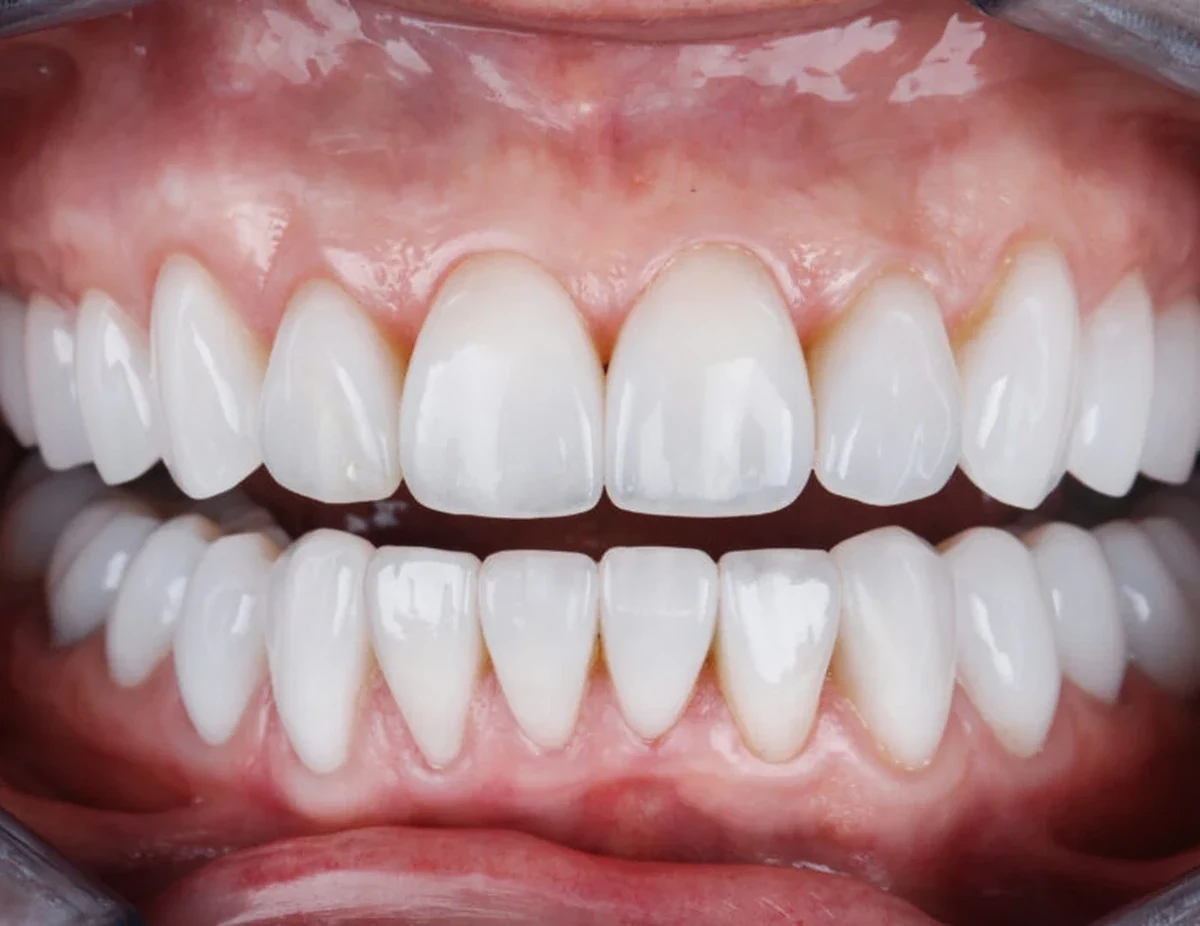
Choose a veneer shade by considering brightness, translucency and texture alongside the colour of nearby teeth. A natural-looking result often includes subtle differences from gum to edge. The shade discussion should establish how bright you want the smile and what the underlying tooth and ceramic can realistically achieve.
Brightness and natural appearance are not opposites
If you want white veneers with natural detail, the conversation needs to cover more than a shade tab. Natural teeth often vary from a warmer gum-side area to a translucent edge, with subtle surface texture. Ceramic can reproduce some of this, depending on its system, the preparation, underlying tooth colour and laboratory work. Discuss whether you value a brighter effect, a close match to other teeth or a more noticeable overall change.
One front veneer is often harder than several
When replacing a single central incisor, the restoration is compared directly with its natural neighbour, which acts as a detailed visual reference. Even small differences in warmth, translucency, tooth length or light reflection become obvious. Designing multiple veneers offers more control over symmetry, but usually involves treatment to more teeth. Adding veneers to otherwise healthy teeth simply to make shade matching easier is not always the most conservative approach. A laboratory may use photographs and precise shade communication to improve the match, while explaining that perfect identity is difficult.
Lighting can change what you see
A veneer that looks attractive under a dental chair light may appear different in daylight, warm household lighting or flash photography. Some dental materials exhibit optical behaviours that differ from enamel, and the underlying tooth can influence final brightness if the ceramic is thin. Evaluating colour under appropriate lighting and obtaining good clinical photographs can improve communication. Patients should avoid making a definitive decision from a highly filtered online photograph alone. Ask whether the planned shade can be reviewed at a try-in or mock-up stage and what changes remain possible before final bonding.
Whiten natural teeth before matching restorations
If a person plans to lighten surrounding natural teeth, it is often sensible to discuss whitening before the final ceramic shade is selected. Porcelain itself will not respond to whitening gel the way natural teeth do, and a mismatch may develop if whitening is done afterwards. NHS advice highlights that restorations do not bleach like tooth tissues. The clinician can advise an appropriate interval before colour matching, taking sensitivity, gum health and the chosen whitening approach into account. Bleaching is not suitable for every patient and should never be prescribed purely to make veneers look better.
Shape, gum level and lips change perception
Two veneers of the same colour can look surprisingly different if one has a flatter surface, shorter biting edge or more prominent gum contour. Tooth width-to-length proportion, incisal edge position and the way light travels across the face all influence perceived whiteness. A trial smile or temporary restoration may help the patient judge whether the design feels comfortable when speaking or smiling. People with extensive dark underlying stains may need a different ceramic design from someone with naturally light enamel. Colour cannot be planned separately from the whole restorative result.
How to make the decision confidently
Describe how subtle or bright you want the result and what you like about your natural teeth. Real, unfiltered examples of the clinician's work, where patient consent allows, can support the discussion alongside an explanation of the proposed ceramic. Include enamel preparation, repair limits and cleaning in the colour plan. That helps you choose a result you can maintain, with expectations based on your own teeth rather than a generic celebrity shade.
Document the shade agreement
Record the agreed brightness, limits imposed by the underlying tooth and the stage when you can assess a mock-up or try-in. This helps communication with a laboratory working away from the practice. Preparation and long-term maintenance belong in the same discussion: you may prefer a small colour compromise to irreversible treatment on additional healthy teeth. The decision should reflect the result and commitments that matter to you.
Sources and professional guidance
Applying the information:
Your next step, when you’re ready
We would be pleased to welcome you for a £30 consultation at your preferred Iconic Smiles practice. Bring your questions, and we can talk through the options that may suit you.
Any additional investigations and their fees will be explained before you decide.