
Bonding, veneers and whitening
Four, six or eight porcelain veneers: how many teeth might you need, and what would they cost?
The right number of veneers depends on which teeth you show, how the untreated teeth will blend and what can be achieved without unnecessary preparation. A bigger smile makeover is not always a better one
Discover what could suit your smile
Whether you are thinking about colour, shape or a subtle change, a £30 consultation is a welcoming place to share your ideas, ask questions and explore a personalised approach.
Please confirm the £30 planned-treatment consultation fee when booking. Scans, additional investigations and emergency assessments may have separate fees.
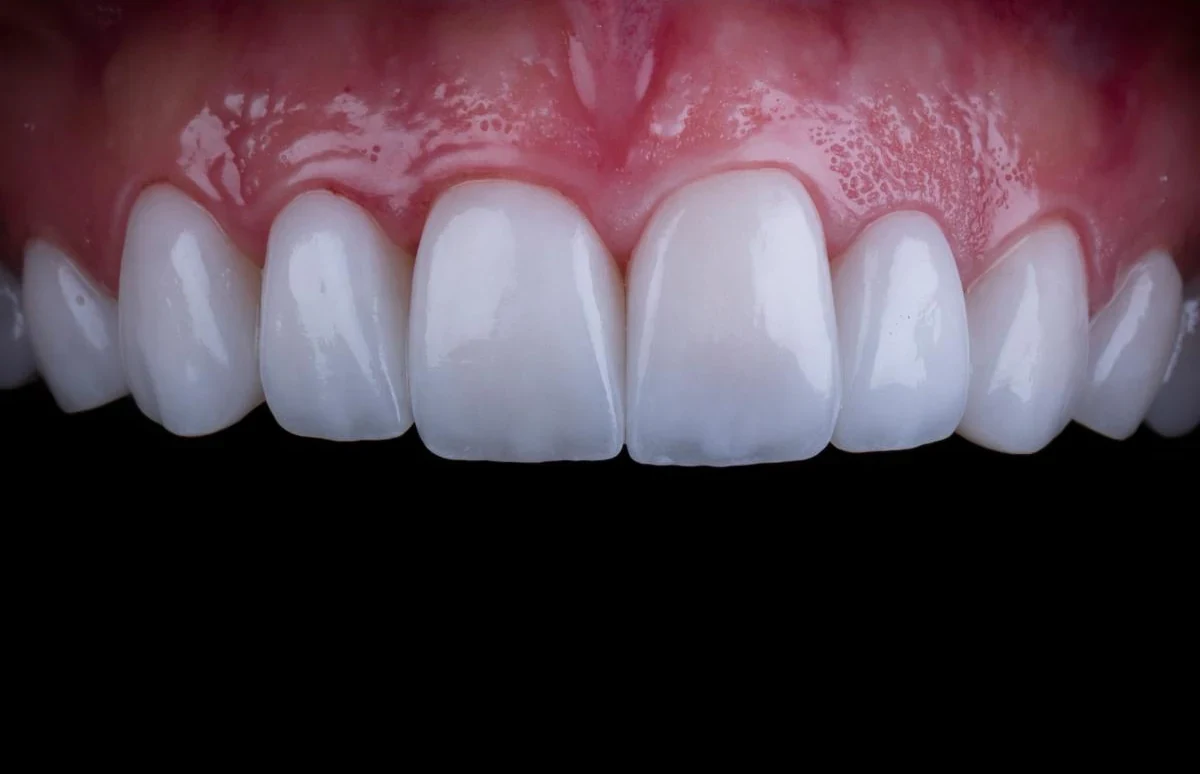
The short answer: The right number of veneers depends on which teeth you show, how the untreated teeth will blend and what can be achieved without unnecessary preparation. A bigger smile makeover is not always a better one.
You may have found yourself counting teeth in somebody else's smile and wondering whether four veneers would make the change you want, or whether a wider smile means committing to eight. It is an understandable place to start. Porcelain veneers are individually made restorations, and the number involved has a substantial effect on the fee.
Yet the count itself tells us surprisingly little about whether veneers are right for you. A well-considered result starts with the shape, colour and position of your natural teeth, how your upper and lower teeth meet and what you actually want to look different. Sometimes six veneers are an appropriate way to create a consistent smile. Sometimes the most respectful treatment is one veneer — or none at all.
What do four, six or eight veneers cost at Iconic Smiles?
The published Iconic Smiles fee schedule lists crowns and veneers from £650 per tooth. At that entry price, the arithmetic would be:
| Number of veneers | Illustrative minimum at £650 per tooth |
|---|---|
| 4 | From £2,600 |
| 6 | From £3,900 |
| 8 | From £5,200 |
These calculations are not package prices or final quotations. Porcelain material, laboratory design, preparation complexity, temporary restorations, additional records and the health of the supporting teeth may all influence the actual cost. Other treatments — such as whitening, gum care or orthodontics — may be advised and priced separately.
A useful written quotation identifies the teeth by number, explains why veneers are proposed for each one, names the material where relevant and states what is included in preparation, laboratory work, fitting and any follow-up.
Why would somebody choose four veneers?
Four upper veneers normally involve the two central incisors and the two lateral incisors. They can make sense when those four teeth are the main source of concern and blend naturally with the untreated canines on either side.
Perhaps the four front teeth have worn edges or mismatched old restorations. Porcelain may be considered where composite additions would not achieve the desired appearance or where there is a reasonable restorative indication. But if healthy teeth are simply a little uneven, it is worth discussing bonding or orthodontic alignment first.
Four veneers are less likely to give a harmonious result if your canines are visibly much darker or if the change in width between veneered and unveneered teeth would catch the eye. Your dentist should show you the intended transition, not just a close-up photograph of the four front teeth.
When does six make more sense than four?
Including the canines gives more control over the transition towards the corners of the smile. Their colour and contour influence how the front teeth look together. A six-tooth design can be appropriate where the original tooth shapes or colours are inconsistent across that area.
The important caution is that canines are not simply decorative. Their position and shape help guide the teeth during certain jaw movements. A veneer placed there needs to respect how the teeth meet. Your clinician should assess the bite rather than design six identical-looking, flat-edged teeth.
A natural result often includes gentle variation. The central incisors may have more prominence, the lateral incisors slightly different proportions and the canines a shape that suits their function.
When might eight veneers be appropriate?
Some people show their premolars clearly when they laugh or smile broadly. If the intended change is significant and stops abruptly at the canines, the difference in shade or surface texture could be noticeable. Planning eight teeth can help achieve a consistent appearance across a wider visible smile.
However, a wide smile does not by itself justify restoring eight healthy teeth. Whitening the natural teeth first may allow fewer veneers. In other cases, carefully matched composite may be enough on selected teeth. Good planning works backwards from a balanced appearance and the least intervention that can reasonably achieve it.
Ask to see photographs taken from the front and at an angle while smiling naturally. A close-up image with the lips pulled away can be useful clinically, but it should not be the only basis for the decision.
What can veneers change — and what can't they?
A veneer is a thin covering bonded to the front of a tooth. It can improve colour, proportion, surface form and some minor irregularities of appearance. It does not move the tooth root into a different position, cure gum disease or correct a substantial bite problem.
If a tooth is significantly rotated or positioned too far forward, making it appear straight with porcelain alone may require more tooth preparation than you would like. In those circumstances, orthodontic treatment before veneers may help preserve enamel and allow a less bulky restoration. Teeth that are heavily damaged may need a different type of restoration, while some teeth require no treatment at all.
There is value in asking your dentist to separate the changes that are essential to health or function from those you would simply prefer aesthetically.
How much natural tooth will be removed?
There is no single preparation depth that applies to every veneer. Some cases can be largely additive, with minimal preparation; others require removal of enamel or existing restorative material to create space and an appropriate shape. Veneer preparation is generally an irreversible decision, and future maintenance or replacement may be needed.
If someone offers 'no-prep veneers' as a promise before examining you, ask how they know the result will not feel thick or interfere with your bite. A preparation-free approach may be appropriate for selected teeth, but it is not a universal advantage if it compromises the final contour.
The dentist should explain the proposed preparation in terms you can picture: where material would be removed, why it is necessary and whether alternatives can achieve your goals more conservatively.
The colour decision is more subtle than choosing the whitest shade
Natural-looking porcelain is rarely a single block of white. Real teeth transmit and reflect light differently near the gumline and the biting edge. Their surface has fine texture, and neighbouring teeth are not perfectly identical.
The clinician and dental laboratory may consider photographs, shade records, translucency, the colour of the tooth underneath and how the porcelain will look in natural light. An old dark crown next to the veneers can make matching more involved. Very bright shades can look attractive to some people, but they should be chosen knowingly, with an appreciation of how they will sit against your skin tone and untreated teeth.
If you may want a lighter overall smile, ask about whitening before choosing a porcelain shade. Porcelain does not whiten afterwards, so doing things in the wrong order can be frustrating.
What happens before the veneers are made?
A careful assessment should consider the health of the teeth and gums, bite contacts, old fillings, photographs and impressions or digital scans. Where useful, a trial smile or mock-up can show the proposed proportions before irreversible treatment. It may also reveal that the result would look more natural with fewer veneers, or that the teeth would benefit from straightening first.
Temporary veneers are sometimes needed after preparation, depending on the case. Ask how they will look, how to care for them and what happens if one comes loose. You should also understand whether you can request adjustments to the proposed appearance before final fitting, within the technical limits of the process.
The laboratory work is not just a manufacturing stage. It translates the agreed design into surfaces and contours intended to work in your mouth. Ask how the dentist communicates the design and shade information to the technician.
How long do porcelain veneers last?
Veneers can serve for many years, but there is no guaranteed lifespan. Their future depends on the strength and condition of the underlying teeth, bonding, bite forces, oral hygiene, habits and accidents. Veneers can chip, fracture, become loose or require replacement if the tooth beneath changes.
If you clench or grind, an assessment of the bite and a protective nightguard may be appropriate. The dentist should explain maintenance and the possible future cost of replacing several veneers. This matters particularly when comparing a six- or eight-tooth plan with a smaller approach.
Is it better to choose bonding instead?
Bonding is often more conservative when only small amounts of shape need adding. It is generally repairable and has a lower advertised entry price per tooth at Iconic Smiles. It can also stain, wear or chip and may need more frequent maintenance. Porcelain may be advantageous where the planned appearance, material characteristics and clinical conditions make it suitable, but it should not be sold as the only route to a beautiful smile.
For some patients, the most sensible plan combines professional whitening with bonding on selected teeth. For others, alignment first and fewer veneers afterwards offers a better long-term balance. The consultation should give you a reason for the recommendation beyond 'porcelain is premium'.
What should a veneer quotation include?
You should leave with a clear understanding of the number and location of veneers, the expected degree of tooth preparation, the proposed shade and material, the number of appointments, any provisional stage, what the price includes and what aftercare may cost. If the plan includes whitening, gum treatment or replacement of an old crown, these should be shown as separate items.
You are entitled to think about the proposal before proceeding. A well-designed smile does not become less appropriate because you have taken time to understand it.
Iconic Smiles offers a £30 planned-treatment consultation as a starting conversation about your options, subject to confirmation when booking and with any further investigations explained separately. You can use that appointment to explore whether your smile calls for four veneers, six, eight — or a more conservative solution.
Common questions
Can veneers go only on the top teeth? Yes, but the overall colour balance and the way your teeth meet must be considered. The lower teeth may not need veneers at all.
Will eight veneers always look more natural than four? No. Natural appearance depends on design, matching and restraint, not the number of restorations.
Could I choose veneers for discoloured teeth instead of whitening? Sometimes, particularly where discolouration cannot be managed conservatively, but the diagnosis and alternatives matter. Healthy teeth should not be prepared automatically for a colour change.
Can I see the intended result before committing? In many cases photographs, digital planning and mock-ups can help communicate a proposal. They are planning aids rather than guarantees of the finished appearance.
Before choosing a veneer number
Take the time to compare your own smile photographs with a trial design, rather than choosing a tooth count first. You can explore porcelain veneers or see real examples of treatment before deciding whether a consultation would be useful.
Independent patient information: NHS: what dental veneers involve · British Orthodontic Society: alternatives to restorative masking. These explain general clinical considerations; a personal recommendation requires assessment.
Your next step, when you’re ready
We would be pleased to welcome you for a £30 consultation at your preferred Iconic Smiles practice. Bring your questions, and we can talk through the options that may suit you.
Please confirm the £30 planned-treatment consultation fee when booking. Scans, additional investigations and emergency assessments may have separate fees.