
Bonding, veneers and whitening
How Dentists and Dental Laboratories Match a Natural Tooth Shade
Patients can assume that a dentist chooses a tooth shade from a plastic card and the laboratory makes a crown in exactly that colour.
Discover what could suit your smile
Whether you are thinking about colour, shape or a subtle change, a £30 consultation is a welcoming place to share your ideas, ask questions and explore a personalised approach.
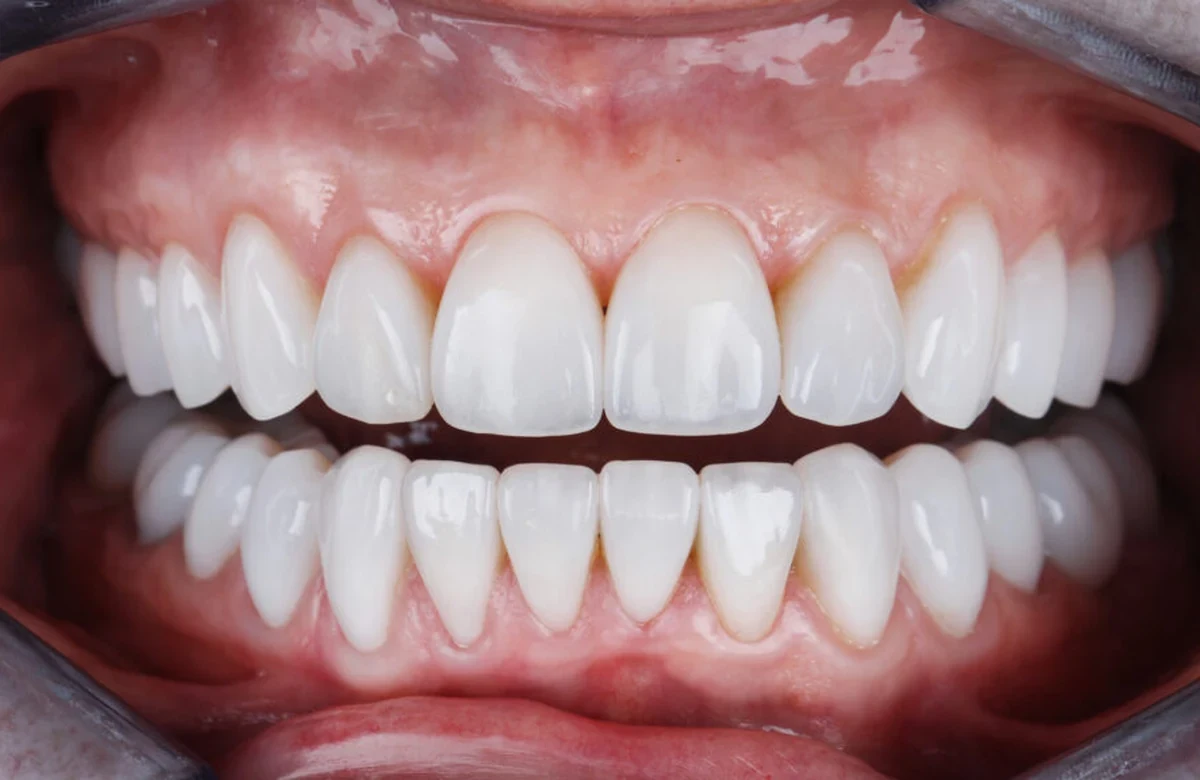
Dentists and technicians match a natural tooth using records of colour, translucency, shape and texture, rather than a shade card alone. This is especially important for one visible front crown. The colour can vary from the gumline to the edge, and the information shared with the laboratory can matter as much as the choice of ceramic.
Shade assessment begins with the neighbouring teeth
A tooth is not a uniform block of colour. The neck may appear warmer or more saturated; the incisal edge may be more translucent, sometimes with subtle blue-grey effects. The dentist examines the whole smile and checks which neighbouring tooth offers the best reference. Standardised photographs with shade tabs may help record variations. The patient's expectations about whitening must be settled before the final shade is selected, because whitening natural teeth after crown fitting changes the comparison.
Why lighting conditions matter
Dental surgery lights, daylight and warm household bulbs have different colour characteristics. Automatic phone white balance can also distort photographs. Clinicians may use controlled colour conditions or cross-polarised images to record internal shade information more reliably. The goal is not to eliminate every optical difference but to reduce avoidable errors. The patient should eventually judge the restoration under ordinary lighting as well as in the treatment chair.
Tooth dehydration can mislead
Teeth can look temporarily lighter when kept dry during treatment. A shade chosen at the end of a long appointment may therefore differ from the normally hydrated tooth seen at the start. The dentist may record the shade early and allow time for reassessment when a close single-tooth match matters. The laboratory also needs the colour of the prepared tooth beneath the crown.
Contour affects what looks like colour
Two crowns made in the same ceramic shade can look different because their surface angles reflect light differently. Broad, flat front surfaces tend to create a different highlight pattern from subtle line angles and natural texture. Tooth width, contact position and incisal length influence the appearance of symmetry. Aesthetic planning should therefore involve shape and texture as well as shade selection.
When a technician's input is useful
For a highly visible central incisor, a shade visit with the technician or extra photographs may help record fine details. The team can discuss masking, internal colour and layering for the chosen ceramic. Cement colour, restoration thickness and the underlying tooth also influence the result. Where appropriate, a trial helps assess the proposed appearance before final fitting.
How patients can participate constructively
Bring a description of what looks wrong with the current tooth: too bright, too grey, too flat or the wrong edge shape. Avoid relying on filters or heavily edited reference photographs. Ask whether whitening is needed first and how the final crown will be compared with neighbouring teeth before bonding. An excellent single-tooth result comes from accurate information, realistic expectations and careful laboratory collaboration rather than an extraordinary shade number.
A useful shade-record checklist for a single crown
For a single upper central crown, useful records include photographs with shade references while neighbouring teeth are normally hydrated. After preparation, the underlying tooth shade helps the laboratory choose ceramic thickness and opacity. A facial view shows tooth length and its relationship with the lips; a close-up records texture and edge translucency. Any intended whitening of neighbouring teeth needs to be agreed before the final shade. At trial fitting, shape, contacts and colour are considered together, with ordinary lighting used where possible. These records reduce avoidable surprises, although no match can be guaranteed under every light source.
Your next step, when you’re ready
We would be pleased to welcome you for a £30 consultation at your preferred Iconic Smiles practice. Bring your questions, and we can talk through the options that may suit you.
Any additional investigations and their fees will be explained before you decide.