
Bonding, veneers and whitening
Replacing an Old Front Crown for a More Natural Smile
An old front crown may be mechanically sound but look too opaque, too long or noticeably different from neighbouring teeth.
Discover what could suit your smile
Whether you are thinking about colour, shape or a subtle change, a £30 consultation is a welcoming place to share your ideas, ask questions and explore a personalised approach.
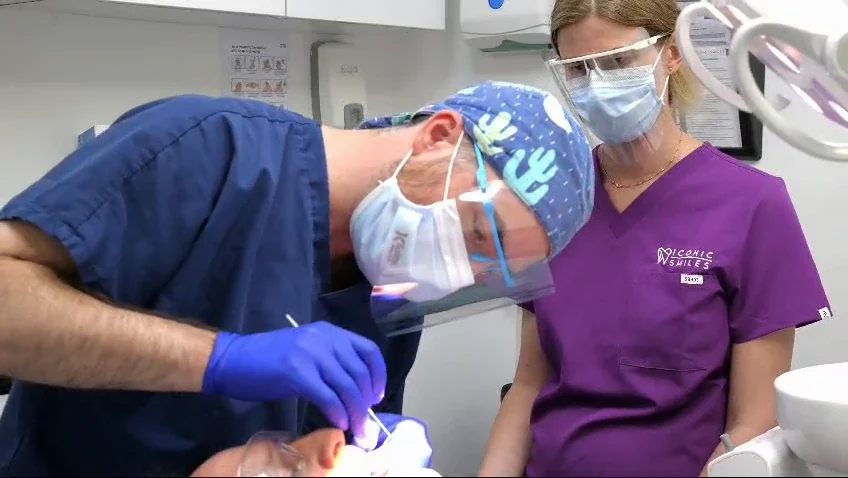
Replacing an old front crown may improve its appearance, but first establish whether the issue is colour, the underlying tooth, gum position or shape. An intact crown can still look too opaque, long or unlike its neighbours. New ceramic and laboratory techniques may help, yet removal is an irreversible procedure on an already prepared tooth. Its expected benefit needs to justify that intervention.
Examine the supporting tooth first
The dentist checks the crown margins, gum health, bite, adjacent contacts and whether radiographs are needed to assess the root and existing restorations. A tooth with a large core, post or past root treatment has different structural risks from a lightly prepared vital tooth. Removing an old crown may reveal cracks, decay or insufficient remaining tooth structure. Those possibilities need discussing in advance, not after the patient has committed to a purely cosmetic replacement.
Colour is not one number
A natural match needs the right brightness, colour intensity, translucency and fine detail. Photographs and a detailed laboratory prescription help reproduce the neighbouring tooth. Underlying darkness, strength needs and available thickness influence the ceramic choice. A very translucent crown may reveal the core shade, while too much opacity can look flat.
The gingival margin can dominate the result
If recession has exposed a dark margin or the crown edge is positioned poorly, simply selecting a whiter ceramic will not resolve the contour problem. The clinician may discuss gum health assessment, adjustments to shape or a different restorative margin according to the diagnosis. Tissue levels can change after inflammation is treated, so definitive aesthetics may need staged planning. A single crown's relationship to the other incisor is particularly unforgiving in a high smile line.
What a provisional can test
A temporary crown may allow evaluation of length, speech, lip contact and the bite before the final ceramic is bonded or cemented. It also protects the prepared tooth between visits. Patients should know the provisional is not meant to have the same longevity or final optical quality as the definitive restoration. Laboratory handover includes the intended shade, tooth axis, surface character and contact relationships.
Is replacement necessary?
If the crown is healthy and the complaint is small, monitoring or modifying surrounding cosmetic expectations may be reasonable. If there is decay, poor fit or a major aesthetic mismatch, replacement may be justified. Ask what tooth structure remains, which risks removal creates and how the new restoration will be maintained. The goal is an appropriate result for the tooth rather than a more expensive ceramic label.
Replacing one front crown after neighbouring teeth have changed
An intact central crown made years earlier may look opaque after the natural teeth are whitened. Matching it involves enamel's light transmission, ceramic thickness, the core and underlying colour. Before removal, assess the existing edge, remaining structure and any risk to a core or post. Allow the whitening shade to settle before selecting the replacement shade.
A temporary can test length, gum contour, speech and lip support while the laboratory develops the design. If the neighbouring front tooth has worn, copying the old crown exactly may not create the desired balance. Photographs in natural light and clear laboratory instructions help. Establish what happens if removal damages the core, how the gumline will be assessed and what shade differences may remain. An identical match under every light cannot be guaranteed.
Record the old crown before removal
An older front crown provides information about what the patient likes or dislikes in length, shade and lip support. Photographs and a scan before removal help communicate the target to the laboratory. The dentist also needs to anticipate the stump shade and remaining tooth structure once the old restoration is removed. A provisional crown is an opportunity to evaluate shape and speech, not simply a cover while the laboratory works.
Your next step, when you’re ready
We would be pleased to welcome you for a £30 consultation at your preferred Iconic Smiles practice. Bring your questions, and we can talk through the options that may suit you.
Any additional investigations and their fees will be explained before you decide.