
Bonding, veneers and whitening
How Thin Are Veneers? Enamel Preservation Explained
'Ultra-thin veneers' sounds like a promise that a smile can change without significant alteration of the natural teeth.
Discover what could suit your smile
Whether you are thinking about colour, shape or a subtle change, a £30 consultation is a welcoming place to share your ideas, ask questions and explore a personalised approach.
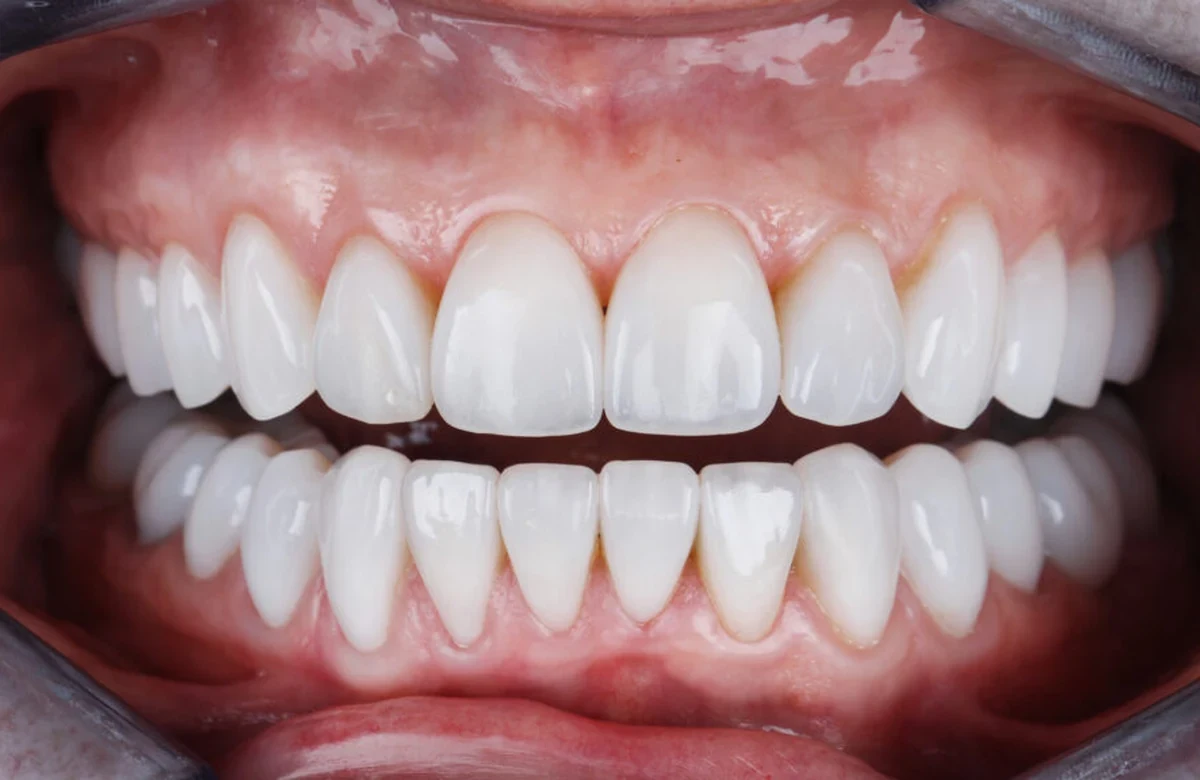
The appropriate veneer thickness depends on the tooth, material and intended shape, with minimal preparation possible in selected cases. Thin ceramic still adds volume. On a prominent tooth it may look bulky without suitable preparation, while a small or set-back tooth may allow a more additive design. Planning the final contour, gum margin and bite helps preserve enamel without judging treatment by thickness alone.
Work backwards from the final smile
The dentist should first establish the intended tooth width, visible length, edge position and smile arc. These dimensions can be explored through photographs, digital planning and a diagnostic mock-up before definitive preparation. If teeth are set back or unusually small, adding ceramic may create the desired volume with little reduction. If teeth already protrude, overlap or are rotated, an additive veneer may exaggerate the position. Alignment first can sometimes provide a better foundation with less preparation than attempting to disguise tooth position using ceramic alone.
Why enamel is such a valuable bonding surface
Enamel is generally a more predictable surface for adhesive bonding than a large area of exposed dentine. Reviews of ceramic veneers report differences in survival and complications according to the underlying surface, although study designs and follow-up vary. Preserving sound enamel can reduce tissue loss and support later care. This does not rule out bonding to dentine; the extent and reason for exposing it need explanation.
Ceramic still needs physical space
Ceramic needs room for shape, strength and the way it handles light. The required amount depends on the material, underlying colour, edge design and any masking needed. Very thin ceramic may show a dark tooth through it; stronger masking can reduce natural translucency. Contacts and texture also need space. Too little preparation in one area may create bulky margins, while too much removes healthy tissue unnecessarily. The aim is selective reduction guided by the planned restoration.
The gumline makes an overbuilt veneer obvious
The transition between natural tooth, ceramic and gum should be cleanable and harmonious. An over-contoured margin can make flossing harder or appear to rise abruptly from the tooth surface. Gum inflammation must be stabilised before shade, contours and margins are finalised. Where gum levels are uneven, the team should assess whether orthodontic movement, periodontal correction or simply retaining natural asymmetry is preferable. Automatically extending veneers to hide every gum difference risks treating anatomy as a cosmetic error instead of understanding its cause.
What is involved in preparation and try-in?
A conservative workflow may use a mock-up as a reference so the dentist removes material only where the planned restoration needs room. Impressions or optical scans record the preparation, and laboratory work develops colour and anatomy. At a suitable try-in, the appearance should be assessed for shape, proportion, edge translucency and harmony with neighbouring teeth. Some adjustments are possible before bonding; major changes may require laboratory revision. A discussion of future replacement is also essential, because veneers are restorations with maintenance needs rather than permanent changes that never require attention.
Choose the design, not the thickness slogan
Before preparation, understand why each tooth needs reduction, how much healthy tissue would remain and whether alignment or bonding could provide part of the result. If one tooth is the concern, one suitable restoration may be enough. Compare the design, likely durability and maintenance as well as the amount of preparation.
One veneer may need a different design from another
It is perfectly reasonable for adjacent teeth to require different preparation depths if their original positions and anatomy differ. A plan that assigns the same cut or the same ceramic thickness to every tooth without considering the intended smile can destroy enamel unnecessarily. Tooth-by-tooth justification is more important than a uniform marketing label.
Evidence and further reading
Planning thickness tooth by tooth
The proposed veneer needs room for the intended shape and shade. Compare that design with the original tooth position so the reason for any preparation is clear for each tooth.
Iconic Smiles practices are in Hatfield and Cheshunt in Hertfordshire, and Friern Barnet in North London. If travelling from Bedfordshire, Buckinghamshire or Essex, confirm the actual practice for each appointment.
Your next step, when you’re ready
We would be pleased to welcome you for a £30 consultation at your preferred Iconic Smiles practice. Bring your questions, and we can talk through the options that may suit you.
Any additional investigations and their fees will be explained before you decide.