
Bonding, veneers and whitening
Veneer Try-In Pastes: Why the Final Colour Is Not Just the Ceramic Shade
Patients selecting ceramic veneers often focus on the shade of the porcelain, expecting the laboratory's chosen colour code to determine the final result.
Discover what could suit your smile
Whether you are thinking about colour, shape or a subtle change, a £30 consultation is a welcoming place to share your ideas, ask questions and explore a personalised approach.
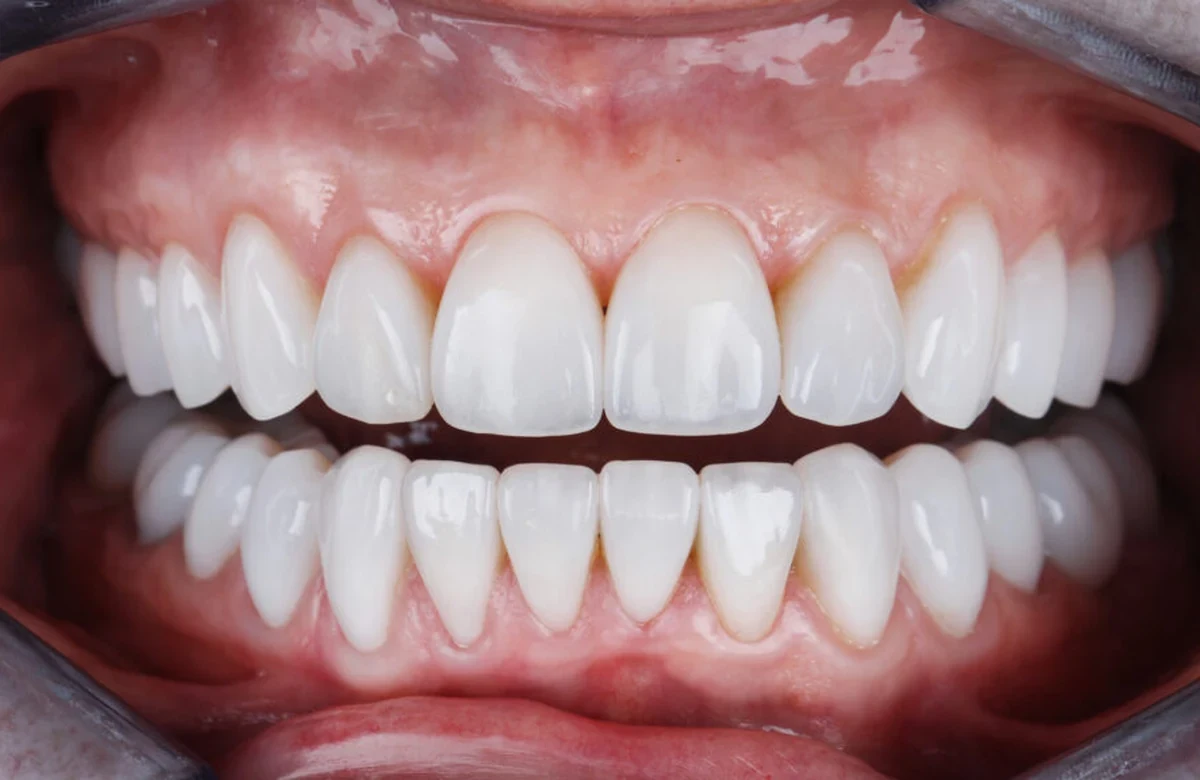
A veneer try-in paste helps you and the dentist assess the combined appearance of ceramic, tooth and intended bonding cement before permanent attachment. This is especially useful for translucent veneers or different underlying tooth colours. The ceramic shade code alone cannot describe the result, and the trial remains an approximation.
The prepared tooth is part of the visible colour
Enamel, dentine, an old composite restoration and a dark root-treated tooth can provide different backgrounds for a thin ceramic shell. A highly translucent veneer may reveal some of this underlying colour, whereas a more opaque ceramic can hide it at the expense of visual depth. If neighbouring teeth have different stump shades, two apparently identical veneers may not look identical after bonding. The dentist should record the background shade and communicate it to the laboratory, rather than expecting the ceramic alone to conceal every difference.
What a try-in paste is intended to show
The temporary paste is intended to approximate the optical effect of a particular bonding cement on the prepared tooth. It does not behave exactly like the final set adhesive in every situation. The clinician still checks fit, margins, shape and colour under suitable light. A paste cannot correct unsuitable ceramic thickness or preparation, so those findings need addressing before bonding.
Why photographs under several conditions help
A veneer can appear different under surgery lighting, daylight and a smartphone camera. Fluorescence, translucency and surface reflection affect the impression of brightness and naturalness. Photographs can help the patient identify whether the restoration looks too opaque, too grey or simply different in shape from the neighbouring teeth. The technician may need information about the light source and photography setup to interpret the images sensibly. Shade selection should not be based on one edited image or a phone-screen filter presented as a guaranteed preview of the final smile.
The choice of cement involves more than colour
A resin cement must be compatible with the ceramic, prepared tooth, bonding strategy and expected curing conditions. Different shades or opacity levels can influence the appearance of thin ceramics, but chemical and mechanical suitability remain essential. The dental team also needs to control moisture, remove excess cement near the gums and deliver an appropriate cure. A patient need not choose a cement code, but should understand why the fitting appointment involves deliberate steps. Selecting the brightest paste is not equivalent to selecting the most natural or reliable restoration.
Trial appearance should include the entire smile
A single veneer might be excellent in isolation yet distract from the rest of the dentition. The clinician should compare tooth width, incisal edges, midline, gum levels and neighbouring ceramic or composite restorations. When several veneers are being fitted, the apparent symmetry and gradient across the arch can change the colour impression. A proposed smile that is too uniform may look less natural than one with subtle differences in translucency. The try-in conversation should therefore cover proportions and surface texture, not just the shade number.
What happens if the try-in is not right?
Before the trial, understand which adjustments can be made, when laboratory revision or remaking would be needed and how these stages are arranged. Changing shade after permanent bonding is more difficult than choosing another paste. Heavy grinding at fitting can also alter ceramic thickness and finish. A clear plan includes temporary work and agreed appearance changes so you can make the decision before attachment.
References and further reading
Book an assessment
The practices are in Hatfield and Cheshunt in Hertfordshire, and Friern Barnet in North London. For travel from Bedfordshire, Buckinghamshire or Essex, confirm the actual practice and any sites involved in later stages.
Editorially updated: 27 October 2026.
Your next step, when you’re ready
We would be pleased to welcome you for a £30 consultation at your preferred Iconic Smiles practice. Bring your questions, and we can talk through the options that may suit you.
Any additional investigations and their fees will be explained before you decide.