
Bonding, veneers and whitening
Veneers, bonding and speech: planning around pronunciation
Understand how tooth length, thickness and position can affect speech, and what to discuss before veneers or bonding if pronunciation matters to you.
Discover what could suit your smile
Whether you are thinking about colour, shape or a subtle change, a £30 consultation is a welcoming place to share your ideas, ask questions and explore a personalised approach.
£30 for a planned-treatment consultation. Scans, additional investigations and emergency assessments may have separate fees; please confirm when booking.
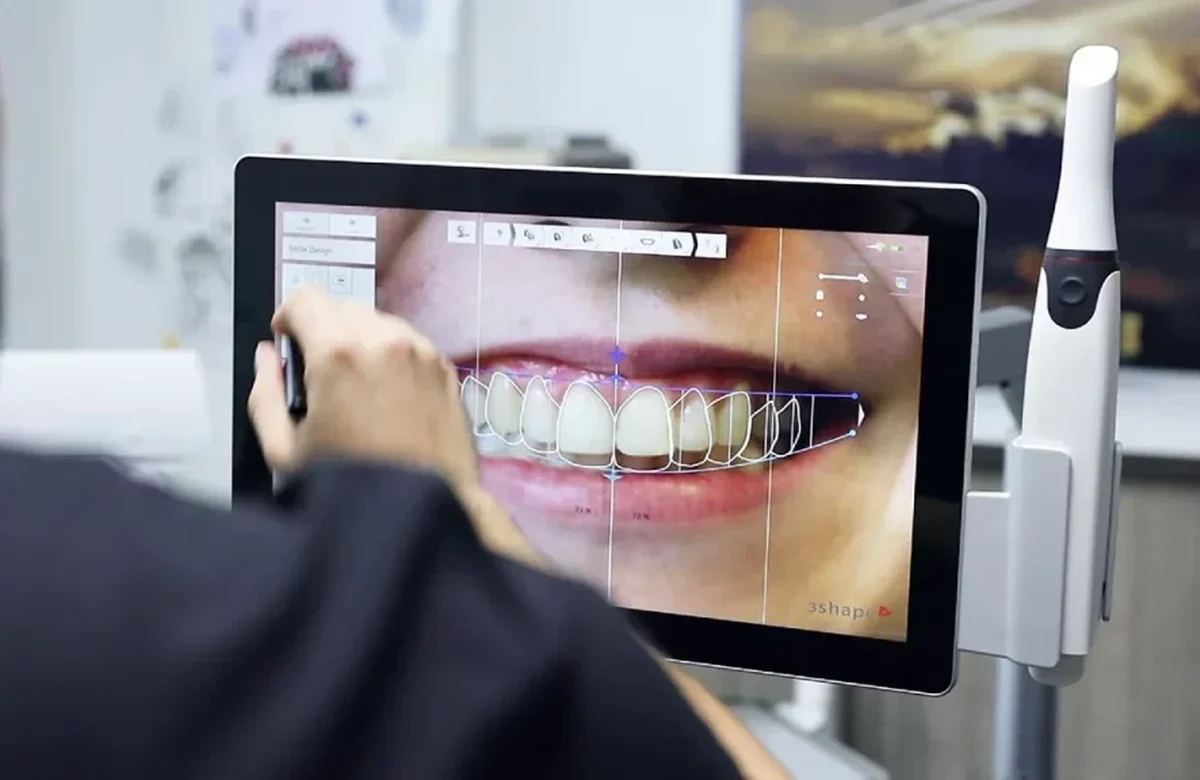
If you teach, sing, deliver presentations or spend the day talking to people, the thought of changing your front teeth may bring an unexpected concern: will you still sound like yourself? Cosmetic consultations often concentrate on photographs, yet the position and shape of the front teeth can affect the way the tongue and lips produce certain sounds.
Most people seeking minor cosmetic additions will not have a dramatic speech problem. But changes to the length, thickness or position of front teeth can feel unfamiliar, particularly when several teeth are altered at once. The reassuring answer is not to promise that speech will be completely unchanged; it is to plan the restorations with speech in mind and understand what should happen if something feels wrong.
Your teeth are part of the way you pronounce words
Speech is produced by coordinated movements of the tongue, lips, teeth, jaw and airflow. The upper incisors provide a contact or reference point for certain sounds. The relationship between upper and lower front teeth also helps create the narrow air channel used in sounds such as s and z.
The f and v sounds involve contact between the lower lip and upper front teeth. If the upper edges become much longer or are positioned differently, that contact can feel altered. Other speech sounds depend more heavily on tongue placement and the space behind the front teeth.
Studies of incisor positions during English consonant sounds show that the jaw occupies different positions for different sounds. [1] Prosthodontic literature also identifies phonetics, appearance and bite as complementary considerations when positioning the front tooth edges. [2] These findings do not mean every veneer changes speech. They explain why shape should not be decided from a still photograph alone.
The three changes most worth discussing
Length. Making front teeth longer can affect the point at which the lower lip meets the upper edges and may influence the space between the upper and lower incisors during speech. A change that looks proportionate when smiling needs to be checked during ordinary conversation.
Thickness. A bulky addition behind or near the front teeth may alter the space available for the tongue, especially if palatal or lingual surfaces are involved. Cosmetic bonding placed only on the outward face does not necessarily have this effect, but the overall contour must be considered.
Position. Tooth angulation and the amount a tooth projects forward matter. In a very large cosmetic change, extending restorations to compensate for teeth that would be more appropriately repositioned with orthodontics can create both an unnatural profile and a speech adjustment challenge.
The effect of any one change depends on the individual's anatomy and habits. There is no single safe measurement that applies to every patient.
What might feel different immediately afterwards?
Some people describe a new sensation rather than a true problem pronouncing words: their tongue notices a smoother edge, a fuller surface or a slightly different contact. When they have had several restorations, the mouth may initially feel less familiar. That does not automatically mean the treatment is poorly made.
In other cases, a restoration may genuinely interfere with a sound or with comfortable bite movements. A persistent whistle, an inability to produce a familiar sound, a lisp that does not improve or repeated contact in an awkward place should be brought to the dentist's attention rather than ignored.
It is important to distinguish a reasonable adaptation period from an avoidable design issue. No article can tell you how long your individual adjustment should take, and you should not be given a fixed deadline before your symptoms have been assessed. If the speech change is significant or persists, the clinician should examine the contours, contacts and bite rather than reassuring you indefinitely.
Why the bite matters as well as speech
Teeth are not separate decorative tiles. When you close your mouth, chew or move your jaw forward and sideways, the front teeth can guide movement. New veneers or bonding must fit into those relationships. An incisal edge that looks attractive but catches heavily during movement may be uncomfortable or place unnecessary stress on the restoration.
People with severe wear, clenching habits or restricted space for added material may need a more involved assessment. Occasionally the most conservative-looking external change requires a complex functional plan. This is one reason a dentist might propose orthodontic alignment before bonding rather than simply building out several teeth.
Ask where the upper and lower front teeth will contact once treatment is complete. It is reasonable to request that speech and bite be assessed before final acceptance, especially when your occupation depends on speaking.
Does composite bonding carry a different speech risk from porcelain?
The material name alone tells you relatively little. A very small composite repair on a chipped corner may have negligible effect. A thick composite build-up across several surfaces can be more noticeable. A ceramic veneer may be thin and carefully contoured, while another veneer might need more substantial shape change.
The decisive factors are the final form, the position and the amount of alteration, not simply whether the restoration was made directly or in a laboratory. The material also affects what adjustments are possible. Composite can often be altered or polished in the mouth. Ceramic can be adjusted within limits, but significant changes may affect the finish, strength or overall design and sometimes require remaking.
This makes planning particularly valuable for ceramics. A trial or provisional stage may help reveal whether the anticipated contours feel acceptable before definitive work is completed.
A simple speech check before treatment
Your normal speaking pattern is the best baseline. If you are concerned, tell the dentist so they can record or observe ordinary speech. You might read a short passage containing several s, z, f and v sounds, then repeat it during a trial smile or following provisionals where applicable. The point is not to conduct a formal speech-language assessment; it is to identify a change that matters to you.
Use familiar words and sentences. A prepared tongue-twister may exaggerate small differences that are not apparent in real life. If you have a professional speaking role, try a paragraph you actually deliver in your work. Notice not only the sound but whether your tongue or lip has to move awkwardly to produce it.
You may also find it useful to speak at a normal pace rather than concentrating on each word. A restoration that only 'works' if you speak unnaturally slowly deserves a discussion before the plan is finalised.
What can a mock-up tell you — and what can it not?
A trial smile is often a useful communication tool for the visible shape of restorations. Depending on how it is made, it may also provide a rough sense of how altered front tooth edges feel. But temporary material can be thicker, less polished or different in contour from the finished restorations. It is not a definitive prediction of phonetic comfort.
A longer provisional stage may provide more information in complex restorative cases, especially if significant tooth length or bite changes are proposed. However, not every small bonding procedure requires provisional work, and every case is different.
Ask whether your treatment can be adjusted based on what you notice during the trial. If a design cannot be altered without irreversible steps, understand those limitations beforehand. The Care Quality Commission's consent guidance emphasises the patient's right to understand risks and alternatives and to make voluntary decisions. [3]
When should you contact the dentist after treatment?
Contact the practice if you have a noticeable, persistent change in how you pronounce words, a restoration that catches the tongue, an uncomfortable bite or a sensation that one front tooth is hitting before the others. Report accidental biting of the lip, persistent soreness or difficulty chewing as well.
Do not try to file, sand or reshape a new restoration yourself. Small contour differences can be significant in a bite, and an uninformed adjustment may harm the restoration or underlying tooth. Your clinician needs to examine what is happening before recommending polishing, modification or further review.
Speech concerns should not be dismissed as vanity. If being able to speak comfortably is central to your life, it is a legitimate treatment outcome. You are entitled to raise it before you consent and to receive a considered response afterwards.
A conversation worth having before a smile makeover
Before choosing length and shape, ask: 'Which parts of my front teeth will be longer or thicker?' 'Will the back surfaces change?' 'How will you check my bite and speech?' and 'If I notice a lisp or whistle, what is the adjustment process?'
If several upper front teeth need substantial alteration, ask whether repositioning them first could reduce the amount of restorative material. If you want a more prominent smile, ask how much prominence can safely be added before the teeth become bulky or uncomfortable.
A dentist who takes these questions seriously is looking beyond the photograph. The most satisfying cosmetic result is one that looks attractive and lets you behave naturally when you forget about your teeth.
Frequently asked questions
Will I definitely lisp after veneers? No. Many patients do not experience a noticeable change. Risk depends on the planned contours and your anatomy; a guarantee of no effect is not appropriate.
Can bonding affect an s sound? Significant changes to the front tooth shape or contact relationships can affect articulation in some people. Minor additions may not.
Do new teeth need 'breaking in'? An unfamiliar sensation may improve with adaptation, but persistent or pronounced speech difficulty needs assessment rather than a fixed period of waiting.
Can a dentist adjust a veneer if I cannot speak comfortably? Some adjustments are possible, depending on the restoration and its contours. Major changes may require a different solution.
Should singers and broadcasters mention this specifically? Yes. Explain the speaking or singing demands important to you so they can be considered during treatment planning.
Plan for conversation, not only photographs
An Iconic Smiles £30 consultation offers a place to discuss appearance, tooth shape and practical concerns such as speech before choosing veneers or composite bonding. Confirm the current consultation fee and available services when booking.
You should not have to choose between a smile you like and feeling comfortable when you speak. A carefully designed treatment aims to respect both, with open discussion about the limitations and a clear pathway for reviewing problems.
Clinical sources and further reading
Your next step, when you’re ready
We would be pleased to welcome you for a £30 consultation at your preferred Iconic Smiles practice. Bring your questions, and we can talk through the options that may suit you.
£30 for a planned-treatment consultation. Scans, additional investigations and emergency assessments may have separate fees; please confirm when booking.