
Invisalign and teeth straightening
Invisalign Before Veneers or Composite Bonding: Planning the Complete Smile
Thinking about aligners and cosmetic finishing? Learn why straightening teeth first may change how much bonding or veneer work is needed, and how the stages are planned.
Talk to us about straightening your teeth
You might have a particular change in mind, or simply want to know what is possible. At a £30 consultation, we can talk through your goals and explain how the next steps are planned.
ICONIC SMILES · DIAMOND APEX
Invisalign care. Diamond Apex experience.
Choose Iconic Smiles, a Diamond Apex Invisalign provider serving Hertfordshire and North London, for individually planned clear aligner treatment.
What does Diamond Apex Invisalign Provider mean?
Diamond Apex is an Invisalign provider tier recognising high annual treatment volume. It reflects extensive experience with the Invisalign system. Your treatment is planned around your teeth, bite and goals, with clinical reviews and retention discussed from the outset.
Tooth position and tooth contour are separate treatment targets
Straightening teeth before veneers or bonding can help when tooth position contributes to the appearance you want to change. Aligners move teeth, while resin or ceramic changes their visible shape or surface. Your assessment should establish whether position, colour, missing tissue or a combination needs attention, and what each proposed stage would add. Not every cosmetic restoration needs orthodontics first. [1]
Assess the amount of restorative change each option requires
Ask the clinician to compare an alignment-first plan with the proposed restorative-only option, including any preparation and the final contour. If tooth movement is intended to permit a smaller addition or less preparation, the plan should explain how. That possible benefit should be demonstrated for the case rather than advertised as a guarantee that orthodontics always prevents enamel removal.
Agree the orthodontic endpoint before the final additions
Discuss the intended positions, spaces and bite, and what would remain to be changed with resin or ceramic. BOS notes that complex movements can require more than routine aligners. If the desired movement is unlikely to be achieved by the proposed appliance, changing the restorative plan is not a substitute for explaining that limitation before treatment. [1]
If whitening is wanted, plan the shade sequence too
Whitening affects natural teeth rather than existing fillings or veneers. If it is appropriate and wanted, the timing of whitening, shade assessment and new bonding needs coordination. Ask when the final colour will be chosen and how the sequence changes if the whitening result differs from expectations. A fixed timetable should not be promised before the treatments are assessed. [2]
The final retainer has to be considered with the final restoration
Retention remains necessary after active orthodontics. Tell the orthodontic team about planned changes to tooth contour so that appliance instructions and timing can be coordinated. Ask who is responsible for the handover and what appliance should be used between stages. Do not independently force an old retainer over teeth whose shape has changed. [3]
Compare the whole commitment, including maintenance
A combined estimate should separate active alignment, any optional whitening, the selected restorations, retention and follow-up. Anterior composite research identifies fracture and aesthetic changes as reasons for intervention; adding it after orthodontics does not make it permanent. Ask what a future repair would involve and whether retention would then need review. [4]
Reassess the smile after the relevant movement
Aligners change tooth positions, while edge bonding adds restorative material to alter selected tooth form. After movement, the appearance concern may be different from what it was before treatment. Ask which features still bother you and what the current assessment supports. A plan for bonding should not be automatic simply because it appeared beside aligners on an initial estimate. GDC consent guidance requires an explanation of the proposed benefit, risks and alternatives. The useful starting point is the actual teeth and achieved positions, with a proportionate decision about whether additional restoration is wanted or clinically appropriate. [source]
A small addition still needs an explained purpose
Edge bonding may seem minor compared with the orthodontics that came before it, but it is a separate restorative decision. Ask which concern it addresses and whether the current tooth positions and health have been assessed. Consent should explain the expected benefit, material risks and realistic alternatives. A cosmetic preview should not conceal preparation, maintenance or an accepted compromise. The patient may choose no additional appearance treatment after understanding the findings. Finishing aligners should not create an automatic obligation to add material to every front tooth or a presumption that one standard design suits the whole smile. [source]
Further clinical details: Invisalign Before Veneers: Why Tooth Position Comes First
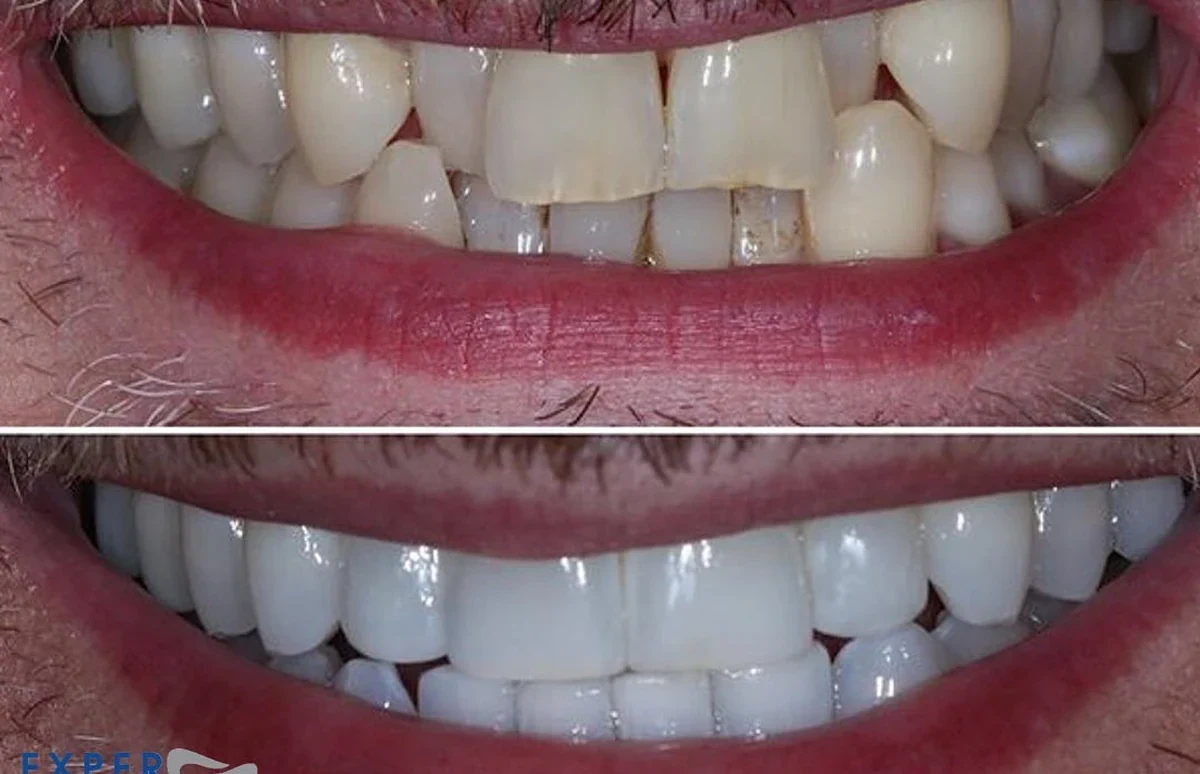
Straightening teeth before veneers may reduce the amount of enamel that needs removing, and can sometimes make veneers unnecessary. A veneer changes the visible tooth surface; it does not move the root or correct the relationship between the upper and lower teeth. The assessment should establish whether movement would resolve a specific compromise, rather than assuming everyone needs both treatments.
Identify the source of the uneven appearance
A crowded smile may look uneven because teeth overlap, sit at different angles or have genuinely different shapes. The dentist distinguishes those causes through examination, photographs, scans and bite records. If the teeth themselves have pleasing proportions but are rotated, orthodontics may address much of the concern without ceramic restorations. If they are naturally short, chipped or asymmetrical after alignment, carefully targeted bonding or veneers might still be useful.
How movement can save enamel
A tooth that projects forwards may need more preparation to fit the intended smile than one already in a suitable position. Orthodontics can sometimes move it back so a thinner restoration, or no restoration, is needed. This matters because the evidence for veneer bonding is generally more favourable when it bonds to enamel than when much of the bond is to exposed dentine beneath it. The plan should compare movement with irreversible cutting used to disguise the tooth's position.
The bite must work with the final shapes
Changing tooth edges can alter contacts during biting and sideways jaw movements. When aligners are used first, the orthodontic end-point should allow room for any planned restorations without creating new interference. A mock-up can show the intended thickness and edge positions; the orthodontist may then refine tooth movement to accommodate that design. This requires genuine coordination, not two disconnected treatment plans signed by different clinicians.
Not every movement suits aligners
The British Orthodontic Society describes aligners as useful for many mild to moderate alignment problems, while more complex movements may need additional techniques or fixed braces. Suitability involves the roots, gum health and bite as well as the computer preview. Equally, orthodontics may offer little benefit where limited reshaping or bonding would address the concern conservatively.
What happens between the two stages?
When alignment finishes, teeth need retention. If whitening is planned, the team should decide when colour stabilisation and shade selection will occur before making definitive restorations. Temporary bonding or a diagnostic mock-up may test the intended length and speech. The final ceramic or composite should then be fitted without undermining the orthodontic result, and the retainer may need modification to fit the new tooth contours.
Comparing three treatment routes
Ask to see a realistic plan for alignment alone, cosmetic restoration alone and a combined sequence where clinically justified. Compare how much healthy tooth tissue each option changes, the likely commitment to retainers, the replaceability of restorations and the financial implications. A patient with nearly straight teeth may choose limited bonding. Another with severe crowding may need comprehensive orthodontics before cosmetic decisions can be made responsibly.
The consultation question that matters
Instead of asking 'How many veneers do I need?', ask which parts of your smile can be improved by moving teeth and which genuinely require restorative material. That distinction helps protect enamel, keeps the bite central to the plan and avoids using expensive porcelain where a less invasive approach would suffice.
Put an actual end-point on the alignment phase
For example, two slightly overlapping, chipped upper front teeth might need unequal veneer preparation if treated in their present positions. The prominent tooth could need more enamel removed while the recessed one could need a bulky addition. Limited alignment might bring both nearer the intended arch, leaving only the chipped edges to rebuild with composite. A diagnostic mock-up can make that comparison clearer. If aligners are chosen, the final bite needs room for the planned additions, retention needs arranging before the cosmetic stage and any whitening needs to inform the ceramic shade. The combined sequence is worthwhile when it resolves an identified compromise, rather than being a compulsory package.
Understand the limits of repair evidence
A 2026 umbrella review comparing repair and replacement of selected composite restorations found low-certainty evidence. It does not mean every fracture is repairable, that every material uses the same protocol or that replacing the whole restoration is always necessary. Ask which option suits the current defect, what benefit is expected and what remains uncertain. The decision should consider the actual restoration and teeth rather than a generic rule. A useful explanation distinguishes a proportionate local intervention from a broader replacement, including important risks and future maintenance, without promising that either route can eliminate every later problem. Read the supporting clinical study (2)
Why tooth position should usually be finalised first
If a tooth is still rotated or tilted, the apparent shape of its biting edge may be an optical effect. Removing enamel before the tooth reaches its intended position risks changing a surface that would have looked balanced once aligned. Equally, adding composite to a tooth that is about to move can complicate attachment placement and shade matching. A staged plan lets the orthodontist establish position and bite first, then allows the restorative dentist to assess the residual edge discrepancy in the context of the final arch. This is particularly relevant for front teeth whose edges meet lower incisors during speech or biting.
Finish with a clear maintenance and contact plan
Ask how to clean the restored teeth and retainer, which reviews are recommended and whom to contact for chipping, roughness, discomfort or changed fit. At Iconic Smiles, confirm the clinicians, location and itemised fees, including anticipated appliance work and continuing care. The finished pathway should preserve ordinary dental prevention and retention responsibilities. It should not imply that a small composite addition is maintenance-free or that completing aligners and bonding guarantees a perfect result that never changes. The useful handover is a practical routine and an appropriate response to new findings over time. Supporting source (bos.org.uk)Meet the Iconic Smiles dental team · Find an Iconic Smiles practice · See our current treatment fees
Consider a selected composite addition for a defined form change
Edge bonding may be considered where adding material appropriately addresses the assessed shape concern. Ask which teeth are involved, what preparation is proposed and how the intended result will be reviewed. Anterior-composite research reports varied outcomes and complications across different restorations. It does not establish a fixed lifespan or universal repair guarantee for every small addition after aligners. A conservative option can be valuable in suitable cases, but the patient should understand maintenance and limits. The recommendation should explain the actual benefit rather than imply that every front tooth needs the same width, length or material to complete a smile. Read the supporting clinical study
Where whitening belongs in the sequence
If whitening is planned, it generally makes sense to settle the desired natural-tooth shade before matching the composite. Existing restorations do not whiten like enamel, and immediate post-whitening dehydration can alter the apparent colour. Composite is then selected and layered to blend with the surrounding incisal translucency and opacity. Finishing, polishing and the maintenance expectations should be discussed in advance. A brilliant white edge with a different opacity to the adjacent tooth can look artificial even when the shade number sounds correct.
Keep preventive care connected to the original findings
Ask how to clean the restored teeth and relevant appliance areas and describe any difficulty with access or discomfort. If wear contributed to the initial edge problem, the prevention plan still matters. The government toolkit discusses tooth wear and its contributing factors, including acid exposure. Restoring form is not proof that every cause of damage has been removed. Follow the advice relevant to your assessment and report meaningful changes rather than assume every new mark has the same explanation. Ordinary dental reviews remain important even when the cosmetic result looks satisfactory in a photograph. Supporting source (www.gov.uk)Supporting source (bos.org.uk)
The lower teeth help determine the safe length
A longer upper front tooth needs room to pass the lower teeth when you close or move your jaw. Otherwise, a new composite edge may catch repeatedly and wear or chip. The clinician checks the vertical overlap, how far the upper teeth sit forwards, sideways bite contacts and signs of clenching. Sometimes tooth movement can improve tooth display more appropriately than adding length. A trial addition or temporary mock-up may help you explore the appearance before the final restoration.
Report chips and roughness without a home repair
If an edge chips, feels rough or the bite changes, contact the treating service and explain when it happened and whether eating or comfort is affected. Anterior-composite research identifies fracture and appearance-related concerns among possible complications, but it does not establish one response for every restoration. Do not file the material, use household adhesive or repeatedly bite harder to test it. The clinician should assess what is affected and whether repair, another intervention or monitoring is reasonable. A small visible change does not establish that the entire treatment has failed, but it should not be ignored solely because bonding was described as conservative. Read the supporting clinical study
Coordinate retention, maintenance and the complete estimate
Retainers are needed after orthodontic treatment, and the final tooth shapes should be considered in the retention arrangement. Ask who coordinates the handover and what to do if fit changes after bonding. Do not force or modify an old appliance. At Iconic Smiles, confirm the restorative clinician, review plan and itemised fees. A useful assessment leaves you understanding the expected benefit, maintenance and alternatives. It should not promise that straight teeth plus bonding guarantee a permanently perfect smile or that adding a small amount of material removes every risk of chipping, colour change or further care. Supporting source (bos.org.uk)Meet the Iconic Smiles dental team · See our current treatment fees
Plan retention through the restorative change
Ask which appliance instructions apply before bonding, during any interval and after the final tooth shapes are complete. Retainers are needed after orthodontics, and a shape change may affect the arrangement that fits. The relevant clinicians should coordinate the instructions rather than leave the patient to force an old device or independently stop using it. If another appliance or fit review is anticipated, understand who provides it and what the interim plan is. This handover should be resolved as part of the pathway, not discovered only after the patient leaves with a new restoration and incompatible instructions. Supporting source (bos.org.uk)
Composite bonding after orthodontic alignment
Decide what remains after the teeth have moved
Orthodontic alignment changes tooth positions; composite can change selected areas of tooth shape. At the end of active treatment, assess the actual remaining concern before adding resin. A small shape discrepancy may need a different response from residual crowding or an unsettled bite. The proposed bonding should have an agreed purpose beyond simply being the next item in a package. [1]
Confirm the orthodontic endpoint first
Discuss whether active movement is complete and whether the intended contacts have been assessed. If further alignment is still being considered, coordinate that decision with the restorative plan. Consent should identify the sequence, the responsible clinicians and any change in fees, so you know which parts are essential and which are elective refinements.
Plan the retainer around the final tooth shape
Retention remains important after orthodontic treatment. Because retainers are made to fit the teeth, tell the orthodontic team before bonding changes their contours and obtain instructions for the relevant appliance. Do not assume an existing removable retainer will remain appropriate or force it over a changed surface. Retainers after Invisalign require an individual wear and review plan. [3]
Keep the extent of bonding proportionate
Ask whether a local edge or contact addition would meet your aim, and what a full-surface change would add. Explain any wish to whiten before the final shade is selected: NHS guidance notes that whitening lightens natural teeth rather than fillings or veneers. Treatment order matters if the restoration is being matched to a different intended tooth colour. [2]
Include future repairs in the coordinated plan
Anterior composite may need intervention for fracture, staining or shape changes. Ask who will review the restoration, who will maintain retention and how a future repair would affect appliance fit. A study of bonding longevity cannot establish that orthodontic retention is no longer needed, and completing alignment does not make the resin permanent. [4][3]
Research and guidance
Your next step, when you’re ready
We would be pleased to welcome you for a £30 consultation at your preferred Iconic Smiles practice. Bring your questions, and we can talk through the options that may suit you.
Any additional investigations and their fees will be explained before you decide.