
Bonding, veneers and whitening
Veneers when you talk and laugh: planning a smile in motion
Learn why veneer planning should consider talking, laughing and everyday expressions, with practical ways to discuss a smile that looks right in motion.
Discover what could suit your smile
Whether you are thinking about colour, shape or a subtle change, a £30 consultation is a welcoming place to share your ideas, ask questions and explore a personalised approach.
£30 for a planned-treatment consultation. Scans, additional investigations and emergency assessments may have separate fees; please confirm when booking.
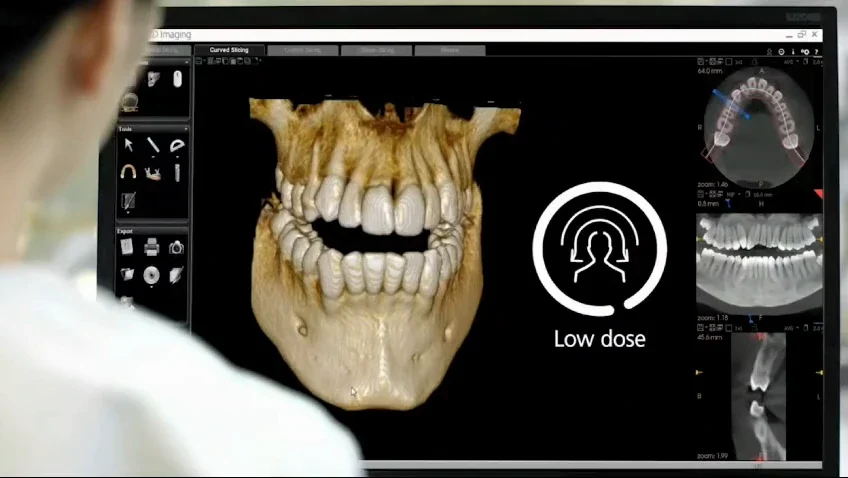
There is a moment in many cosmetic consultations when a photograph of a proposed smile appears on the screen. The teeth are aligned, the shade is bright and the proportions look pleasing. But you are not a photograph. You talk, laugh, hesitate, tell stories and smile in ways that change by the second.
That movement can transform how restorations look. A veneer that seems beautifully shaped in a still image may look too long when your lips are relaxed, too wide when you laugh or too uniform when you speak naturally. Planning for movement means evaluating the result in the conditions where other people will actually see it.
Why the still photograph tells only part of the story
A traditional close-up dental photograph is useful for recording details such as tooth shade, edge position, gum contours and restoration margins. It can also be highly artificial. The head is held still, the lips may be retracted and lighting is designed to show the teeth clearly.
Ordinary conversation produces quite different views. The upper lip rises and falls; the lower lip frames the incisal edges; the teeth appear at changing angles. In some people, more of the lower teeth show when speaking than when smiling. The relationship between the teeth and the face is therefore dynamic.
This is why clinicians sometimes use short video recordings as part of smile analysis. A video is not magic: it does not replace the examination or demonstrate that a design is clinically feasible. It can, however, make it easier to notice what a static photograph hides, including how much tooth is visible at rest and whether the lip line changes markedly during laughter.
Start with your natural resting expression
When you are not smiling, your lips may be slightly apart and a small portion of the upper teeth may be visible. Other people naturally show very little upper tooth at rest. Both can be normal. A cosmetic change that lengthens several incisors may alter this resting appearance noticeably.
That matters because a patient may enjoy the dramatic tooth display in a full smile but dislike seeing too much tooth when the face is relaxed. A dentist should consider both expressions rather than judging only the most flattering view of a proposed veneer.
Ask how the proposed incisal edges will sit beneath your upper lip when you are simply listening or speaking. A small increase in length can make a difference in some faces, whereas the same change may be barely visible in others.
There is no universal amount of tooth display that everybody should aim to achieve. A pleasing result depends on your own proportions and preferences.
What happens when you laugh fully?
A full laugh may reveal more of the gums, the premolars and the transitions between treated and untreated teeth. If a veneer makeover concentrates only on the six front teeth, you may see where the new restorations end and natural teeth begin when you laugh broadly.
That does not mean more teeth should automatically receive veneers. It means the shade and shape transitions need to be planned. A softer, less opaque ceramic shade may blend more comfortably with untouched premolars than a much brighter, uniform finish. Alternatively, selective whitening of natural teeth could be considered if suitable.
The amount of gum visible also changes with facial movement. A 2026 dynamic smile study explored how different levels of gingival display influenced aesthetic ratings among dental professionals and lay observers. [1] It illustrates why a fixed image is an incomplete way to think about smile aesthetics. The study should not be used to impose a numerical 'ideal' on an individual patient.
An expressive smile can look beautiful without concealing all gum tissue or showing an identical number of teeth on both sides.
Why the lower lip is a useful guide
The curve of the upper incisor edges may relate visually to the shape of the lower lip during a smile. This is sometimes called the smile arc. In some people the curves complement one another; in others they differ. A rigid rule that every smile must have a particular curve would oversimplify normal anatomy.
When planning veneers, changing the length of one or several incisors may change how the edges sit against this moving frame. A straight, uniform row can look precise on a screen yet feel too mechanical during a natural smile.
The clinician needs to assess not only the two central incisors but the lateral incisors and canines, which contribute to the overall edge pattern. The relationship should be evaluated at normal viewing distance and from different angles.
Ask for an explanation of whether tooth length changes are intended to improve this dynamic relationship or merely match a digital proportion chart.
Wide smiles reveal the joins in a makeover
The further back your visible smile extends, the more important it becomes to plan transitions. Suppose six upper front teeth receive veneers but the adjacent premolars remain natural. That may be entirely appropriate. Yet a sudden change in whiteness, opacity or apparent width can draw the eye when you laugh.
The solution is not automatically eight, ten or twelve veneers. The dentist might suggest choosing a slightly more natural shade, whitening untreated teeth beforehand if suitable, or limiting changes to the teeth that actually need them. The exact plan should consider your existing restorations and the colour of natural teeth.
A competent design also keeps the teeth recognisably different. Central incisors, laterals and canines should not be copied into one repeating rectangular shape merely because the full smile displays many teeth.
Your smile should look continuous, but continuity is not the same as every tooth receiving the same treatment.
Video can reveal unwanted tooth prominence
A front-on photograph can conceal how much a veneer projects forwards. When someone turns their head or speaks in profile, the thickness and position of the upper incisors may become more apparent. If the underlying teeth are already prominent, adding restorative material without adequate planning can increase that projection.
A dentist should consider whether orthodontics would achieve a better foundation before veneers, and whether the desired cosmetic result requires enamel preparation. The aim is to balance aesthetics with preserving healthy tissue and comfortable function.
A physical mock-up may help you appreciate prominence more realistically than a flat digital image, although temporary material can be bulkier than the intended final restoration. The preview should therefore be described as an approximation, not proof that the finished smile will look or feel identical.
If profile views concern you, ask to discuss them explicitly rather than assuming the dentist will infer your preference from a front-facing photograph.
Motion also matters for gums and asymmetry
One side of the mouth often moves more strongly during smiling. A gumline that looks level with the lips retracted may appear uneven when the lip lifts differently on each side. Similarly, a slight dental midline difference can become more or less noticeable during movement.
This distinction can prevent unnecessary treatment. Altering tooth shapes to correct an apparent slant caused mainly by the lip may not achieve the effect you expect. In other cases, a rotated tooth or uneven edge becomes genuinely conspicuous only during speech and is worth addressing.
A dentist should distinguish what can be changed within the teeth from what belongs to normal facial expression. Some asymmetries are part of the character of the smile, and not every variation requires correction.
A good treatment conversation explores whether you seek perfect symmetry or a subtle improvement that still looks unmistakably like you.
What should a dynamic trial involve?
If a trial smile or provisional restoration is part of the plan, use it actively. Speak at a normal pace, smile with your lips closed, laugh, and look from a three-quarter angle as well as straight ahead. You may want to see a short video rather than only a mirror held very close to your face.
Take note of whether the new teeth look too square, too forward or too bright when you move. Expressing these concerns before finalisation is easier than discovering them after permanent restorations have been fitted.
But trial material has limitations. It may not match the translucency and texture of finished ceramic, and a short trial cannot establish long-term wear or maintenance. Digital and physical preview research supports their value for communication, not the idea that they are exact forecasts. [2]
Ask which aspects of the design can still be changed and which decisions have already become irreversible.
A sensible set of images to review
A well-planned cosmetic assessment might include a relaxed face, an ordinary conversation, a gentle smile, a full laugh and oblique views. These do not need to be used as promotional before-and-after material. They can simply be clinical records that help the patient and dentist discuss the same features.
The proposed veneer length should be assessed against resting tooth display. The shade should be judged beside natural teeth that become visible during laughter. The shape of the incisors should look comfortable in motion, not merely aligned with an overlay. If the plan changes the bite, that also needs clinical examination rather than visual guesswork.
A beautifully lit studio photograph is still helpful for judging fine surface details. The mistake is treating it as the only relevant representation of the smile.
Choose the result that works in ordinary life
You may be offered a very dramatic makeover that looks striking in photographs. You may prefer something softer and less noticeable. Neither preference is inherently wrong, but the implications should be discussed before treatment. A dentist should be comfortable explaining the trade-offs between brightness, opacity, tooth prominence, symmetry and the amount of preparation required.
Ceramic veneers are real restorations with risks and ongoing care needs. Long-term studies document good survival in selected cases as well as technical and aesthetic complications. [3] Their design should prioritise sensible function and a result you are happy to live with, rather than just a single perfect image.
Ask for an explanation of which healthy teeth can remain untreated. If a smaller plan produces an appealing moving smile, there may be little reason to pursue additional restorations.
Frequently asked questions
Can veneers look good in photos but unnatural in person? Yes. Tooth projection, lip movement, shade contrast and how the smile changes during laughter can alter the impression.
Does a dentist need to record video? Video can be useful for communication and evaluation, but it is not mandatory for every case. The clinical assessment still matters most.
Should all teeth visible when I laugh have veneers? No. Natural teeth may be preserved and the colour transitions planned carefully.
Can a mock-up show how veneers look in motion? It may help, but temporary materials and contours differ from the final restorations.
Is the smile arc a fixed rule? No. It is one descriptive feature among many, and individual facial characteristics influence the result.
Design for the person people actually see
At Iconic Smiles, a £30 consultation can be a starting point to discuss how your smile looks in conversation, not merely which shade looks best on a chart. Confirm the current fee and the availability of planning options at booking.
Your best smile should look comfortable and coherent when you are enjoying yourself, speaking freely and laughing without thinking about your teeth. That is a higher standard than looking flawless in one photograph.
Clinical sources and further reading
Your next step, when you’re ready
We would be pleased to welcome you for a £30 consultation at your preferred Iconic Smiles practice. Bring your questions, and we can talk through the options that may suit you.
£30 for a planned-treatment consultation. Scans, additional investigations and emergency assessments may have separate fees; please confirm when booking.