
Healthy teeth and gums
What Does a Dental Hygienist Actually Do?
Dental hygiene appointments can assess and support plaque control, remove suitable deposits and help manage gum health.
Ask us about your teeth and gums
You can talk to our team about your concerns and what you would like to improve. A £30 planned-treatment consultation is a simple way to start exploring your options.
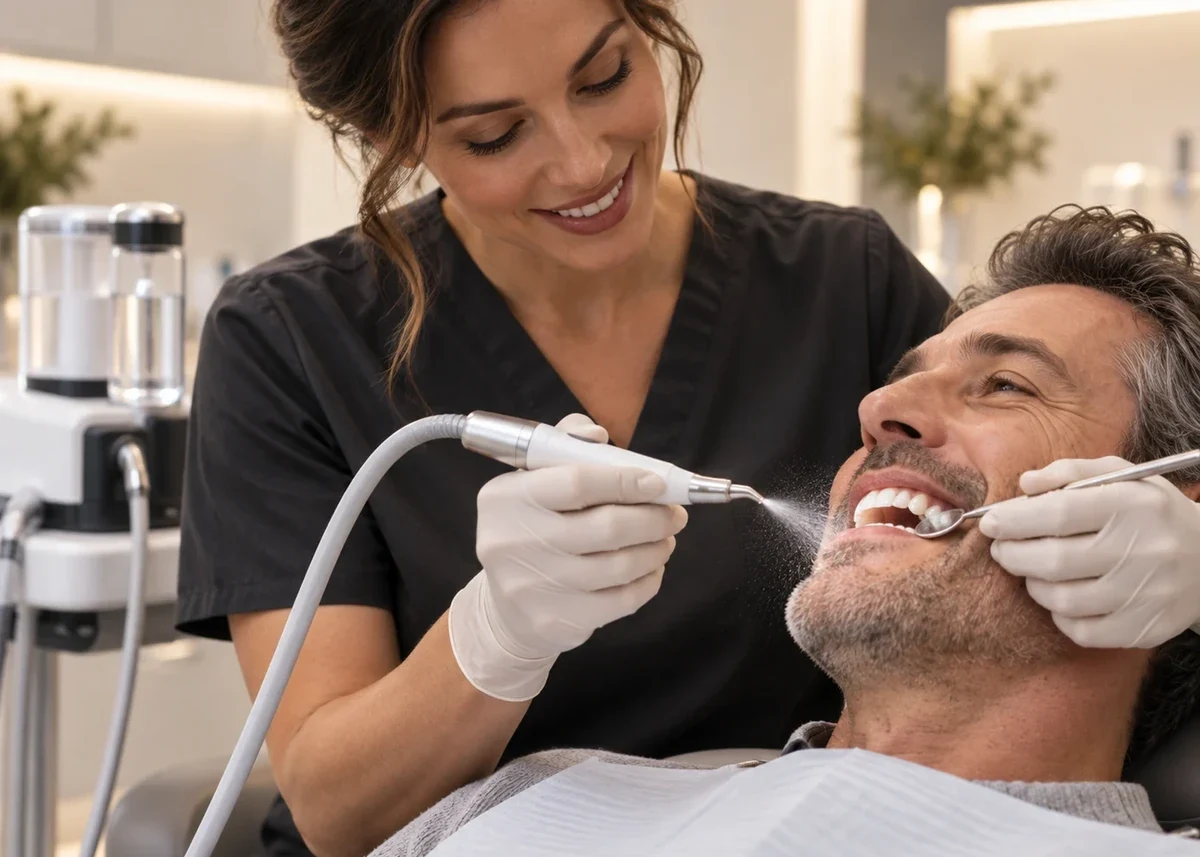
A dental hygienist helps you manage plaque, removes appropriate deposits and supports gum health with advice and treatment suited to the findings. A preventive clean differs from structured care for periodontitis. Before booking, understand the purpose of the appointment and whether a wider dental or gum assessment is needed.
Assessment and prevention
A hygiene visit may examine plaque levels, gingival bleeding, existing restorations and cleaning technique within the clinician’s role and care pathway. Personalised instruction can identify overlooked surfaces and the right interdental aids. A patient with repeatedly bleeding gums needs more than an attractive polish and should have the underlying condition appropriately assessed.
Professional cleaning explained
Scaling removes deposits that brushing cannot easily remove once mineralised; polishing may address selected surface staining. Instrumentation can be tailored to the tissues, restorations and sensitivity. Routine cleaning does not necessarily remove deposits deep within diseased periodontal pockets, and not every person needs identical intervals or techniques.
Supporting gum disease treatment
Where periodontitis is diagnosed, suitably delivered subgingival instrumentation and ongoing supportive care can form part of a coordinated plan. Home plaque control and modifiable risk factors remain critical; repeated treatment without patient-specific instruction may not secure long-term stability.
Care around implants and complex restorations
Bridges, implants and joined restorations create different spaces to clean. The advice should show how to reach the actual margins and contours with suitable aids, as ordinary floss may not access every area. Inflammation or movement around an implant needs diagnosis rather than an assumption that polishing alone will resolve it.
Hygiene does not replace a dental examination
A visit focused on cleaning should not be mistaken for an assessment of every tooth, oral soft tissues or complex treatment need unless that wider scope is actually provided. Clarify the intended appointment, any required dental review and the pathway for unexpected findings.
'A clean' can refer to very different kinds of care
A routine visit may address plaque, hardened tartar, stain and prevention around stable teeth. Periodontitis treatment concerns disease affecting the supporting tissues and bone and may need detailed measurements, cleaning below the gum and targeted reviews. Stain alone cannot determine which appointment you need. Bleeding, pockets, bone support, smoking and medical factors guide the recommendation.
A good hygienist appointment should explain what needs attention
The clinician may assess home cleaning, identify sites where calculus persists and recommend interdental brushes, floss or other devices suited to your mouth. Advice should be practical: the technique and size of a brush matter more than the number of products in a bathroom cupboard. Sensitive areas, existing crowns, implants and gum recession may alter the method used. If you are uncomfortable, tell the team; treatment should be adjusted where clinically possible rather than regarded as a routine endurance test.
Polishing and airflow are not substitutes for disease control
Air polishing can be useful for some surface stains and biofilm management, depending on the powder, device and clinical indication. It does not remove every hard deposit or replace the assessment and treatment needed for gum disease. A bright appearance immediately after a visit can coexist with deeper gum problems that need a structured plan. Conversely, not every patient needs advanced periodontal therapy. An accurate diagnosis should drive the procedure and its duration, not a promise that one premium cleaning technology cures gum disease.
Decide on a sustainable maintenance interval
Maintenance timing depends on disease activity, history, home care and other risks. Routine dental recall follows an individual assessment, as NICE advises, while previous periodontitis or complex implants may need additional supportive visits. The plan should identify the next appointment type, expected fee and findings that could change the interval. Daily maintainability is the longer-term aim.
Further questions to consider before treatment
- Preventive treatment such as fluoride application should have a clear role in your individual care.
- A demonstration can help select cleaning aids that fit your tooth spaces and are manageable to use.
Your next step, when you’re ready
We would be pleased to welcome you for a £30 consultation at your preferred Iconic Smiles practice. Bring your questions, and we can talk through the options that may suit you.
Any additional investigations and their fees will be explained before you decide.