
Dental implants — replacing missing teeth
Same-Day Implant After Extraction: Suitability Guide
If a tooth has to be removed, the idea of replacing it with an implant in the same appointment is understandably appealing.
Explore your tooth replacement options
If you are considering replacing a tooth or several teeth, a £30 consultation gives you a chance to explain what matters most, ask questions and explore the options with our team.
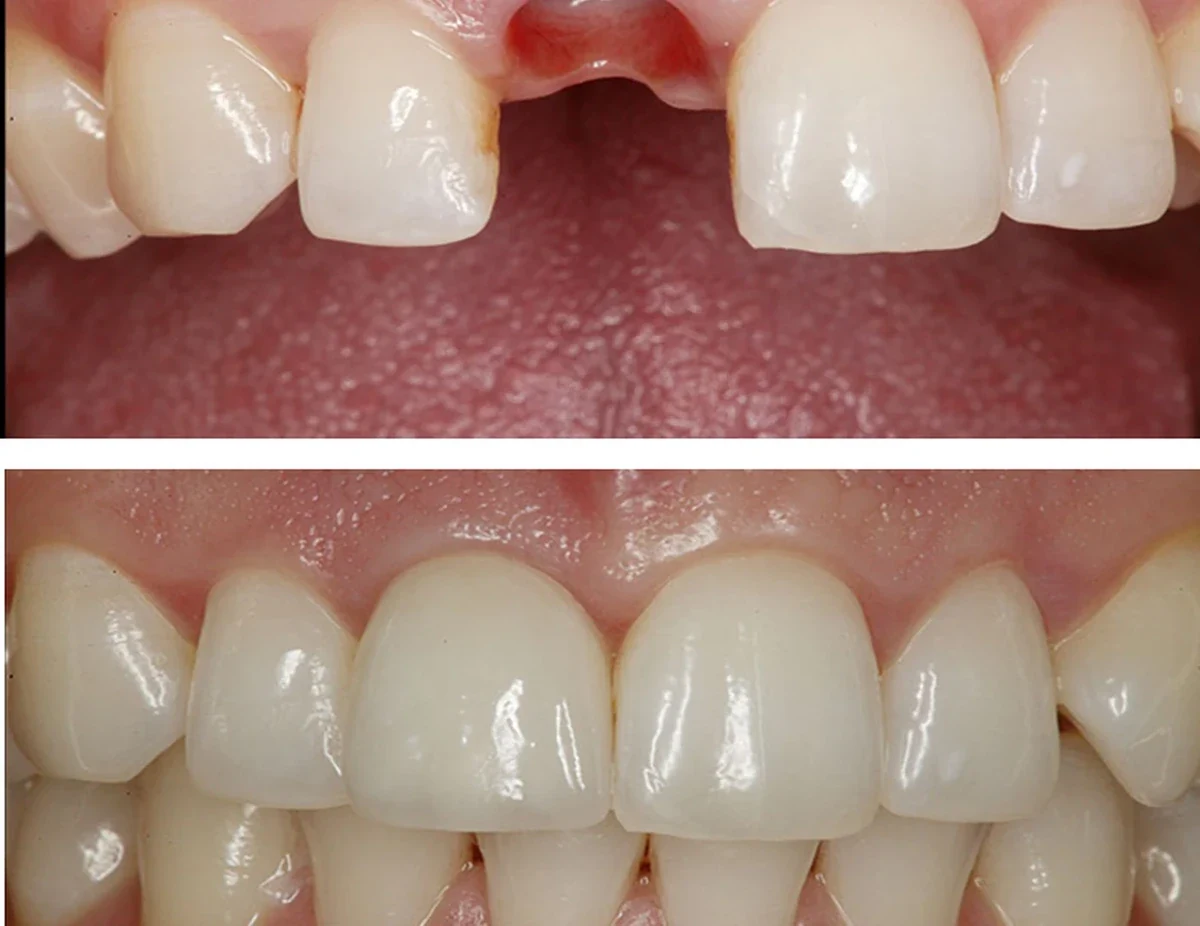
An implant can sometimes be placed at the same appointment as an extraction if the site and wider plan are suitable. Immediate implant placement uses the fresh socket rather than waiting for it to heal. It still needs enough bone for stability in the right position for the replacement tooth. Same-day placement is separate from fitting a temporary or permanent crown and from allowing normal chewing straight away.
The extraction socket has to be assessed in three dimensions
The existing tooth and its roots do not simply define a ready-made cylindrical hole for an implant. The clinician needs sufficient bone in the appropriate position for initial stability and an implant trajectory that supports the planned crown. A thin or damaged facial wall in the front jaw can complicate the final gumline, while large sockets around molar roots present different challenges. A suitable radiographic assessment may be needed to understand the relationship between neighbouring roots, facial bone, sinus or nerve. A pleasing final tooth begins with that anatomical assessment, not a promise to fill the socket on the day.
What makes a front-tooth site more favourable?
The European Association for Osseointegration's position paper identifies factors including no acute infection, favourable socket shape, suitable anchoring bone and an acceptable existing gum contour for immediate placement at front and premolar sites. The clinician also assesses gum thickness, tooth position and whether extraction can avoid unnecessary damage. These factors need considering together. An unfavourable outer wall or gum situation can make delayed placement more appropriate even where immediate surgery is technically possible.
Implant placement, provisional tooth and loading are separate decisions
It is possible to place an implant immediately and leave it to heal without a crown. In selected aesthetic sites, a carefully designed provisional tooth may be attached with restricted contact so that appearance is maintained while the implant integrates. This is different from allowing the temporary crown to carry full biting forces. Another option is a temporary adhesive bridge or removable tooth that does not load the implant. Patients should ask precisely which teeth they will leave with, whether those teeth are attached to the implant and what they may safely eat during healing.
When a staged approach may be better
A damaged bone wall, insufficient primary stability, an unfavourable tooth position or other factors can make a separate healing or grafting stage a more responsible choice. In some cases, socket preservation is considered at extraction to help support later implant planning. Delaying placement should not be presented as a clinical failure or a second-rate approach; it can be a deliberate way to protect aesthetics and reduce compromise. Equally, a suitable immediate protocol can avoid another surgical stage. The decision must balance predictable placement with the long-term crown and gum contours.
Why a front implant is also an aesthetic project
The final implant crown needs to meet neighbouring teeth at natural contact points and support a harmonious appearance of the gum. If the implant is too far towards the lip or at the wrong depth, it can be difficult to compensate with ceramic alone. A provisional restoration may help shape the soft-tissue emergence profile, but it cannot reverse every anatomical limitation. Tooth shade, bite, visible gumline and cleaning access belong in the plan before the surgery starts. Treatment is complete only when an appropriate permanent restoration has been delivered and a maintenance programme agreed.
What to ask before booking an extraction
Before extraction, understand the reasons for immediate, early or delayed placement in your site. The plan should identify the temporary tooth, any graft material, stage-by-stage fees and findings that could change the decision during surgery. Discussing replacement in advance preserves planning choices. The appropriate timing follows suitability rather than a same-day label.
Evidence and further reading
Agreeing the alternative before extraction
The plan should explain the preferred timing and what would change if the socket cannot support it. Include the temporary tooth, healing checks and possible changes in visits or fees.
Iconic Smiles practices are in Hatfield and Cheshunt in Hertfordshire, and Friern Barnet in North London. If travelling from Bedfordshire, Buckinghamshire or Essex, confirm the actual practice for each appointment.
Immediate vs Delayed Dental Implants: When Should an Implant Be Placed After Extraction?
Placement timing and tooth-fitting timing are separate
An implant can be placed at different points after a tooth is removed. The timing of connecting and loading a restoration is another decision. An immediate-placement proposal must therefore explain both when the implant is inserted and when a temporary or final tooth is expected to be used. [1]
The site has to support the chosen protocol
The protocol should reflect the site assessment and clinical conditions. Ask which findings support immediate placement in your case and which would favour a staged approach. A timeline selected before assessment cannot substitute for that reasoning. [1]
Additional tissue treatment can change the sequence
Some implant pathways involve grafting before the implant stage. Others involve different surgical and restorative appointments. The team should explain which stages are essential, which are conditional and how healing will be checked before progressing. [2][3]
Choose a defensible plan rather than the shortest advertised route
Compare the expected benefits, risks, alternatives and maintenance, including what would happen if the protocol changed. Temporary teeth, visits and fees may be affected. Consent needs to cover that actual sequence and foreseeable changes alongside the proposed completion date.
How socket anatomy changes implant timing
A thin facial socket wall can remodel after extraction even when the implant is stable and the original tooth was aesthetically acceptable. Infection control is one issue; intact socket walls, primary stability and soft-tissue support are others. The patient should see what is gained and sacrificed by accelerating the timetable.
Your next step, when you’re ready
We would be pleased to welcome you for a £30 consultation at your preferred Iconic Smiles practice. Bring your questions, and we can talk through the options that may suit you.
Any additional investigations and their fees will be explained before you decide.