
Dental implants — replacing missing teeth
Dental Implants in a Narrow Jawbone: Understanding Augmentation Choices
Implants need sufficient bone to support a suitable fixture in the correct restorative position.
Explore your tooth replacement options
If you are considering replacing a tooth or several teeth, a £30 consultation gives you a chance to explain what matters most, ask questions and explore the options with our team.
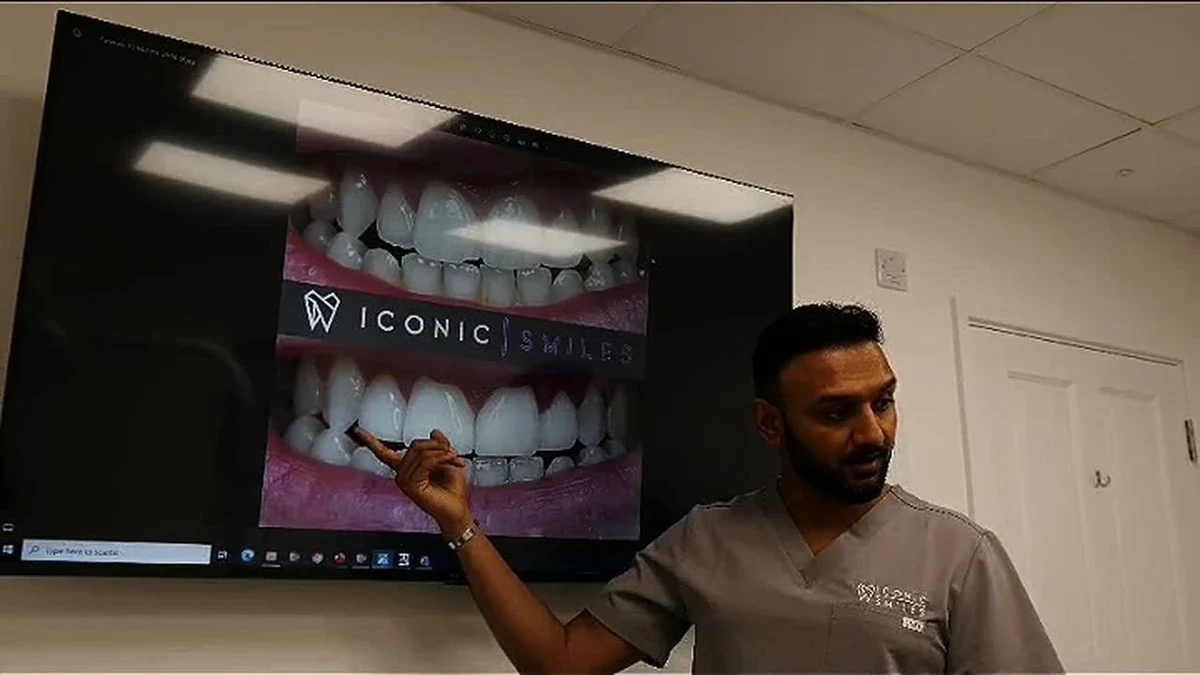
A narrow jaw ridge does not automatically rule out implants or mean that you need extensive bone grafting. It does mean assessing whether there is enough bone around an implant in the position needed for the crown. After tooth loss, the ridge can become narrower, particularly towards the cheek. The remaining bone and the proposed replacement need to be considered together, alongside other reasonable ways to replace the tooth.
Width is not the only dimension
A ridge can be narrow but relatively tall, or apparently broad while losing height near a nerve or sinus. Cross-sectional anatomy, root proximity and the planned implant axis determine what is usable. A dentist may use conventional radiographs initially and request CBCT when the three-dimensional question materially changes treatment planning. The purpose of imaging is to answer where the implant can go and whether the final crown can be restored predictably.
When a graft is considered
Bone augmentation aims to build support where the implant needs to sit for the planned replacement. It may take place before implant placement or at the same appointment, depending on the defect. Your plan should explain why that sequence is proposed. Graft materials and techniques differ, as do their healing needs. Establish whether a protective membrane is involved, how long healing may take and how much rebuilding can reasonably be expected at your site.
Narrower or shorter implants are not universal substitutes
Different implant dimensions can sometimes reduce the need for augmentation, but their suitability depends on indication, bone quality, bite loading and restorative space. A tooth with a broad chewing table produces different functional demands from a narrow front incisor. Placing a smaller fixture merely because it fits the remaining bone may leave an unfavourable crown-to-implant relationship. The dentist must assess overall mechanical and biological design rather than chasing an individual diameter.
Soft tissues can be equally important
The gum surrounding an implant crown influences comfort, brushing and appearance. A narrow ridge may be accompanied by thin or mobile tissue, and the clinician should explain whether that changes the plan. In a visible front-tooth area, a slightly broader, well-supported emergence profile may be more important to appearance than simply placing any implant. Additional procedures should be justified by the expected benefit rather than routinely added to every quote.
Comparing a staged approach with alternatives
A staged implant might involve site reconstruction, healing, placement and later crown fitting. A bridge can sometimes avoid surgery but may involve supporting teeth; a resin-bonded bridge may be conservative in selected front-tooth gaps. Leaving the space or choosing a removable replacement can also be reasonable in particular circumstances. A complete consultation compares the irreversible consequences, maintenance and costs of these options.
The right measure of success
The aim is an implant crown that can be cleaned, functions appropriately and sits in the intended tooth position over time. ITI guidance emphasises restorative position and clinical selection rather than merely achieving placement. If you are told your bone is too thin, ask to see what that means for the actual crown design, whether augmentation would improve the outcome and what the non-implant alternatives would look like.
Seeing the augmentation decision on the scan
In an illustrative missing lower premolar site, the outer ridge may be thin while the deeper bone offers some height. The clinician first chooses where the new crown should sit relative to neighbouring teeth, then examines whether sufficient bone surrounds a fixture in that location. Moving the implant towards the tongue simply to find more bone could compromise the crown emergence and make cleaning awkward. A graft may improve the bone envelope, but only if the likely gain is relevant to the planned reconstruction and its risks are acceptable. The alternative could be a different implant dimension, a bridge or a removable replacement. A useful consent discussion includes the source of graft material, whether healing before placement is required, what imaging or review will confirm readiness and which limitations will remain even with successful augmentation. 'You need bone' is not a complete clinical explanation.
Dental Implants in a Thin Jawbone: Assessing Width and Shape
Width is only one part of the assessment. Sloping bone walls, the way the crown emerges through the gum and the volume of soft tissue also matter. The dentist checks whether any part of the planned implant would lack a covering of bone, sometimes called a dehiscence.
For example, a site where an upper lateral incisor has long been missing may have a narrow ridge beneath an apparently normal smile line.
The assessment needs to include any hollow in the bone towards the lip and its thickness around the planned top of the implant, rather than relying on the broadest measurement. Even a carefully positioned narrow implant may leave too little bone on that side. Widening the ridge or choosing an adhesive bridge may better support the intended gum outline.
Compare the bone support towards the cheek, proposed implant diameter and gum thickness. Establish what grafting would offer and whether a cantilever bridge, supported from one side, is a suitable alternative.
Your next step, when you’re ready
We would be pleased to welcome you for a £30 consultation at your preferred Iconic Smiles practice. Bring your questions, and we can talk through the options that may suit you.
Any additional investigations and their fees will be explained before you decide.