
Dental implants — replacing missing teeth
Same-Day Dental Implants: Can You Really Get New Teeth in One Day?
Immediate implant placement means placing an implant in relation to an extraction appointment; immediate loading concerns when a restoration is connected and used.
Explore your tooth replacement options
If you are considering replacing a tooth or several teeth, a £30 consultation gives you a chance to explain what matters most, ask questions and explore the options with our team.
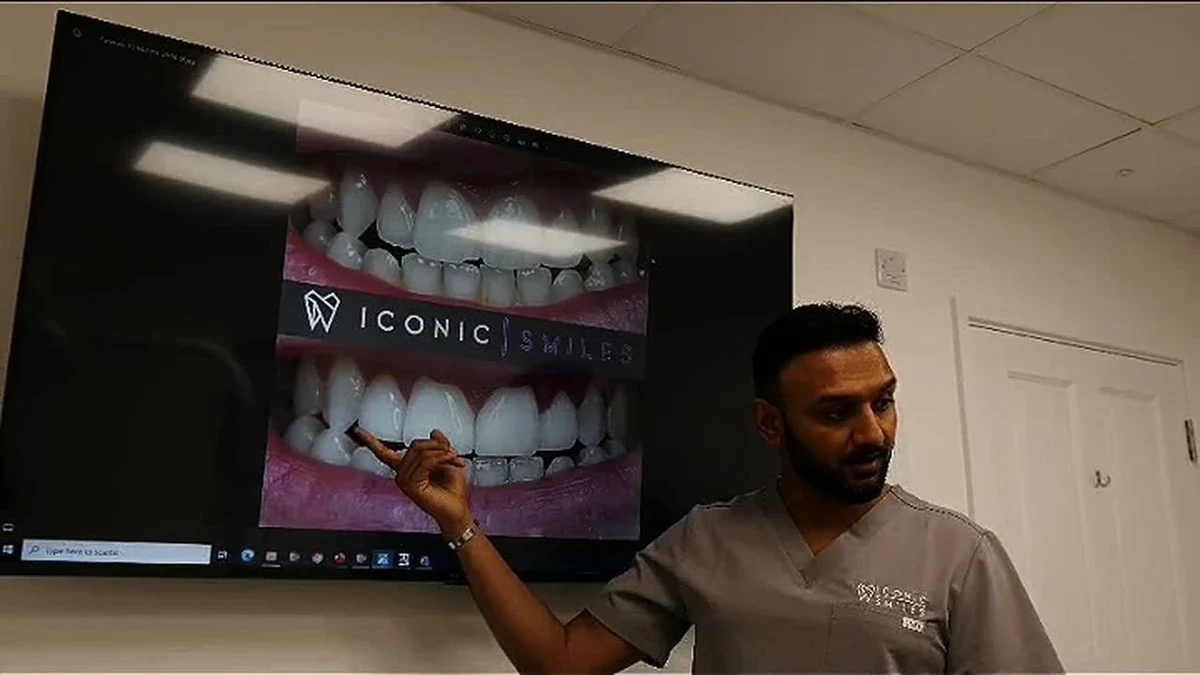
Same day can describe different treatment steps
Some people can have implants and temporary teeth fitted on the same day, but that does not usually mean treatment is complete. Immediate placement means putting an implant in when a tooth is removed; immediate loading means connecting teeth for early use. The final crown or bridge is a separate stage. Your plan should make clear which of these is being offered. [1]
Eligibility depends on the clinical conditions
Placement and loading protocols require appropriate case selection. The clinician needs to assess the site and the restoration planned, rather than promise a fixed timetable from a photograph. Ask what the alternative sequence will be if the conditions needed for the intended immediate protocol are not achieved. [1]
A temporary tooth does not remove the healing phase
Implant treatment involves biological healing as well as the visible replacement. Assessment, grafting where necessary, placement and restorative care may involve separate stages. Understand which tooth is provisional, how it should be used and when the definitive restoration is expected to be considered. [2]
Compare the complete plan
Compare the design, future care, possible complications and complete fee, including the alternative if treatment needs to be staged. A clear plan should explain suitability and what could change, so you can weigh the convenience of early teeth alongside the full course of care. [3]
Bring the medical and oral picture into planning
Tell the team about health conditions, medicines, smoking, previous dental treatment and difficulties with cleaning or eating. The clinician assesses the available site and the proposed prosthesis, with appropriate investigations. These details can affect the sequence and risk discussion. Be clear about the practical recovery commitments you can manage. A plan that depends on particular aftercare should address barriers before surgery, rather than obtain agreement to instructions the patient does not understand or cannot realistically follow. [source]
The operation day does not complete every restorative decision
Leaving with fixed temporary teeth can be an important stage in a full-arch course, but it does not mean that the definitive restoration has already been completed. The implants, the early prosthesis and the final bridge are different parts of the pathway. Confirm which restoration is being provided and what later stages remain. The useful timetable identifies the purpose of each appointment and the clinical conditions needed to progress, rather than promise one completion date before all relevant findings are known. [source][source]
Further questions to consider before treatment
- Discuss what temporary teeth you may wear during implant healing, and what eating and cleaning instructions might apply.
Consider whether another definitive option is reasonable
If the preferred implant pathway is unsuitable or its burden does not fit your priorities, discuss the appropriate non-implant alternatives. The NHS implant information includes different denture designs, tooth-supported options and, in suitable circumstances, no treatment among possibilities. A remaining-tooth assessment is important before assuming a whole arch must follow one package. Ask what each route preserves or changes, how it would be maintained and what the next decision would be if the initial approach did not meet the goal. NHS patient information
Compare recovery with the instructions for your procedure
Plan for some discomfort, swelling, bruising and postoperative bleeding, with recovery advice tailored to the extent of surgery and any additional procedures. You will receive instructions for your operation and contact details if recovery worries you. Increasing pain, spreading swelling, fever, pus or an unexpected bridge problem needs advice from the treating service; a general online timetable should not delay that contact. NHS patient informationNHS patient information
Progress depends on clinical readiness
The timing of the next stage depends on the planned protocol and the clinician’s assessment. Placement and loading decisions should be distinguished; ITI guidance also recommends an alternative when the preferred conditions are not met. If healing or a component problem changes the schedule, ask what has changed and how it affects the intended endpoint. A revised appointment sequence should have an explanation. Time passing alone is not a substitute for checking the site and restoration relevant to the proposed next step. Supporting source (academy.iti.org)
Know which part of treatment the promise describes
Same-day full-arch treatment usually refers to providing an early temporary replacement supported by implants. It should not be understood as a promise that every patient receives the definitive bridge and completes all care on the day of surgery. Implant placement and loading are separate decisions, and the prosthesis itself needs a clear description. Ask whether the proposed teeth are temporary or final, which jaw is involved and what later appointments remain within the treatment pathway. NHS patient informationSupporting source (academy.iti.org)
Know what changes to report
Contact the team about a new movement, fracture, sharp area, changed bite or a sudden difficulty using the temporary. Implant components can loosen or wear, and full-arch guidance also describes technical complications of interim prostheses. Do not attempt to unscrew, reshape, glue or tighten a fixed bridge at home. Explain the time of onset, what you were doing and whether there are tissue symptoms as well. That information helps the service assess the urgency and arrange review of the appropriate structure. NHS patient informationSupporting source (access.archive-ouverte.unige.ch)
Personal risk should be discussed before treatment
Medical history, oral condition and habits belong in the assessment. A systematic review of observational studies found smoking associated with early implant failure, but its group comparisons do not predict one individual’s outcome. Tell the team accurately about smoking and other relevant exposures. Ask which factors can be modified and whether they change timing or complexity. Do not alter prescribed medicines independently to try to improve healing; obtain the appropriate instruction from the clinicians responsible for your care. Read the supporting clinical study (2)NHS patient information
Compare the burden as well as the appearance
Each temporary option has practical demands. A discreet removable tooth may need adjustments, cleaning and reviews. A fixed bridge needs suitable support and may come with restrictions during healing. Compare the routines and compromises that fit your mouth and priorities, rather than assuming one type is always easier. Supporting source (access.archive-ouverte.unige.ch)
Understand a staged fixed pathway
Implants can be placed first and fitted with replacement teeth later. NHS information describes assessment, possible grafting, placement and restoration as separate stages. If this suits your case, the team should explain how your appearance and daily needs will be managed while you heal, what the timing aims to achieve and what will be checked before moving on. NHS patient information
Some decisions depend on findings during surgery
The team may need to confirm conditions for early loading during the procedure. ITI guidance identifies factors such as primary stability and the need for augmentation as reasons the preferred loading approach may change. These principles require an individual clinical judgement, not a patient trying to interpret a torque value online. Ask before surgery which findings would lead to a different sequence and who explains that change. Consent should include an alternative rather than leave the patient with an unconditional expectation of fixed teeth. Supporting source (academy.iti.org)
Obtain an eating plan you can actually follow
Ask for clear instructions on food choices, how long the advised restrictions apply and what would prompt a change. The appropriate advice depends on the operation, implant support and temporary design. Explain any dietary, medical or practical difficulty before you go home. Do not use comfortable chewing as an independent test of whether greater loading is safe. If eating becomes unexpectedly difficult or the bridge feels different, report the finding rather than repeatedly test the restoration with hard food. NHS patient information
Completion includes a continuing-care plan
The final bridge moves the patient into long-term supportive care rather than ending the need for review. EFP guidance recommends periodic assessment of peri-implant health after restoration. Ask how the bridge will be cleaned, who provides maintenance and what happens if a component is damaged. Confirm the contact route and any separately charged care. The end of the restorative sequence should leave you understanding the finished prosthesis and its upkeep, with responsibility for future concerns as clear as responsibility for the operation. Read the supporting clinical study (2)
Know the infection emergency threshold
Call 999 or go to A&E if swelling makes breathing, speaking or swallowing difficult. Significant mouth swelling or eye symptoms such as painful swelling or affected vision also require emergency attention under NHS dental-infection advice. These symptoms should not wait for a planned implant review. For concerns that do not meet that threshold, seek the appropriate urgent dental assessment rather than try to decide from the appearance of the temporary teeth alone whether the tissues are safe. NHS patient information
Agree the alternative before the operation
Clarify what replacement and support will be available if the preferred immediate bridge cannot be provided. The appropriate option depends on the actual plan and surgical findings. Ask how the alternative affects function, appearance, appointments and fees. Having an explained fallback does not diminish advanced treatment; it makes the decision more dependable. The patient should know how the team will preserve a workable pathway if immediate loading is not the appropriate choice on the day.
The temporary provides experience that should be discussed
Explain what you notice about speaking, cleaning, chewing within the prescribed limits and the visible tooth arrangement. This feedback can inform the discussion of the intended final restoration, but it does not independently establish that every requested change is feasible. Ask what will be reviewed and how a proposed adjustment relates to the wider design. A temporary stage is most useful when its observations are recorded and considered, rather than assuming the definitive bridge must copy it without further assessment.
Clarify cleaning around the wound and under the bridge
The surgical site may need a modified routine, while the rest of the mouth still needs care. Ask the team to demonstrate the areas and aids relevant to the actual bridge and explain when the routine changes as recovery progresses. A product list is not enough if you cannot reach the intended surfaces. Report difficulty, discomfort or uncertainty. The EFP guidance makes prevention part of planning and continuing implant care, so access for maintenance should be considered alongside the prosthesis rather than improvised after fitting. NHS patient informationRead the supporting clinical study (2)
Bleeding that does not settle needs urgent attention
Follow the pressure instructions supplied after surgery. Guy’s and St Thomas’ advises emergency-department assessment if bleeding continues despite its stated pressure measure. If your own instructions do not resolve the problem, obtain urgent help rather than repeatedly disturb the wound or assume the bridge prevents a complication. Tell the clinical service about the operation and relevant medicines. Do not independently stop prescribed anticoagulants or start leftover medication in response to a postoperative problem. NHS patient information
Assess the remaining teeth before a full-arch decision
If natural teeth remain, the plan should explain their prognosis and why extraction is recommended where proposed. A convenient surgical sequence is not, by itself, a reason to remove a maintainable tooth. Discuss the diagnosis, reasonable retention options and the consequences of changing to a full-arch prosthesis. Some patients need replacement of an entire arch; others need a different extent of care. A full-arch assessment should establish the clinical need rather than begin with a fixture package and fit the diagnosis around it.
Agree the logistics and cost before consent
The written plan should identify the expected temporary, the alternative if findings change, the visits needed and what is included in the estimate. Clarify who adjusts the temporary and how concerns are managed outside planned reviews. At Iconic Smiles, confirm the clinicians and locations involved in the surgical and restorative stages. The patient should leave the planning discussion knowing how they will be supported through the interim period, including an honest explanation of which features cannot be guaranteed in advance. Meet the Iconic Smiles dental team · Find an Iconic Smiles practice
The first phase concentrates on the surgical site and temporary
Use the written instructions for your procedure, including eating, cleaning, prescribed medicines and the temporary restoration. The extent of surgery and any associated grafting affect the advice. An early fixed bridge still needs to function within the chosen loading plan. Do not treat the appearance of complete teeth as permission to change the prescribed routine. If practical difficulties make the instructions hard to follow, tell the team promptly so they can assess the problem and give appropriate guidance. NHS patient informationSupporting source (academy.iti.org)
Attend the planned reviews and discuss the transition
Reviews allow the team to assess recovery and the temporary rather than rely only on whether it looks intact. Bring practical feedback about cleaning, eating and appearance and ask what remains before definitive treatment. Confirm which clinician handles adjustments, the contact route between visits and the arrangements for the final bridge. A useful care plan makes the temporary phase manageable while protecting the intended long-term reconstruction, with each change in instructions explained rather than guessed from another patient’s experience. NHS patient information
Persistent altered sensation should be reported promptly
Local anaesthetic produces temporary numbness, but altered sensation continuing beyond the expected recovery needs advice. Oral-surgery guidance recommends contacting the service about ongoing numbness after the anaesthetic should have worn off. Report the area affected and the time course rather than wait for a distant routine appointment. A general article cannot establish the cause or prognosis, and it should not be used to recommend self-treatment for a possible nerve-related concern. NHS patient information
Research and guidance
- Implant Placement and Loading Protocols - Consensus Statements - ITI ITI â International Team for Implantology
- Dental implants - Overview | Guy's and St Thomas' NHS Foundation Trust
- Recommendations for Implant-Supported Full-Arch Rehabilitations in Edentulous Patients: The Oral Reconstruction Foundation Consensus Report.
Your next step, when you’re ready
We would be pleased to welcome you for a £30 consultation at your preferred Iconic Smiles practice. Bring your questions, and we can talk through the options that may suit you.
Any additional investigations and their fees will be explained before you decide.