
Dental implants — replacing missing teeth
Several missing back teeth: which gaps should you replace first?
Missing several back teeth can change how you eat. Explore which spaces to consider first and how a staged treatment plan might work.
Explore your tooth replacement options
If you are considering replacing a tooth or several teeth, a £30 consultation gives you a chance to explain what matters most, ask questions and explore the options with our team.
£30 for a planned-treatment consultation. Scans, additional investigations and emergency assessments may have separate fees; please confirm when booking.
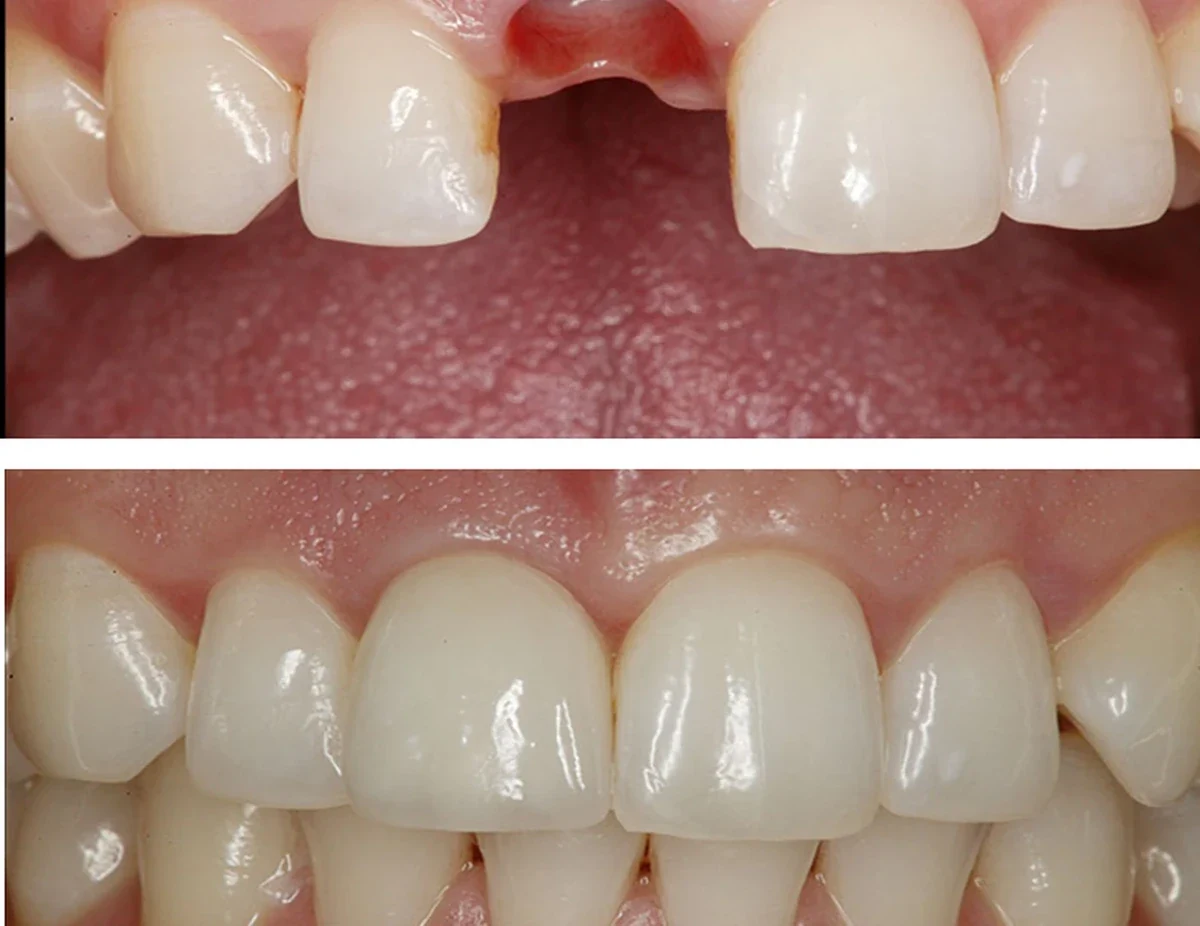
When you are missing several back teeth, deciding what to do can be surprisingly difficult. Perhaps you can still eat reasonably well, but you avoid chewing on one side. Maybe you are worried that more teeth will move into the gaps. Or you know that replacing every missing tooth with an implant would be a substantial investment, and you want to understand where the greatest benefit might come from.
There is a common assumption that every missing back tooth must be replaced, ideally with its own implant. That is not always true. For some people, restoring particular chewing areas can make a meaningful difference. For others, a stable, healthy dentition with fewer back teeth may provide acceptable function. The right priority depends on your bite and how the remaining teeth work together.
What makes the back teeth so important?
Back teeth help break down and grind food. Their broad biting surfaces distribute chewing forces, while the front teeth are better suited to cutting and guiding certain movements. When several molars or premolars are missing, people may unconsciously change how they chew.
Some begin favouring one side. Others take longer to eat or avoid particular foods. But symptoms are not identical for everybody. Two patients with similar gaps may have very different function depending on the teeth that remain, their jaw relationships and the condition of those teeth.
Do all missing molars need replacing?
Not necessarily. Dentistry recognises the concept of a shortened dental arch: a mouth in which some back teeth are absent but enough teeth remain to provide useful function. Research has explored whether selected adults can maintain comfort and oral health without replacing every lost molar.
A British Dental Journal review found insufficient evidence to reject the shortened dental arch as an option in appropriate circumstances. A separate systematic review found too little high-quality evidence to declare one replacement strategy best for every adult with fewer teeth. These findings are not an argument against implants. They support an individual, evidence-based discussion about which spaces truly need treatment. British Dental Journal review; systematic review of shortened dental arches.
If your chewing is satisfactory, your remaining teeth are healthy and your bite is stable, monitoring selected gaps may be reasonable. If you struggle with food, have an unbalanced bite or place excessive loads on the remaining teeth, replacement may offer clear practical value.
Which gap should you look at first?
The answer often depends on the pattern of missing teeth, not simply their position. For example, a missing pair of back teeth on the side you normally chew with may affect daily life more than a single tooth at the very back. But the clinician also has to consider the opposing teeth and the support available on the other side.
Your dentist may assess which teeth meet when you close your mouth, whether you have contacts on both sides, and whether the remaining teeth are carrying more load than is comfortable. The aim is to identify the most helpful change, rather than start automatically with the biggest or most visible gap.
What if you have no molars on one side?
This is a particularly useful situation to assess. Some patients compensate well by chewing on the opposite side. Others find the imbalance frustrating, especially with tougher foods. The effect on function depends on how many premolars remain, which opposing teeth are present and whether the bite feels stable.
You may be offered an implant-supported crown or bridge to restore a useful chewing unit. Alternatively, a removable partial denture may be worth considering. The appropriate option depends on available bone, gum health, space, bite and budget.
Do wisdom teeth count?
Wisdom teeth deserve a separate conversation. Many people function well without their third molars, and replacing an absent wisdom tooth is not routinely necessary simply because a gap exists at the back of the mouth. The situation can be different if a wisdom tooth plays a useful role in your bite or if there are unusual restorative circumstances.
What happens to the teeth next to a gap?
Teeth can sometimes drift or tilt towards spaces over time, and opposing teeth may change position when they no longer meet a tooth. These changes are not inevitable in every person and do not progress at the same rate for everyone.
The important question is whether movement is occurring in your mouth and whether it affects function or a future treatment plan. A gap left for years may have less restorative space than it once did. Conversely, an old gap may have remained stable without causing a meaningful problem.
Should you replace upper or lower back teeth first?
There is no universal preference for the upper or lower jaw. Chewing requires teeth to work against each other. Replacing an upper molar that has no useful opposing contact may not give the same immediate benefit as restoring a pair of teeth that can function together. Equally, a proposed lower restoration must be planned around the condition and position of the upper teeth.
A well-explained plan looks at the entire bite. Ask your dentist to show you which teeth will contact the new restoration and what improvement they expect. If several stages are proposed, understand how each stage will affect the next.
Are implants automatically the best solution?
Implants can be very useful because they support replacement teeth without relying on a removable denture and may avoid some types of preparation of neighbouring natural teeth. They still involve surgery, healing, financial investment and long-term maintenance.
A tooth-supported bridge may be suitable in selected cases, particularly if adjacent teeth already need substantial restorations. A partial denture may replace several teeth without multiple implant procedures. Sometimes the preferred first step is to stabilise gum health and improve cleaning rather than replace a tooth immediately.
The British Society of Periodontology emphasises that implants require ongoing self-care and professional monitoring and that restorations may need maintenance or replacement over time. BSP implant FAQs. It is reasonable to include those future commitments in your decision.
Can treatment be carried out in stages?
Often, yes. A staged approach can be helpful when you have several spaces, differing priorities or a budget to manage. The plan should still be designed as a whole before the first stage begins. Otherwise, a decision made for one gap might inadvertently limit what can be done later.
Ask which treatment would provide the greatest functional benefit first, which steps depend on each other and whether delaying a particular stage is likely to make it more difficult. Your clinician may advise treating active decay or gum disease before implant surgery, as oral health is central to long-term success.
Questions to take to your appointment
It helps to arrive with a clear sense of what bothers you. Is it avoiding meat or crusty bread? The feeling that one side does all the work? Food trapping in a particular gap? Or simply wanting to know whether the remaining teeth are likely to stay stable?
Ask your dentist to identify which missing teeth they would prioritise and why, whether any gaps could reasonably be monitored, and what difference each replacement should make. Then compare implant-supported, bridge and removable alternatives where appropriate.
At Iconic Smiles, a £30 consultation can help begin that discussion. You do not have to commit to replacing every missing tooth. The purpose of an assessment is to find a sensible plan that fits your needs and your mouth, not to turn every gap into an automatic procedure.
The main thing to remember
Several missing back teeth do not necessarily call for several identical treatments. The most valuable plan is one that improves the way you eat, protects the health of the teeth you still have and makes financial and practical sense. For one person that may mean replacing a single strategic tooth. For another it may involve a bridge, multiple implants or a staged rehabilitation.
Frequently asked questions
Is it bad to chew on one side? Many people do it, but if it reflects missing teeth, discomfort or difficulty eating, it is worth assessing. The need for treatment depends on the cause and your overall bite.
Could I replace just one of three missing molars? Possibly. A clinician can assess whether restoring a particular contact would improve function and how that choice fits the long-term plan.
Will leaving a gap make neighbouring teeth move? Movement is possible, but it varies. Your dentist can assess your current tooth positions and whether monitoring or treatment is appropriate.
Will I need a dental implant for every tooth? Not necessarily. The number of implants and the choice of separate crowns or a bridge depend on anatomy, forces and restorative design.
Clinical sources
Your next step, when you’re ready
We would be pleased to welcome you for a £30 consultation at your preferred Iconic Smiles practice. Bring your questions, and we can talk through the options that may suit you.
£30 for a planned-treatment consultation. Scans, additional investigations and emergency assessments may have separate fees; please confirm when booking.