
Dental implants — replacing missing teeth
Zirconia vs acrylic full-arch implant teeth: choosing the material
Compare zirconia and acrylic full-arch implant teeth, including appearance, weight, repairability, cleaning and the maintenance questions to ask.
Explore your tooth replacement options
If you are considering replacing a tooth or several teeth, a £30 consultation gives you a chance to explain what matters most, ask questions and explore the options with our team.
£30 for a planned-treatment consultation. Scans, additional investigations and emergency assessments may have separate fees; please confirm when booking.
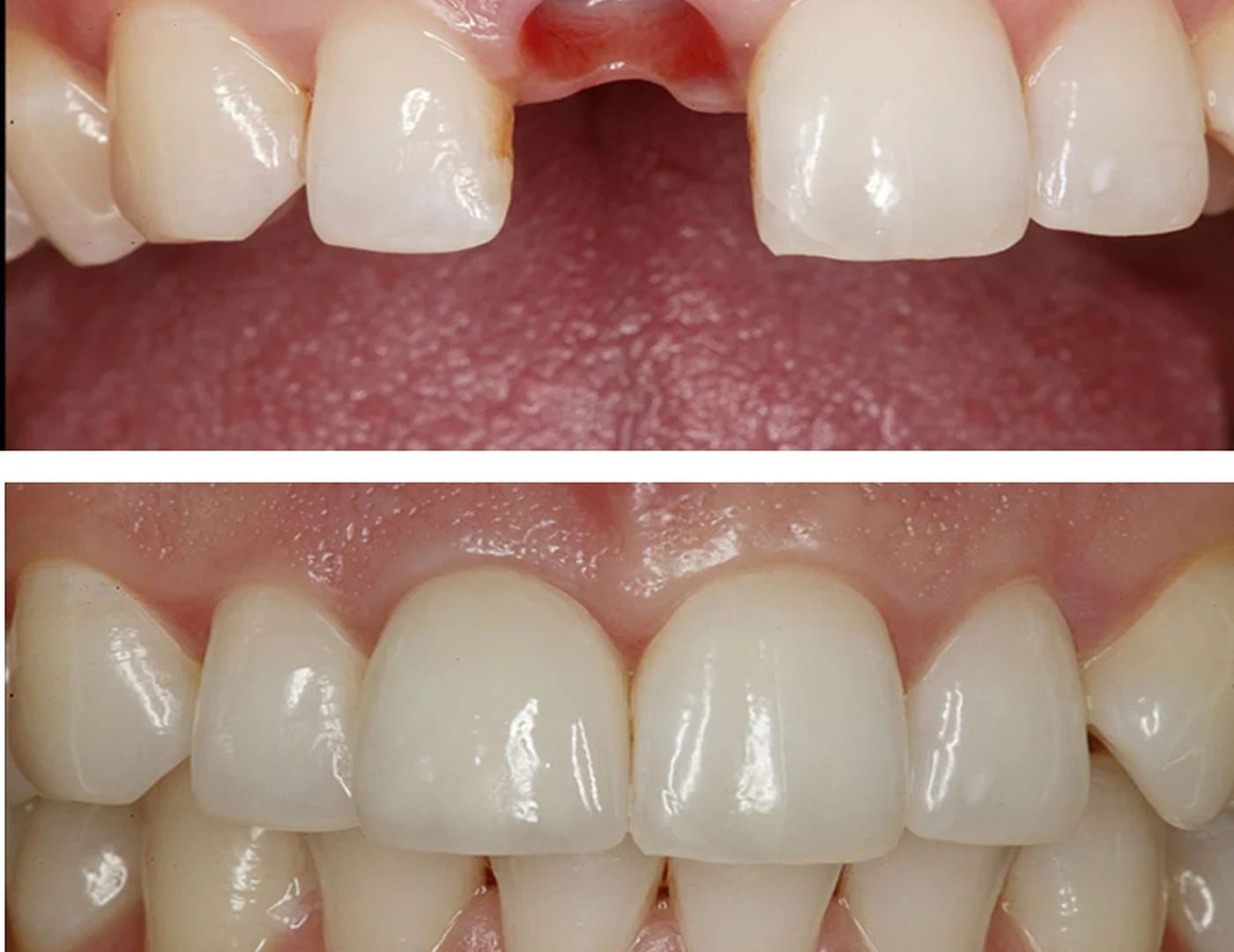
If you are considering replacing most or all of your teeth with a fixed implant-supported bridge, it is perfectly reasonable to concentrate first on the new smile. Will it look natural? Will you be able to eat comfortably? Will it feel secure when you laugh? But one question deserves more attention than it often receives: what, exactly, will your new teeth be made from?
Two materials you are likely to encounter are acrylic and zirconia. Both can be used to create a full set of fixed teeth supported by dental implants. Neither should be chosen simply because one sounds more modern or costs more. The right decision depends on the design of the bridge, your bite, the available space, how the teeth will be cleaned and what matters most to you over the next decade.
First, what are you actually comparing?
A full-arch implant restoration is not just a row of replacement teeth. It is a carefully engineered structure attached to implants positioned in the jaw. Some designs use a metal framework with acrylic teeth and gum-coloured acrylic attached to it. Others use zirconia, a strong dental ceramic, sometimes made as a largely single-piece, or monolithic, restoration. There are also hybrid and layered versions.
What does acrylic have going for it?
Acrylic has been used in implant dentistry for many years. It can produce attractive replacement teeth and pink gum contours, and it is relatively straightforward for a dental laboratory to adjust, polish or repair in suitable circumstances. That can be useful if the bite needs refining or individual teeth suffer wear.
Acrylic-based designs may also be less expensive initially, although the complete fee depends on the framework, laboratory work, implant system and complexity of your case. The important distinction is between a lower starting price and the total cost of ownership. Acrylic teeth can wear, stain or chip over time, especially if you grind your teeth or place heavy forces on the bridge. Some repairs are simple; others require the bridge to be removed and sent to a laboratory.
An acrylic restoration is not automatically a second-rate choice. A thoughtfully designed acrylic bridge may be entirely appropriate, particularly when repairability, weight, available space or financial priorities influence the decision. The question is whether its likely maintenance needs have been explained honestly.
Why do some patients choose zirconia?
Zirconia is a dental ceramic used in crowns, bridges and full-arch restorations. It can be highly polished and made to look natural, with subtle changes in tooth shape, colour and translucency. In some designs, it offers excellent resistance to surface wear and fracture.
It is tempting to assume that zirconia is indestructible. It is not. A bridge can still develop complications involving screws, connectors, opposing teeth, ceramic layers or the implants underneath. A highly polished, monolithic zirconia bridge behaves differently from a veneered zirconia bridge. That distinction matters because the evidence suggests that chipping is more common when a separate ceramic layer is added to certain zirconia restorations.
A 2026 umbrella review of long-term research reported that fixed complete-arch restorations can have high survival rates, but that complications vary by material and design. The authors found that monolithic zirconia and screw-retained designs tended to have fewer technical complications than some alternatives. These are population-level findings, not a promise of how one individual's bridge will perform. Research: Journal of Prosthetic Dentistry, 2026.
Will zirconia feel harder or sound different?
Material affects how a restoration behaves, but patients experience more than the material itself. The shape of the teeth, how your upper and lower jaws meet, the thickness of the bridge and the way your tongue moves around it all contribute to how natural it feels.
Zirconia is a rigid ceramic; acrylic has different physical properties. Some patients notice changes in the sound of their teeth meeting or in how chewing feels, particularly during the adjustment period. It would be misleading to promise that one material always feels more natural. A bridge that is beautifully made but bulky or poorly balanced may feel unfamiliar whatever it is made from.
During planning, ask how your bite will be tested and whether a provisional set of teeth will help you assess appearance and speech before the final restoration is made. The opportunity to adjust tooth position before final manufacture can be more valuable than choosing a material from a brochure.
Which looks more like real teeth?
Both can look extremely good. Natural-looking results depend on proportion, surface texture, colour variation, the relationship between the teeth and lips, and the appearance of any replacement gum material. A uniform row of very white teeth may be striking, but it is not necessarily what you want.
What if you grind your teeth?
Teeth grinding, or bruxism, is a particularly useful topic to discuss before treatment. It can increase mechanical demands on both the bridge and its components. Your dentist will assess how your jaws meet, the opposing teeth or restoration, and whether a protective night-time appliance may be appropriate.
What does each option mean for cleaning?
Neither material is self-cleaning. Plaque can accumulate around implants and underneath fixed bridges, particularly where the contours make access difficult. Your bridge needs to be shaped so that you can clean it effectively using the aids recommended for your mouth.
The British Society of Periodontology explains that dental implants require daily self-care, regular professional monitoring and, sometimes, removal of a fixed restoration to allow more thorough cleaning. The shape of the prosthesis is part of making that possible. British Society of Periodontology: dental implant patient information.
Before agreeing to treatment, ask the clinician to show you exactly where your brush or other cleaning aids will go. If you cannot understand how you will clean a proposed design, keep asking until the answer is clear.
Which material lasts longer?
This is the question everyone wants answered, and the most responsible response is that survival depends on more than the material. Implant health, the bite, the framework, the number and positions of implants, personal habits and ongoing maintenance can all influence outcomes.
Research comparing different full-arch systems is encouraging, but studies do not all measure complications in the same way or follow patients for the same length of time. An older systematic review of monolithic zirconia found promising clinical results while emphasising the limitations of long-term evidence available at that point. Systematic review of monolithic zirconia full-arch restorations.
Five questions worth asking before you decide
- Is the proposed restoration monolithic zirconia, layered zirconia or acrylic on a framework?
- Why is that construction suitable for my bite, smile and available space?
- What can be repaired in the surgery, and what would need laboratory work?
- How will I clean beneath it, and what professional maintenance is expected?
- What is included in the quoted fee, and what might cost extra in later years?
So which would we recommend?
For someone considering a fixed full-arch smile, the best starting point is a clinical assessment and a conversation about priorities. Zirconia may be attractive for its appearance and resistance to certain technical complications. Acrylic can offer practical advantages around adjustment, repair and initial cost. Neither makes a good treatment plan out of a poor one.
At Iconic Smiles, the sensible first step is to explore whether full-arch implants are suitable for you and what type of final restoration could meet your expectations. A consultation is £30, giving you the opportunity to discuss the possibilities before making a major commitment. Any recommendation should follow examination, appropriate investigations and a personalised treatment plan.
Frequently asked questions
Are zirconia teeth always better than acrylic teeth? No. The bridge's design, available space, bite and maintenance requirements matter as much as its material. The most expensive material is not automatically the best option for you.
Can acrylic implant teeth be replaced later with zirconia? Sometimes, but it is not a guaranteed simple swap. Implant positions, connectors, space and bite must all be compatible with the new design. Ask about upgrade possibilities before treatment begins.
Will either material stop gum problems? No. Implant health still depends on plaque control, risk-factor management and professional monitoring. The material cannot compensate for a bridge that is difficult to clean.
Can I choose how white my new teeth will be? Usually, shade and appearance are planned with you, but the final result also depends on the material, design and laboratory process. Discuss your preferred appearance early, ideally before any definitive teeth are made.
Clinical sources
Your next step, when you’re ready
We would be pleased to welcome you for a £30 consultation at your preferred Iconic Smiles practice. Bring your questions, and we can talk through the options that may suit you.
£30 for a planned-treatment consultation. Scans, additional investigations and emergency assessments may have separate fees; please confirm when booking.