
Dental implants — replacing missing teeth
Titanium or zirconia dental implants: comparing the materials
The fixture is the part placed in bone. The visible crown, bridge or denture is a separate part of implant treatment.
Explore your tooth replacement options
If you are considering replacing a tooth or several teeth, a £30 consultation gives you a chance to explain what matters most, ask questions and explore the options with our team.
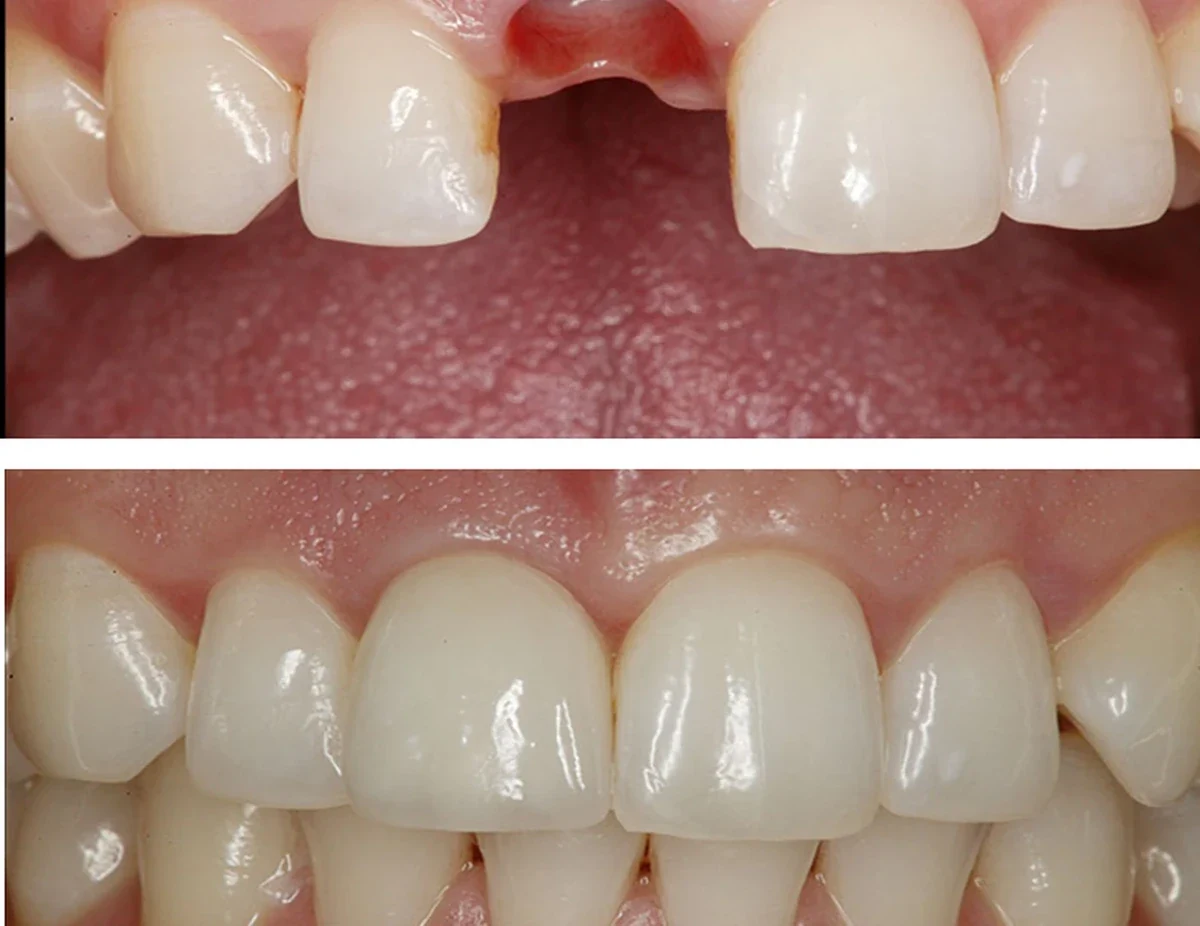
Distinguish the implant fixture from the tooth above it
Titanium and zirconia can be used for the implant placed in bone, while the visible crown or bridge is a separate component. A zirconia crown therefore does not necessarily mean a zirconia implant. Before comparing materials, establish which part of the proposed treatment each name describes. [1]
What the comparative evidence can establish
A 2023 systematic review found four publications from two distinct randomised-trial populations, involving 100 zirconia and 99 titanium implants. Its short-term comparison did not identify a statistically significant survival difference at twelve months. The authors called for further long-term trials. A limited comparison is not proof that all designs have identical outcomes or that zirconia lasts longer. [2]
Survival, success and appearance are different outcomes
An implant remaining in place is not the same outcome as remaining free from complications. The review also considered clinical, aesthetic and radiographic measures. A favourable appearance score cannot settle long-term durability, just as a survival percentage cannot establish that maintenance will be unnecessary. Ask which outcome supports the particular claim being made. [2]
Ask about the complete restoration and future serviceability
The planned crown or bridge and its components need to suit the clinical situation. Ask why the proposed system is appropriate, how the restoration will be attached and what a future component repair would involve. A material preference should be considered alongside the intended function, alternative options and the practical maintenance pathway, rather than treated as the entire plan. [1]
Treat material-sensitivity and metal-free claims carefully
If avoiding a material matters to you, explain the reason and ask which components the claim covers. Concerns about an adverse reaction require a proper history and assessment. Advertising and consent should explain meaningful limits; no material should be presented as universally risk-free or objectively superior for every patient without suitable evidence.
Questions that make the choice clearer
Ask for the names of the fixture material and system, the proposed visible restoration, the evidence relevant to that design and indication, the reasonable alternatives and the total fee. Clarify whether your concern is appearance, material preference or a clinical recommendation. Documenting those differences helps prevent a zirconia crown from being compared with a whole ceramic-implant treatment as if they were the same purchase. [1]
Titanium or ceramic dental implants: how should you choose?
The fixture material is one part of the plan
Titanium and zirconia fixtures should be compared using evidence for the actual implant designs and indication. The material of an implant fixture is different from the material of the visible crown. A systematic review of zirconia and titanium implants found a limited comparative clinical evidence base and emphasised the need for longer follow-up. [2]
Short-term comparisons do not settle lifetime performance
The comparative review included few distinct trial populations and assessed outcomes such as survival, complications and appearance. Its findings should not be stretched into a claim that a ceramic implant is always safer, allergy-free or clinically superior. The question is what is known about the specific proposed option in a situation like yours. [2]
Check the treatment pathway and alternatives
Ask which fixture and restoration are proposed, why that combination is appropriate, and how future maintenance or component problems would be managed. Surgery, healing and restorative stages remain relevant whichever material is chosen. A bridge, a removable denture or no replacement may also be reasonable in an individual case. [1]
Keep the consent discussion specific
Tell the clinician about relevant medical conditions, medicines and any history that concerns you. Ask what evidence addresses that concern rather than relying on a material label. Your clinician should explain expected benefits, material risks, alternatives, likely prognosis and costs before you decide. [1]
Titanium Dental Implant Materials: What Patients Need to Know
Titanium alloy selection is a small part of prognosis; surface properties, implant geometry, tissue conditions and restorative loading also matter.
A patient has read about corrosion and wants to know whether a ceramic implant is automatically safer.
Most mainstream implant systems have extensive titanium-related evidence, whereas a proposed alternative should be assessed by its specific system and published clinical follow-up. Implant components form an engineered junction; material discussions must include crown contacts, component fit and maintenance rather than speculative metal toxicity.
If you are concerned about different metals interacting in the mouth, the clinician should explain what is known without overstating it. The junction between the implant and its connecting abutment also matters. A relevant specialist opinion may help where your history raises a concern that needs further assessment.
What the published evidence adds
A review of zirconia bonding strategies discusses the importance of surface treatment and MDP-containing primers; its laboratory and clinical evidence should not be interpreted as a guarantee for any particular veneer. Read the source
Research and guidance
Your next step, when you’re ready
We would be pleased to welcome you for a £30 consultation at your preferred Iconic Smiles practice. Bring your questions, and we can talk through the options that may suit you.
Any additional investigations and their fees will be explained before you decide.