
Invisalign and teeth straightening
Invisalign, Bonding, Veneers or Whitening? Plan Your Smile
Not sure whether your smile goals call for Invisalign, bonding, veneers or whitening? Compare what each treatment changes and how a personal plan can bring the choices together.
Talk to us about straightening your teeth
You might have a particular change in mind, or simply want to know what is possible. At a £30 consultation, we can talk through your goals and explain how the next steps are planned.
ICONIC SMILES · DIAMOND APEX
Invisalign care. Diamond Apex experience.
Choose Iconic Smiles, a Diamond Apex Invisalign provider serving Hertfordshire and North London, for individually planned clear aligner treatment.
What does Diamond Apex Invisalign Provider mean?
Diamond Apex is an Invisalign provider tier recognising high annual treatment volume. It reflects extensive experience with the Invisalign system. Your treatment is planned around your teeth, bite and goals, with clinical reviews and retention discussed from the outset.
Similar-looking edges can have different causes
A recent fracture and slowly progressing tooth wear are different problems. Before choosing a cosmetic restoration, explain when the change appeared, whether one tooth or several are affected and whether there is pain or sensitivity. A small visible defect does not establish the depth of an injury or explain an ongoing wear process. [source][source]
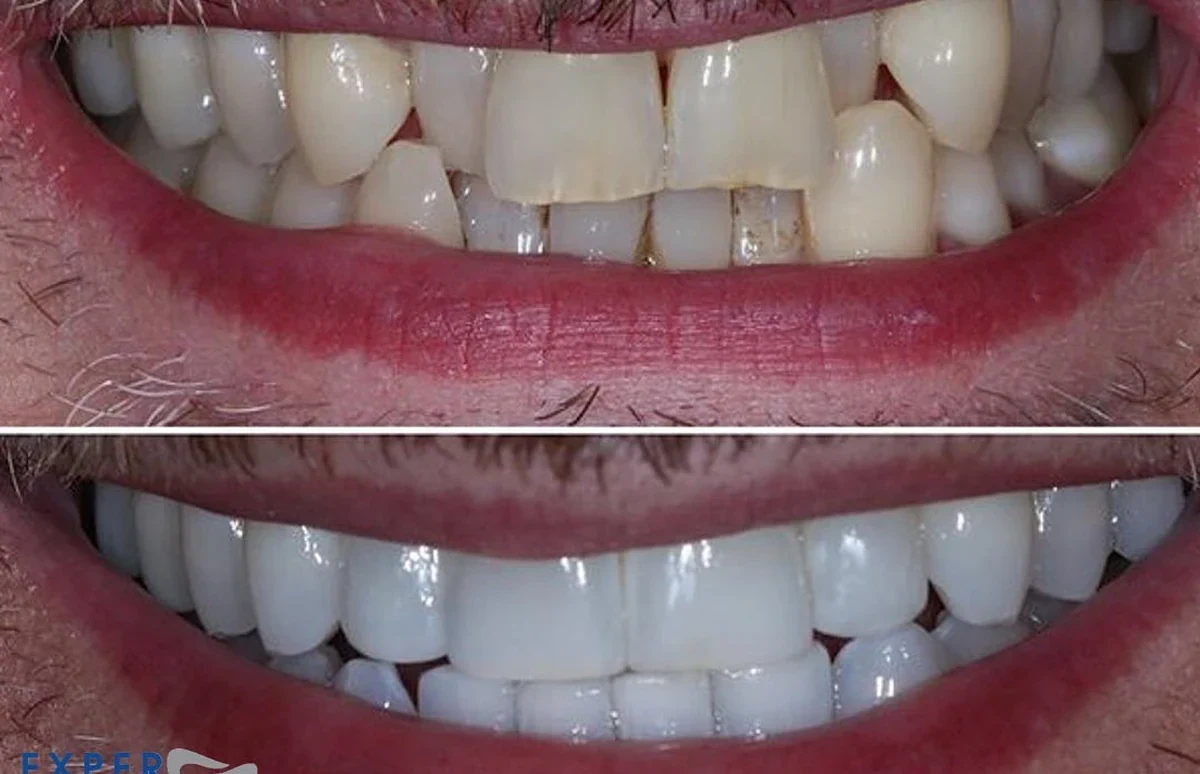
Choose smile-makeover treatments by what needs to change: position, colour, shape or missing tooth structure. Orthodontics, whitening, bonding and veneers address different parts of that picture. The suitable combination may involve one stage or several, with the least alteration needed to meet the agreed aim.
You may want straighter front teeth, a brighter shade or a small edge repaired. Describe those aims before selecting a procedure. The assessment considers tooth position, colour, shape and dental health, so the treatment can be matched to the starting teeth and the change you value.
This guide explains how these factors influence the choice between Invisalign, fixed braces, whitening, composite bonding, porcelain veneers and dental implants, and why the sequence matters.
Explore a smile designed around you. Show us the kind of change you have in mind and explore whether alignment, whitening, bonding or veneers are suitable. Introductory consultations start from £30 where available. Book an introductory consultation · Tell us what you would like to change. Alternatively, explore smile makeovers.
Explore a smile designed around you. Show us the kind of change you have in mind and explore whether alignment, whitening, bonding or veneers are suitable. Introductory consultations start from £30 where available. Book an introductory consultation · Tell us what you would like to change. Alternatively, explore smile makeovers.
1. First identify what actually needs changing
A narrow-looking tooth may be genuinely small, rotated away from view or affected by its neighbour's position. Whitening changes colour; braces or aligners change position; bonding adds shape. None does all three automatically. A veneer can change several visible features but may involve irreversible preparation. Establishing the cause makes the options easier to compare.
A reliable consultation should identify which feature is driving your concern and what intervention, if any, is proportionate to it.
For instance, if teeth are healthy and only slightly crowded, alignment may allow a natural result without placing restorations. If alignment is already satisfactory but one edge is chipped, small-scale bonding may be reasonable. If multiple teeth are heavily restored or structurally compromised, porcelain or another restorative approach might be more appropriate.
2. The conservative sequence: align, improve colour, refine shape
The phrase Align–Bleach–Bond describes a possible sequence, not an automatic requirement.
Align. If tooth position is a significant contributor to the patient's concern, orthodontic movement can create more favourable proportions and perhaps reduce later restorative intervention. The clinician must examine the teeth, gums and bite and decide whether Invisalign or another appliance is suitable.
Bleach. Professionally supervised tooth whitening may improve natural tooth colour when clinically appropriate. Existing crowns, veneers and composite restorations do not respond like natural enamel, so shade planning may matter if other restorative work follows.
Bond. Composite resin can refine selected tooth edges, contours or spaces after alignment and colour have been addressed. The final design should preserve natural tooth structure where possible and remain compatible with the bite.
One stage may be sufficient, and not every stage will suit every patient. The sequence should follow the findings and intended result rather than a requirement to complete a package.
3. When porcelain veneers may be appropriate
Veneers may suit a broader appearance change when the tooth's condition or the material and colour needs make composite less appropriate. Planning includes preparation, ceramic thickness, edges, bonding, the bite and laboratory instructions. Those requirements need consideration before choosing the material.
It would be misleading to say porcelain always lasts longer in every mouth or that a ceramic restoration lasts for life. Veneers may chip, debond or require replacement. Some patients will need enamel preparation, and once natural structure is removed it cannot simply be replaced. The benefits must justify those changes.
At Iconic Smiles, restorative and cosmetic planning is led by Dr Vishal Patel. The team uses digital smile planning where helpful and works with Estetica Dental Laboratory. Tooth proportions, shade, texture and shape should be planned for the individual teeth and face.
4. If teeth are missing, plan the final smile before placing implants
A missing tooth changes more than the visible space. It can influence adjacent tooth positions, bite relationships, gum contours and the appearance of the final restoration.
If orthodontic movement and an implant are both contemplated, it may be appropriate to move natural teeth before definitive implant placement. Once integrated into bone, an implant does not move orthodontically like a natural tooth. That makes early coordination valuable.
At Iconic Smiles, Mr Mayur N. Pandya provides implant planning, Dr Kishan Patel provides specialist teeth-straightening assessment and Dr Vishal Patel contributes restorative design. Individual cases can be discussed between disciplines rather than treated as separate cosmetic packages.
INDEPENDENT RECOGNITION · PATIENT EXPERIENCE
Our independent group has received national dental-practice awards and workplace recognition. These are reasons to explore our team and approach—not guarantees of any individual clinical outcome.
Explore our awards · Read patient reviews · Hear patient stories · Meet our clinicians
5. What makes a smile look natural rather than manufactured?
A natural-looking design considers tooth length and width, front-edge positions, surface angles, translucency, shade and fine texture. Gum display and lip movement affect what you see during speech and ordinary expressions. These features can vary without every tooth being mathematically identical.
A digital simulation is a communication aid, not evidence that the exact result is biologically or mechanically achievable. A mock-up or trial approach may help in suitable cases, but the details depend on the treatment. Ask how the proposed appearance will be evaluated before irreversible work begins.
A natural result may retain minor asymmetries. Some patients prefer a more noticeable transformation; that preference is legitimate, provided it is discussed and compatible with sound clinical care.
See what this could mean for you
You do not need to decide on bonding, Invisalign or veneers in advance. Start with your goals, view genuine smile transformations and discuss what could be appropriate for your own teeth.
Explore first: Explore smile makeovers · See genuine smile transformations · Meet the treating team.
When you are ready: Arrange a consultation or send a Smile Enquiry.
6. Why gum health and the bite belong in a cosmetic discussion
Untreated gum disease or active decay should not be disguised by a cosmetic surface improvement. The gums and supporting structures form the foundation for dental work, and long-term maintenance matters. European Federation of Periodontology guidance emphasises diagnosis, personalised treatment and supportive care. [1]
Bite assessment is equally relevant when adding material to front teeth or changing the length of several teeth. If a patient has tooth wear, grinding, missing posterior support or relevant symptoms, the dentist should consider the functional implications before finalising shape and material choices.
This is not a reason to require extensive investigation for every minor aesthetic concern. It is a reason to tailor the examination to the proposed work and the patient's circumstances.
7. The role of the clinician, specialist and laboratory
Laboratory skill and scanning equipment can contribute, but the clinical plan still needs to be understandable and appropriate. Establish who is responsible, whether relevant orthodontic or periodontal advice is needed and how the laboratory receives the design records. Your clinician's assessment and fitting decisions need to work with the technician's craft.
An external laboratory can produce highly personalised work. The dentist's choice of preparation, material and clinical fitting is inseparable from the laboratory's craft.
8. How to avoid unnecessary cosmetic treatment
Ask the clinician to explain the smallest reasonable intervention that could meet your goal, what it would not achieve, and why more extensive treatment might or might not be justified. Useful questions include:
- Could alignment or whitening reduce the need for enamel preparation?
- Is my concern primarily position, colour, shape, wear or missing tooth structure?
- What alternatives have we considered and why?
- Will any proposed treatment create future replacement needs?
- What should I realistically expect from the materials?
- How will we check gum health and the bite beforehand?
- Can I decide not to proceed after the consultation?
The GDC requires clinicians to explain relevant options, risks, benefits and costs so that patients can give informed consent. [2]
Considering your own treatment? Reading about other patients can help you decide what to ask—but your plan must start with your own examination. Explore smile makeovers · View genuine patient results · Book your first conversation.
Considering your own treatment? Reading about other patients can help you decide what to ask—but your plan must start with your own examination. Explore smile makeovers · View genuine patient results · Book your first conversation.
Why the team matters when your smile makeover combines treatments
Some smile plans involve one small change; others need several disciplines. At Iconic Smiles, the dentist considering bonding or veneers can involve orthodontic, implant or periodontal colleagues when useful. The purpose of that communication is to agree the sequence and responsibilities before one stage affects another.
Our Best Dental Practice wins in Business Awards UK's 2024 and 2026 Dentistry Awards recognise the wider organisation that makes this kind of coordination possible. The 2026 award commentary highlighted technology, systems, workplace culture and community engagement; Great Place to Work ranked Iconic Smiles second among UK small organisations for employee development in 2024. These awards are meaningful because a good smile makeover involves excellent communication as well as clinical skill. (Business Awards UK — 2024 results; 2026 results; Great Place to Work — 2024 development rankings.)
Thousands of people have also shared their experiences through Google reviews. Those stories can help you understand how the team explains options and supports patients through treatment. We encourage you to look at different experiences and at genuine smile transformations, then tell us which details of your own smile matter most. Our aim is an individual result, thoughtfully planned and clearly explained.
9. Why consider Iconic Smiles for a smile makeover?
Iconic Smiles combines restorative and cosmetic dentistry with specialist orthodontic input, implant planning, access to visiting periodontal expertise and digital scanning. It offers bonding, alignment and porcelain pathways rather than restricting patients to a single treatment type.
The practice offers an introductory consultation from £30 for discussion and an initial examination. This is not a full diagnostic work-up, and radiographs and CBCT are not included. A treatment-specific plan and fees follow any clinically indicated further assessment. See fees or speak to our team.
Your next step with Iconic Smiles
Before proceeding, agree which features will change, which healthy tissues will be preserved and the order of care. The initial discussion should identify any further assessment needed, with its purpose and fee clear. You can consider the options and take time before deciding.
Ready to talk? Book a consultation at your preferred practice · Send a Smile Enquiry.
Want to explore first? Explore smile makeovers · Real results · Patient stories · Patient reviews · Meet our team · Awards and recognition · About Iconic Smiles · Fees.
Frequently asked questions
Should I straighten my teeth before veneers?
Sometimes. Alignment may reduce the amount of tooth preparation needed or improve the final position of restorations. The right sequence depends on the diagnosis.
Is composite bonding better than porcelain?
Neither is universally better. Composite may allow conservative, repairable changes; porcelain may suit different aesthetic or structural demands, usually with greater laboratory involvement and potentially more preparation.
Can I choose a very white shade?
The shade is part of a broader design conversation. Your clinician should explain how it will interact with the natural teeth, facial appearance and chosen materials.
Does a smile makeover have to involve every front tooth?
No. Treatment should be limited to what is clinically appropriate and reasonably necessary to achieve the agreed goals.
Is the result permanent?
No dental material or orthodontic result should be presented as maintenance-free or guaranteed forever.
Explore related guides
- How to Choose the Best Invisalign Provider in Hertfordshire and North London
- How to Choose a Cosmetic Dentist for a Natural-Looking Smile
- How to Choose a Dental Implant Dentist in Hertfordshire and North London
Sources
- EFP — Treatment of stage I–III periodontitis
- GDC — Obtain valid consent
- NHS — Orthodontics and retention
- GDC — Dental advertising guidance
Your next step, when you’re ready
We would be pleased to welcome you for a £30 consultation at your preferred Iconic Smiles practice. Bring your questions, and we can talk through the options that may suit you.
Any additional investigations and their fees will be explained before you decide.