
Bonding, veneers and whitening
One dark tooth: whitening, bonding, veneer or no appearance treatment?
If one tooth looks darker than the others, a consultation can explore the cause and whether whitening, bonding, a veneer or simply monitoring would suit your goals.
Discover what could suit your smile
Whether you are thinking about colour, shape or a subtle change, a £30 consultation is a welcoming place to share your ideas, ask questions and explore a personalised approach.
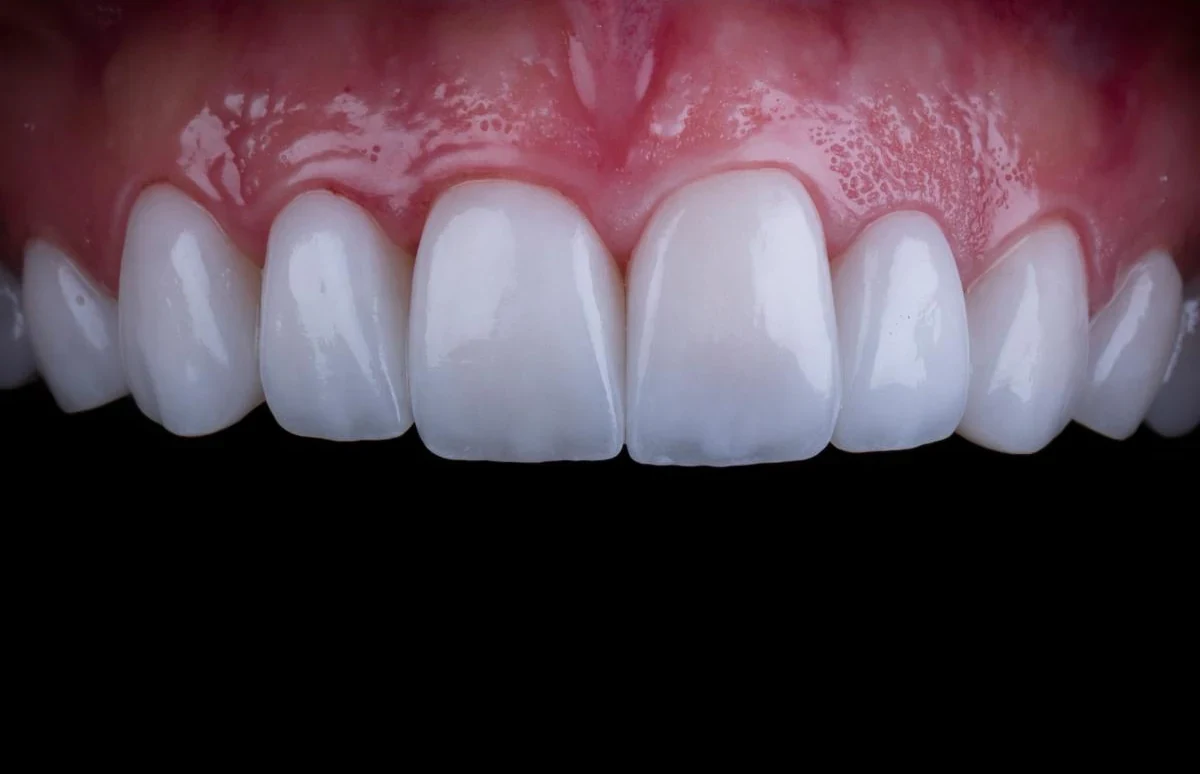
Compare appearance choices only after the tooth is assessed
Whitening, bonding or a veneer may help a darker front tooth, but the tooth needs assessing before you choose. Discolouration can follow an injury or root canal treatment, among other causes. The examination establishes whether a health problem needs care first and which appearance options suit the tooth. Covering the colour alone cannot treat an underlying disease. [1][2]
Consider professionally supervised whitening where suitable
Leeds patient information describes whitening approaches for different clinical situations and notes that results vary. A 2022 review found an internal-bleaching effect in selected root canal-treated discoloured teeth but identified study-quality and long-term stability limits. Ask which method is relevant to your diagnosis, what improvement is realistic and what risks matter. The evidence does not establish that every dark tooth responds identically or can be treated by the same protocol. Whitening may offer an appearance change without the same preparation as a covering restoration, but suitability and the expected result still need individual explanation. [1][3]
Ask what composite would mask and what care it needs
A composite approach may be discussed to change the visible appearance in suitable cases. Leeds information includes composite veneer treatment among alternatives and explains its maintenance needs. Ask whether the proposal adds or removes material, what shade limitation remains and how a repair or replacement would be assessed. Anterior-composite research reports varied outcomes and complications across different restorations, so no one lifespan applies automatically. A conservative option should not be sold as universally reversible, invulnerable or maintenance-free. The recommendation should explain why the proposed design is proportionate to the tooth and the appearance goal. [1][4]
Compare a veneer or crown through its actual indication
If a covering restoration is proposed, ask whether it addresses colour alone or another structural or restorative need. The Oral Health Foundation describes veneers and their implications. Understand the amount of preparation, important risks and future care before agreeing. A crown or veneer should not be an automatic response to every dark tooth, and changing neighbouring healthy teeth needs its own rationale. A more extensive intervention may be reasonable in a particular case, but it should be compared with the realistic alternatives rather than presented as superior simply because it can offer a uniform-looking image. [5]
Include accepting the colour with appropriate health care
You may choose no elective shade change after understanding the findings. Leeds patient information lists acceptance of the colour as an alternative. Ask whether any separate disease, symptom or structural concern still needs treatment or monitoring. No cosmetic treatment is not the same as ignoring an unhealthy tooth. Conversely, a healthy appearance difference need not become an obligation to pursue an idealised match. The clinician should explain the consequences of the choice in your situation and the route for reassessment if priorities or symptoms change. The decision belongs within an informed discussion rather than a standard package. [1]
Compare matching, maintenance and the complete costs
NHS information explains that whitening affects natural teeth and does not change existing restorations in the same way. Ask how fillings, veneers or crowns fit the plan and what happens if the response differs from the intended shade. At Iconic Smiles, request the relevant clinician, stages, review arrangements and itemised estimate. The best-supported choice is the intervention and continuing commitment you understand and accept. It should not depend on a promise of exact permanent matching, a fixed lifespan for every restoration or the assumption that treating one dark tooth requires changing the whole smile. [6][7][8]
What matters here:
Once the tooth has been assessed, compare the appearance options, any irreversible preparation and future care. You may also choose to keep the colour, while treating or monitoring any separate health need.
A colour difference is a finding, not the full diagnosis
One front tooth may look darker than its neighbours for different reasons. Leeds Teaching Hospitals describes colour changes after injury or root canal treatment and other causes of discolouration. The assessment should establish the relevant history and current condition rather than assume that a photograph proves one diagnosis. Tell the dentist when you noticed the change and whether it is progressing. A dark appearance alone should not silently become a decision for root canal treatment, a veneer or extraction. The first question is what has been found and which further assessment is needed before discussing an appearance solution. [source]
Do not let a cosmetic label replace the diagnosis
A dark front tooth needs assessment of its history and condition before the appearance plan is accepted. Leeds Teaching Hospitals describes several reasons for discolouration, while the European Society of Endodontology guideline addresses diagnosis and treatment of pulpal and apical disease. Ask what has been established and which questions remain. A photograph or absence of pain should not be used as the whole diagnosis. The patient needs to understand whether treatment is intended to manage disease, alter colour or do both. Those purposes should not be blurred into an unexplained recommendation for a veneer, root canal treatment or extraction. [source][source]
Resolve health and structural questions before the appearance plan
If a problem needs treatment, request the diagnosis, purpose and realistic alternatives of the proposed intervention. A tooth’s colour is not the whole assessment of its condition. The plan should identify any uncertainty that affects prognosis or the later restoration and explain how it will be reviewed. An elective appearance objective should remain distinguishable from necessary disease management. If another clinician contributes, clarify who coordinates the recommendation. This avoids a final restoration being selected while a relevant clinical question remains open, or a cosmetic request being treated as blanket consent for every possible health intervention. [source]
Report symptoms rather than assume they are only cosmetic
Tell the service about new or worsening pain, swelling or another concern. NHS whitening information describes possible sensitivity and gum irritation, but a patient should not diagnose every symptom as an expected whitening effect. A tooth with previous trauma or endodontic treatment still needs the appropriate assessment when circumstances change. The European Society of Endodontology guideline addresses pulpal and apical disease as a clinical question distinct from shade. Describe when symptoms began, what triggers them and how they are progressing so the team can advise on the appropriate review rather than rely only on the visible colour. [source][source]
Colour alone cannot establish the condition of the tooth
A dark front tooth needs assessment before it is treated as a cosmetic problem. If the pulp is infected, the treatment question includes controlling that infection, not simply covering the colour. NHS root-canal information describes treatment that removes infection from inside the tooth. A resin covering does not perform that treatment. [source]
Further clinical details: One Discoloured Front Tooth: Composite Bonding, Whitening or Veneer?
Whitening, composite or a veneer may help a discoloured front tooth, depending on the cause and remaining structure. An old filling, developmental variation, injury, root treatment or natural shade difference can need a different approach. Assessment should distinguish colour from structural need before preparation is proposed.
Examine the tooth before planning the shade
The clinician should check whether the tooth responds normally to tests where appropriate, whether there is existing root treatment, the size of any composite filling and the condition of the gums. A dental photograph cannot reliably distinguish every cause of darkening. Appropriate radiographs may be indicated when symptoms, trauma history or clinical findings suggest an internal issue. The patient should explain when the colour change appeared and whether it has progressed. If the tooth contains extensive restoration or has a crack, cosmetic coverage may need a different plan from a structurally sound tooth with isolated discolouration.
What whitening can and cannot change
External whitening lightens natural tooth tissues but does not alter the colour of existing composite, porcelain crowns or veneers. A dentist may discuss supervised internal whitening for selected root-treated teeth, subject to a suitable clinical assessment and protocol. A restored incisor that looks darker because of an old filling may need the filling replaced after shade stabilisation. Whitening several natural teeth before matching one restoration can make the comparison easier. Patients should understand that a whitening result is variable, requires suitable oral health and is not a permanent one-off reset of tooth colour.
Can composite disguise a dark tooth?
Composite can alter colour and shape through layers that mask the underlying tooth while preserving suitable translucency at the edge. A thin addition may not cover severe discolouration, while extra thickness can create bulk or affect the bite. It may suit a small surface change or replacement filling, with later staining and polishing considered. The foundation and shade contrast help determine how much is realistic.
When ceramic is a reasonable alternative
A veneer may offer controlled surface texture and colour where sufficient enamel exists for a reliable bond. However, thin porcelain transmits some underlying colour, and masking a very dark tooth may need a more opaque or thicker restoration. That can increase the preparation required. A full crown removes more tooth structure and should not be the default for colour alone, though it may be justified when the tooth is already extensively restored. Ask how the dentist plans to balance masking, translucency, remaining enamel and future maintenance rather than choosing a material solely by its brand.
Matching one tooth is demanding laboratory work
The neighbouring incisor has its own texture, internal markings and changing translucency. Records such as calibrated photographs, a shade map and the prepared-tooth colour help reproduce those details. Material can look different in daylight and indoor light, so a try-in helps assess the match without guaranteeing it in every condition. Discuss whether retaining a small natural difference is preferable to treating the healthy neighbour.
Choose the least destructive sufficient treatment
A comprehensive plan compares diagnosis and treatment of the underlying cause, whitening where appropriate, direct composite, veneer and crown only when indicated. Ask which option retains the most sound enamel while achieving a realistic shade improvement. The clinician should explain the sequence, anticipated maintenance, provisional stages and total fees. A single darker tooth does not automatically justify six cosmetic veneers. Precision and restraint usually matter more than the number of treated teeth.
Evidence and further reading
- NHS: teeth whitening eligibility and limitations
- Systematic review: ceramic veneer survival and complications — PMCID PMC12076113
- NHS: dental treatment choices
The practices are in Hatfield and Cheshunt in Hertfordshire, and Friern Barnet in North London. If travelling from Bedfordshire, Buckinghamshire or Essex, use the actual clinic address on your confirmation.
Confirm what “non-vital” means in your treatment plan
Non-vital means the living tissue inside the tooth is no longer alive. The team should explain whether the tooth has already had root canal treatment, whether any further care is needed and whether it can be restored. A previous root filling or dark colour alone does not establish the current health of the surrounding tissues. Read the supporting clinical study
Compare the complete plan and response to a concern
Ask what will be reviewed, how a different-than-hoped colour response changes the options and what symptoms require contact. At Iconic Smiles, request the responsible clinician and itemised fees for the proposed stages. Suspected infection needs prompt dental advice; NHS abscess guidance directs patients to emergency care for serious symptoms such as difficulty breathing or swallowing, major mouth swelling or eye involvement. A balanced decision recognises the possibility of worthwhile appearance improvement while keeping the diagnosis and limits explicit. It should never guarantee exact permanent matching or use a cosmetic ambition to dismiss new pain or swelling. Meet the Iconic Smiles dental team · See our current treatment feesNHS patient information
Follow the instructions for the treatment actually completed
A whitening course, treatment of a root-filled tooth and a covering restoration are different interventions. Ask what has been completed, what remains provisional and which instructions apply now. Leeds patient information describes different whitening approaches and the need for review, but it is not a prescription for your tooth. Do not extend, intensify or combine products without the treating clinician’s advice. If another stage is planned, clarify the purpose and the interval arrangement. A useful handover leaves you understanding both the tooth’s health plan and the appearance treatment rather than treating them as one indistinguishable procedure. NHS patient information
Consider restorations and shade together
NHS information explains that whitening affects natural teeth and does not change existing restorations in the same way. Ask how any filling, veneer or crown fits the intended appearance plan and whether additional work is appropriate. The decision should follow the assessed tooth and current shade response, not a universal timetable from an online guide. If a covering restoration is proposed, understand the amount of preparation and why it is proportionate. The plan should not assume all neighbouring teeth need alteration or make a larger intervention inevitable merely because whitening was discussed at the first consultation. NHS patient informationSupporting source (www.dentalhealth.org)
Distinguish health treatment from elective shade change
If a dental problem needs treatment, ask what it is and why the recommended intervention addresses it. If the tooth is suitable for an elective appearance change, discuss that as a separate objective. Consent should identify benefits, important risks and realistic alternatives for the actual diagnosis. A patient should not be told that every dark tooth is necessarily non-vital or that every appearance concern requires a covering restoration. Equally, an attractive shade goal should not distract from an unresolved disease or structural question. The clinical assessment should guide the order and extent of any treatment. Read the supporting clinical study
Include discomfort and procedure-specific risks
NHS whitening information describes possible sensitivity and gum irritation, and the Leeds leaflet discusses additional risks in its clinical context. Ask which are material to the proposed method and your tooth. Internal treatment of a root-filled tooth is not a do-it-yourself version of an external whitening tray. The clinician should explain the relevant precautions, alternatives and review. Do not copy a product concentration or treatment duration from a research paper or another patient. An assessment should guide the procedure, and a reassuring label such as conservative should not be translated into zero risk for every person. NHS patient informationNHS patient information
Bring the tooth’s treatment and injury history
Explain previous knocks, fractures, fillings, root canal treatment and any relevant symptoms. Earlier records may be useful if available, and the clinician should explain what information is needed. The European Society of Endodontology guideline addresses diagnosis and treatment decisions for pulpal and apical disease. That is a separate clinical question from simply matching the tooth colour. Ask how the current findings inform the options and whether another assessment is appropriate. The plan should not make you responsible for deciding whether the tooth is healthy from its colour or the absence of pain. Read the supporting clinical study
Understand what the colour review can establish
Leeds information explains that whitening response varies, may not produce a complete change and can alter later. Ask how the result will be assessed and what improvement is realistic for your starting condition. A renewed colour concern should lead to advice rather than automatic repetition or escalation of a product. It does not establish the tooth’s diagnosis from a photograph or mean every earlier treatment has failed. The clinician should explain whether further investigation, a different appearance choice, monitoring or no additional intervention is appropriate. The goal is an informed next step based on the current tooth and your priorities. NHS patient information
Begin with history and the current clinical findings
Tell the dentist when the colour changed, whether it is progressing and whether there was earlier trauma, filling or root canal treatment. Leeds patient information describes several causes of discolouration, and the European Society of Endodontology guideline addresses the diagnosis of pulpal and apical disease. Ask what has been found and what further information is needed. The sequence should follow that assessment rather than begin with an automatic cosmetic covering. A patient should understand whether the tooth needs health treatment, elective shade improvement or another approach before an irreversible intervention is accepted. NHS patient informationRead the supporting clinical study (3)
Masking a dark background is a planning issue
Composite comes in different colours and levels of translucency, which affects how well it can mask a dark tooth. Research on layering materials in a laboratory cannot guarantee that a thin covering will hide every shade or avoid preparation. Your dentist should explain the likely appearance and any limitation before you choose a final restoration. Read the supporting clinical study
Research and guidance
- Tooth Whitening - Leeds Teaching Hospitals NHS Trust
- Treatment of pulpal and apical disease: The European Society of Endodontology (ESE) S3-level clinical practice guideline.
- Comparison of the Bleaching Efficacy of Different Agents Used for Internal Bleaching: A Systematic Review and Meta-Analysis.
- Anterior composite restorations: A systematic review on long-term survival and reasons for failure.
- Veneers - Oral Health Foundation
- Teeth whitening — NHS
- Dental Team | Meet the Iconic Smiles Clinicians
- Dental Fees & Finance: Treatment Prices | Iconic Smiles
Your next step, when you’re ready
We would be pleased to welcome you for a £30 consultation at your preferred Iconic Smiles practice. Bring your questions, and we can talk through the options that may suit you.
Any additional investigations and their fees will be explained before you decide.