
Super-master guide · Invisalign and teeth straightening
Your Invisalign Journey: Assessment, Aligners, Refinements and Retention
Patient journey and responsibilities rather than treatment-cost, speed or Invisalign-vs-braces comparisons.
Talk to us about straightening your teeth
You might have a particular change in mind, or simply want to know what is possible. At a £30 consultation, we can talk through your goals and explain how the next steps are planned.
ICONIC SMILES · DIAMOND APEX
Invisalign care. Diamond Apex experience.
Choose Iconic Smiles, a Diamond Apex Invisalign provider serving Hertfordshire and North London, for individually planned clear aligner treatment.
What does Diamond Apex Invisalign Provider mean?
Diamond Apex is an Invisalign provider tier recognising high annual treatment volume. It reflects extensive experience with the Invisalign system. Your treatment is planned around your teeth, bite and goals, with clinical reviews and retention discussed from the outset.
Thinking about straightening your teeth can be exciting, but it may also feel like a commitment you cannot easily picture. You might be wondering whether aligners will be noticeable at work, how much your routine will change, or what happens if your teeth do not move exactly as planned. Understanding the whole journey can help you make a considered choice rather than judging treatment by a photograph of the final smile.
For a broader comparison, read Invisalign versus fixed braces. This article focuses on the stages of a planned Invisalign treatment itself: assessment, simulation, aligner wear, monitoring, possible refinements and what keeps teeth stable afterwards. Your own sequence may differ according to your bite and oral health.
A related treatment-planning question is explored in Invisalign Attachments, IPR and Refinements: Understanding Your Treatment Plan. This related guide addresses a different patient question and can help you compare your options without rushing a decision.
Stage one: understanding what you would like to change
An effective consultation starts by listening. Some people are mainly concerned about crowded front teeth; others have difficulty biting together or have noticed their teeth moving since earlier orthodontic treatment. There may also be gum problems, missing teeth or worn restorations that affect the plan.
A clinician should assess the whole bite, tooth and root positions, gum health and any existing dental work. It is important to distinguish a cosmetic improvement from correction of a functional problem. The treatment should have agreed objectives that can be checked during and after care.
It is reasonable to say that you want a subtle improvement rather than the straightest possible appearance. It is equally reasonable to raise concerns about bite comfort and long-term stability. Clear expectations make the planning discussion more useful.
Records, scans and a digital treatment simulation
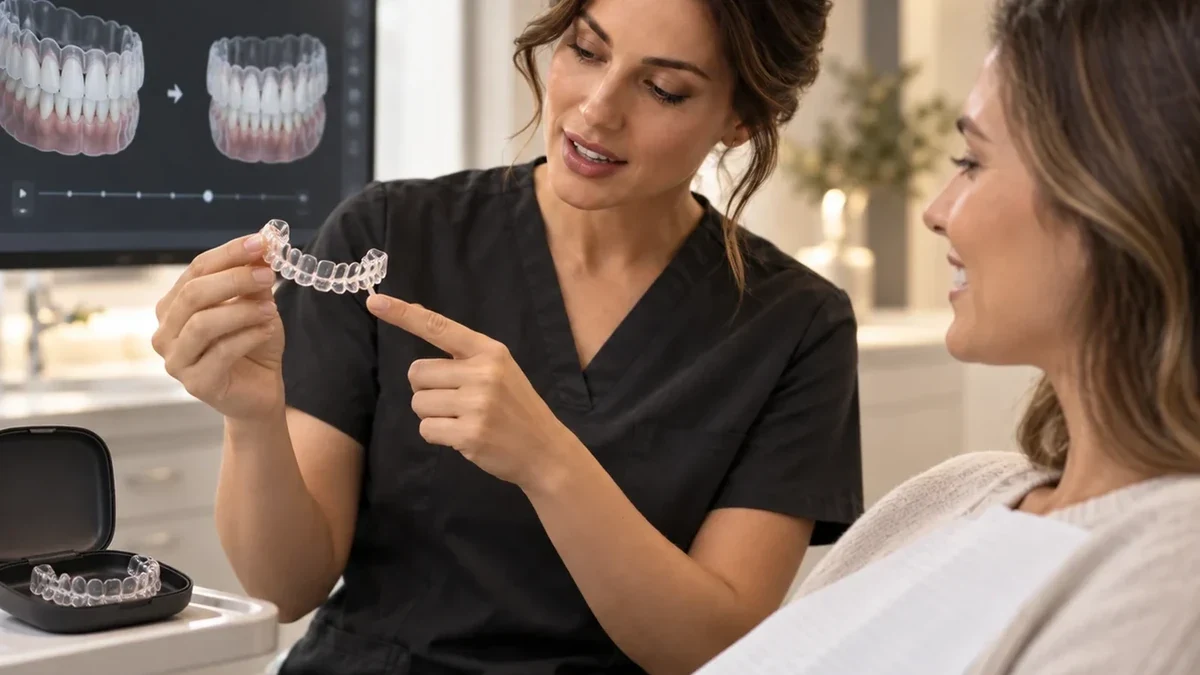
Digital impressions or other records may be used to document the starting position of your teeth. Photographs and radiographs may be appropriate when clinically indicated. A virtual simulation can illustrate a proposed sequence of tooth movements, but it is a planning aid, not a guarantee of how biology will respond.
Ask which changes are expected, which may be less predictable and which teeth may need particular attention. If the simulation shows a result that looks different from your goal, speak up before committing.
A realistic plan should include what will be monitored: tooth contacts, root and gum health, aligner fit and the relationship between the upper and lower teeth.
Wearing and caring for aligners
Aligners work through planned periods of wear. Your clinician will explain the recommended daily wear schedule, when to remove them and how to keep them clean. Eating and many drinks require removal; forgetting to replace the trays can affect progress.
Some patients notice pressure or temporary speech changes, particularly when beginning a new aligner. Comfort and adaptation vary. If a tray causes significant injury or pain, or does not fit properly, seek the practice's advice instead of attempting to reshape or force it yourself.
Think through your daily routine before choosing aligners. A busy schedule, frequent snacks or long meetings do not make treatment impossible, but they may require extra planning. The most suitable appliance is one you can realistically use as instructed.
Attachments and other planned aids
Small tooth-coloured attachments may be bonded to selected teeth to help the aligner engage with them. Your clinician may also discuss elastics or carefully planned enamel reduction between certain teeth, known as interproximal reduction or IPR, where justified.
These are not signs that treatment has gone wrong. They are elements of some treatment plans. However, enamel reduction is irreversible, so its purpose, amount and alternatives should be explained clearly. Ask whether attachments will be visible and what happens to them at the end of treatment.
The guide to complex Invisalign bite problems provides context for why more involved mechanics can be necessary in selected cases.
Reviews and what the dentist is looking for
Follow-up appointments are not only opportunities to receive more aligners. They allow a clinician to compare actual tooth movement with the plan, check the bite, look for soft-tissue problems and address changes in hygiene or wear habits.
Your dentist may change the interval between reviews depending on your circumstances. Do not assume that a lack of pain means every planned movement is happening. If aligners stop seating properly, contact the team; tracking problems may require investigation and an amended approach.
Digital progress images can be useful, but they should support rather than replace appropriate clinical assessment when needed.
Refinements: why an additional sequence may be recommended
A refinement is a planned adjustment after reassessment, often involving new records and additional aligners. It may address a tooth movement that was incomplete, a bite contact that needs adjustment or a finishing detail agreed with you.
It is not necessarily evidence of failure. Tooth movement has biological variability, and the starting plan is a prediction. Nevertheless, refinements have implications for treatment time, appointments and cost. Ask what the quoted package includes and which circumstances might lead to extra charges.
Before accepting a refinement, it is reasonable to ask whether the proposed change meaningfully improves function or appearance and what will happen if you choose to stop at the present result.
Finishing treatment is not the same as retaining it
Teeth can move after orthodontic treatment. Retainers are designed to help preserve the achieved positions, but long-term success depends on using and maintaining them as advised. The British Orthodontic Society's patient information on retainers explains why retention is a continuing part of orthodontic care.
You may be offered removable retainers, fixed retainers or a combination. The choice depends on the original problem, the final bite, practical cleaning and personal circumstances. Ask about breakages, replacements and what to do if a retainer no longer fits.
Discuss retention before treatment starts. The long-term retention guide can help you understand the role of ongoing wear.
How costs and timing should be explained
A transparent quotation should clarify the assessment, records, aligners, attachments, review appointments, potential refinements, retainers and follow-up. The treatment duration is an estimate rather than a promise; more involved movements and changes to the plan can extend it.
If you have a wedding, a new job or another important event coming up, tell the dentist. That information can help you discuss timing and expectations, but it should not override a safe orthodontic sequence.
You should also know what happens if you move house, miss appointments or need a replacement aligner. Practical policies matter alongside the clinical proposal.
Questions to ask at your first appointment
- Which teeth and bite relationships are we planning to change?
- What might aligners achieve, and where could fixed braces be more suitable?
- Will I need attachments, IPR or elastics, and why?
- What wear routine and appointment schedule should I plan for?
- What would happen if a tooth is not tracking?
- What do refinements include in the quotation?
- Which retainers will be recommended, and what ongoing costs should I expect?
There is no need to know all the technical terms before you ask. The clinician's role is to explain the proposed treatment in a way you can understand and question.
References and further evidence
- NHS — Orthodontics and dental treatment options.
- British Orthodontic Society — Retainers.
- NICE CG19 — Individualised dental health reviews.
Aligner suitability, appliance choice, predicted movements and duration require an individual orthodontic assessment. Digital simulations cannot guarantee a particular result.
Your next step, when you’re ready
We would be pleased to welcome you for a £30 consultation at your preferred Iconic Smiles practice. Bring your questions, and we can talk through the options that may suit you.
Any additional investigations and their fees will be explained before you decide.