
Invisalign and teeth straightening
One-tooth straightening and your bite: why other teeth may need to move
Understand why straightening one tooth may require changes to neighbouring teeth and bite contacts, and what limited orthodontic treatment can involve.
Talk to us about straightening your teeth
You might have a particular change in mind, or simply want to know what is possible. At a £30 consultation, we can talk through your goals and explain how the next steps are planned.
£30 for a planned-treatment consultation. Scans, additional investigations and emergency assessments may have separate fees; please confirm when booking.
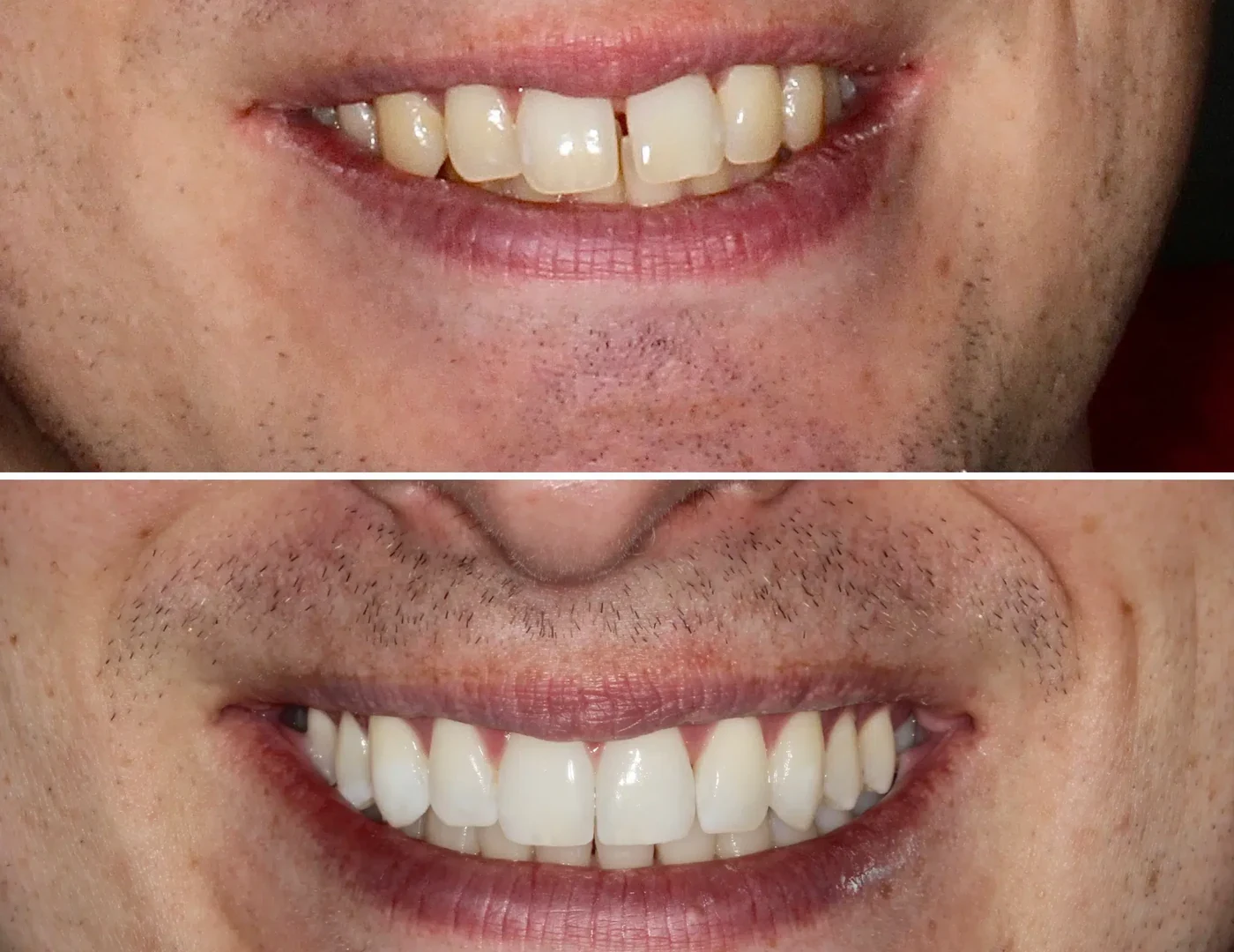
It can feel unfair to consider months of orthodontics when you are happy with nearly every tooth except one. Perhaps a lower incisor overlaps its neighbour, one upper tooth sits slightly behind the others, or a canine catches the light at an awkward angle. You may wonder why a dentist cannot simply move that tooth into place and leave the rest of your smile alone.
Sometimes a limited orthodontic plan is entirely reasonable. Yet teeth do not occupy separate, independent compartments. Moving one tooth needs space, affects contacts with neighbours and can change where the opposing teeth meet. A plan that sounds modest may require small movements elsewhere to make the result stable. The real choice is whether a limited correction can meet your particular goal without compromising the bite—not whether an advertisement can promise treatment of a single tooth in isolation.
What looks like one crooked tooth may be a space problem
A tooth that sits behind its neighbours often lacks adequate room in the arch. If the dentist simply brings it forwards, it may overlap or push against the adjacent teeth. A tooth that has rotated can need more space than its straightened appearance suggests. Another may appear too prominent because the neighbouring tooth is unusually small or tilted. These problems look similar in photographs but can require different solutions.
Your clinician should examine the entire arch, not only the tooth you point to. That includes the available space, the condition of the gums, how the roots are positioned and what the opposing teeth do when you bite. The solution may involve moving two or three neighbouring teeth by small amounts rather than moving the visibly crooked tooth alone.
This does not automatically make the treatment extensive. A subtle redistribution of space can sometimes achieve a conservative result. The essential question is whether the proposed movements are limited because they are appropriate, or merely because a short course is easier to market.
When is genuinely limited orthodontics sensible?
Limited correction may suit mild crowding or a localised irregularity where the bite is stable and sufficient room can be created safely. The patient may be pleased with the existing overall tooth positions and want only a visible improvement. In that case a focused plan can be appropriate, provided the remaining relationships are examined and the goals are agreed clearly.
A dentist should explain which movements will actually occur. For example, a rotated lower incisor might be straightened with small adjustments to adjacent teeth. An upper tooth displaced behind the arch may need more space and a change in its inclination. The degree of movement, not the number of teeth named in an advertisement, determines difficulty.
The British Orthodontic Society notes that treatment complexity varies and that short front-tooth alignment may provide limited changes rather than a full bite correction [1]. A patient can reasonably choose a limited outcome after understanding the compromises. The issue is consent based on accurate expectations.
When might straightening one tooth affect your bite?
If the crooked tooth currently makes a strong contact with its opposite number, moving it changes that contact. A tooth pushed forwards may begin hitting the opposing tooth before the rest of the bite closes. Another tooth may need to move slightly so the arch can function normally. Even apparently cosmetic movement can therefore have a functional component.
Ask your dentist to demonstrate the current contacts and the intended final position. If you already have a deep bite, an edge-to-edge incisor relationship or substantial grinding wear, limited alignment may not address all the relevant issues. Sometimes a more comprehensive plan is advisable; sometimes no orthodontics is necessary, and a small amount of restorative contouring is a reasonable alternative.
The key is that the clinician should not simply show a smile simulation with the teeth apart. You need to understand how the teeth will fit together at the end and whether the change creates a need for other work.
Invisalign, a fixed brace or something else?
For suitable mild local movements, clear aligners can be attractive because they are discreet and removable. However, some rotations, root movements and vertical changes are harder to control with a removable tray. A fixed brace can offer a different way to direct force, sometimes over a limited area, although this approach also needs careful planning of the bite and neighbouring teeth.
The British Orthodontic Society identifies clear aligners as an option for selected mild-to-moderate irregularity while emphasising clinical assessment for more demanding movements [2]. That does not mean one appliance is objectively better in all cases. Your dentist should recommend the tool capable of the movement needed, and tell you what would happen if the tooth does not respond as anticipated.
Bonding or enamel contouring may be considered when the issue is shape rather than true position. For example, a slightly short tooth can sometimes appear aligned after appropriate restorative work. But disguising a substantially crooked tooth with a thick veneer or crown can involve unnecessary preparation of healthy structure. Ask whether tooth movement is the more conservative approach before accepting irreversible cosmetic work.
Where does the space come from?
There are several possible strategies, each with limitations. Small amounts of space can sometimes be redistributed by moving neighbouring teeth, adjusting arch form within reasonable biological boundaries or reducing a carefully measured amount of enamel between selected teeth. The correct method depends on gum health, tooth shape, root position and existing contacts.
It is important not to assume that enamel reduction is universally harmless or that the dental arch can be expanded indefinitely. Adult teeth must remain supported by the surrounding tissues. A patient with recession or thin gum support may require a more cautious approach. The plan should distinguish true movement of the tooth from simply tipping its visible crown, because the latter may not create a stable or healthy position.
Ask the clinician to show how much room is needed and which method is proposed. If a plan requires substantial treatment of otherwise well-aligned teeth, it is reasonable to revisit whether correcting the single tooth is worth the intervention.
Could a retainer alone move the tooth?
Retainers are designed primarily to hold teeth in position following orthodontic treatment. They are not usually intended to deliver controlled new movement. Certain appliances can incorporate active elements, but an ordinary post-treatment retainer should not be adjusted or forced onto a crooked tooth in the hope of moving it without assessment.
If you had braces years ago and one tooth has relapsed, the clinician may compare a small retreatment plan with making a new retainer in the present position. The cause of relapse, current tooth movement and gum condition should be considered. Sometimes the change is small enough that you are comfortable leaving it alone; sometimes it affects cleaning or appearance enough to justify correction.
The British Orthodontic Society stresses that tooth positions can continue changing over time and that long-term retention is important [3]. That applies even after a limited course directed at one visible tooth. Short treatment does not eliminate the need for maintenance.
How can the clinician predict whether it will work?
Digital scans and simulations can be useful for discussing movement, but they do not replace diagnosis. The dentist should examine available space, tooth shape, roots and gums. A simulation may show a neat final incisor row while concealing a compromised bite or movement that proves more difficult in practice. Ask whether the clinician anticipates additional trays or a change of appliance if the single tooth does not track.
Modern aligner research indicates that some movements are more predictable than others and that the intended final position is not always fully achieved in the first series [4]. This does not mean digital planning is unreliable or treatment ineffective. It means the result must be monitored clinically and adjustments may be part of a sound pathway.
Bring photographs showing the tooth from angles where it bothers you. Be clear whether the concern is a rotation, a tooth sitting too far forwards, or simply a mismatch in shape. Specific feedback can avoid treating a larger area than necessary.
What would happen if you did nothing?
Not every crooked tooth needs intervention. If the tooth is healthy, can be cleaned and does not interfere with your bite, observation may be reasonable. The aesthetic impact is a personal choice, and the clinician should respect it. If the tooth position makes cleaning difficult, creates trauma or is part of ongoing relapse, those factors may make treatment more useful.
It is also worth asking whether the issue could become worse. Teeth can drift over time, but the speed and direction of movement cannot be forecast precisely from appearance alone. A dentist can monitor changes and discuss whether retention would help in your circumstances. Doing less now is not a failure if it is an informed, low-risk decision.
For some people, a small visible imperfection is part of an otherwise natural and attractive smile. A good consultation should leave space for that preference rather than imply all teeth must be geometrically identical.
Treatment time, costs and appointments
A limited plan may require fewer stages than comprehensive orthodontics, but it is not automatically a fixed six-week process. The time depends on the movement, the amount of space required, the appliance and how well the teeth respond. Clear aligners usually require regular wear and clinical review. If new trays are needed, additional appointments may follow.
Ask whether the quotation includes assessment, records, all planned trays or adjustments, refinements and retainers. If the clinician later finds that the bite needs broader correction, understand whether this would be a different treatment plan and fee. A short course should not be used as a financial lure if the likely clinical pathway is more involved.
At the end, the retainer needs to fit and the contacts should be checked. It would be frustrating to straighten the tooth beautifully only to have it move again because the maintenance plan was never discussed.
Questions to bring to your consultation
Can only one tooth move? Physically, targeted movement may be possible, but neighbouring teeth often need small changes to create space and suitable contacts. The plan should explain which teeth are involved.
Will limited Invisalign change my face? Small local movements rarely produce dramatic facial changes. Ask about specific expected tooth and lip-position changes rather than broad makeover claims.
Could composite bonding hide the problem instead? Sometimes, if the concern is mainly shape. For an actual position problem, adding material may create bulk or unnecessary treatment.
Do I need a retainer afterwards? Yes, retention is generally required even after a short course. The type and schedule depend on your dentist's plan.
What if the tooth still looks slightly crooked? Discuss the agreed goal, whether further movement is safe and useful, and whether a natural minor asymmetry is acceptable to you.
Start with the tooth you notice, but assess the mouth around it
At Iconic Smiles, a consultation can help establish whether a genuinely limited orthodontic plan makes sense or whether the concern is better addressed through simple cosmetic shaping, more extensive treatment or observation. The £30 consultation is the editorial programme's stated starting fee and requires verification; detailed orthodontic records may cost extra. You should come away knowing why a particular number of teeth needs moving rather than simply being offered a branded short course.
Clinical sources and further reading
- British Orthodontic Society — What to know before adult orthodontics
- British Orthodontic Society — Clear aligners
- British Orthodontic Society — Retainers and adult treatment
- Scoping review (2026) — Clear aligner treatment prediction and limitations
- NHS — Braces and orthodontics
This article is informational only. The actual treatment and need for broader tooth movement are determined by a clinical assessment.
Your next step, when you’re ready
We would be pleased to welcome you for a £30 consultation at your preferred Iconic Smiles practice. Bring your questions, and we can talk through the options that may suit you.
£30 for a planned-treatment consultation. Scans, additional investigations and emergency assessments may have separate fees; please confirm when booking.