
Invisalign and teeth straightening
Straightening teeth after gum disease: what needs checking first?
Having received gum treatment in the past does not on its own describe the current tissues or determine readiness for orthodontics.
Talk to us about straightening your teeth
You might have a particular change in mind, or simply want to know what is possible. At a £30 consultation, we can talk through your goals and explain how the next steps are planned.
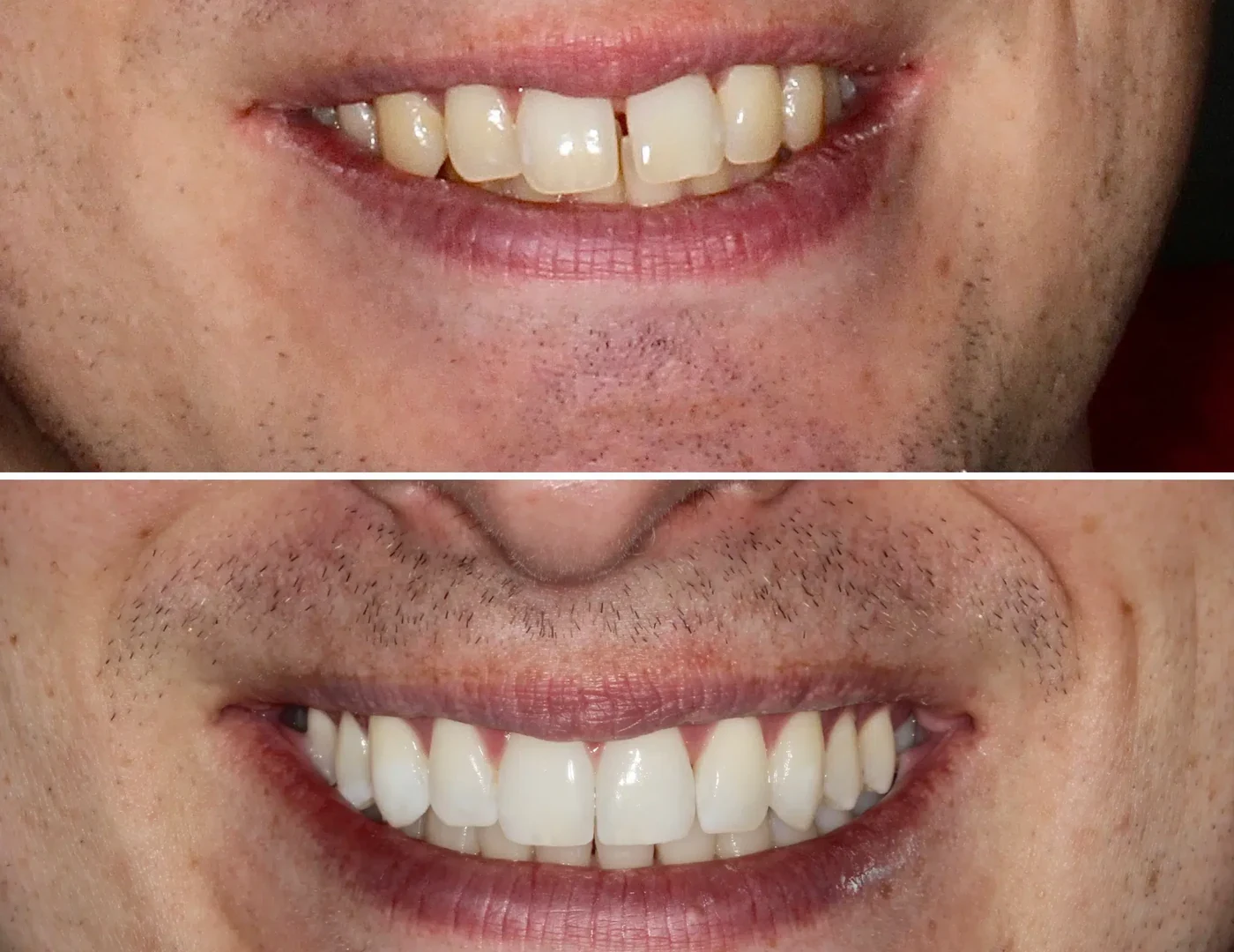
Establish the current condition rather than rely on history alone
Teeth straightening may be possible after gum disease, but your current gum health and tooth support need checking first. Previous treatment alone cannot establish readiness. Your dentist should explain the diagnosis, any active disease and what needs treating or reviewing before movement is planned. European guidance distinguishes routine gum disease treatment from the additional rebuilding of function that some advanced cases need. [1][2]
Explain the changes that brought you to assessment
Tell the clinician when you noticed spacing, flaring, mobility or a change in the bite and whether symptoms are ongoing. The EFP stage IV guideline addresses advanced periodontitis with functional and anatomical consequences, including drifting and flaring. This does not mean everyone with a changed tooth position has stage IV disease. It means those findings deserve diagnosis before an appliance is chosen. Earlier photographs or records may help the team understand the history, but they do not replace the examination. Ask which information is needed to distinguish the current problem and guide a realistic recommendation. [2]
Coordinate disease management before the movement decision
The EFP guideline describes additional rehabilitation following completion of active periodontal therapy in its stage IV setting and emphasises comprehensive evaluation and repeated reassessment. Ask what needs treatment first, how the response will be reviewed and who decides when the orthodontic plan is appropriate. The BOS adult leaflet also states that decay and gum disease should be treated before braces. A patient should understand the clinical purpose of preparation rather than treat it as an administrative hurdle. If readiness remains uncertain, clarify the next assessment and how symptoms and daily care are managed in the meantime. [2][3]
Define the movement objective and limits
A proposal might aim to improve a changed tooth arrangement, assist restoration or address another diagnosed need. Ask what orthodontics is expected to achieve and which periodontal or restorative issues it does not solve. Moving a tooth does not itself recreate every lost supporting structure or guarantee its long-term prognosis. The EFP stage IV guideline includes orthodontic movement within coordinated rehabilitation, alongside other interventions and supportive care. The decision therefore needs an explanation of the tooth’s intended role and the wider plan rather than an appliance preview that treats every existing tooth as if its clinical circumstances were identical. [2]
Choose an appliance around the clinical plan
Fixed appliances and aligners should be considered according to the required movements and practical care needs. The BOS describes the importance of diagnosis and notes that complex problems may need additional techniques. Ask how progress and tissue health will be assessed, how cleaning will be managed and what would lead to a change or pause. Removability or appearance should not be offered as proof that one appliance makes gum health assessment unnecessary. If different clinicians provide periodontal and orthodontic care, establish how findings are shared and which service you should contact if a concern develops between visits. [4][2]
Leave with a maintenance commitment as well as a treatment plan
The EFP guidance includes supportive periodontal care and repeated evaluation as part of advanced rehabilitation. Retention after active movement also needs discussion. Ask how the proposed routine, professional reviews and retainer care fit together and whether you can manage them comfortably. At Iconic Smiles, confirm the clinicians coordinating the recommendation and request the itemised stages and fees. A useful assessment leaves you understanding the current periodontal condition, the purpose and limits of movement and the continuing care required. It should not promise that straight teeth alone cure gum disease or that a history of gum treatment automatically excludes every orthodontic option. [2][5][6][7]
For your decision:
Your plan should connect current gum findings, any necessary treatment and the purpose of straightening your teeth. Moving teeth does not itself replace lost support, so the outlook for each tooth and continuing care still matter.
Keep movement goals separate from regeneration claims
Orthodontics can form part of rehabilitation in selected advanced periodontal cases. The EFP stage IV guideline includes tooth movement among coordinated interventions after active periodontal therapy. It does not mean that straightening teeth automatically restores all lost support or guarantees the prognosis of a compromised tooth. Ask what benefit is expected, what is uncertain and what other care remains necessary. If a proposal is described as rebuilding health, request a clear explanation of which tissues or functions are being addressed by which treatment. The appliance should not be credited with outcomes it has not been shown to deliver in your situation. [source]
Begin with a shared diagnosis and objective
The orthodontic and periodontal parts of the plan should address the same clinical findings. Ask what has been diagnosed, why the teeth have been assessed for movement and what the treatment is intended to improve. The EFP stage IV guideline concerns advanced periodontal cases with additional functional or anatomical consequences; it is not a label for every person who has had gum treatment. Its emphasis on comprehensive evaluation helps explain why an appliance should follow a reasoned diagnosis. The initial plan should distinguish confirmed decisions from questions that require treatment, further information or another assessment. [source]
Identify the problem the proposed movement would address
Teeth may be assessed for movement because of drifting, spacing, altered function or a restorative need. The EFP stage IV guideline addresses selected advanced periodontal cases with such consequences, but a history of gum treatment does not establish that diagnosis in every patient. Ask what has been found and what the proposed movement is intended to improve. Only then can it be compared fairly with alternatives. A cosmetic preview is not enough to establish the need for orthodontics, and declining an appearance change does not remove the need to manage any diagnosed gum disease. [source]
Keep two continuing needs visible
After active orthodontics, retention helps maintain the achieved tooth positions. A periodontal history may also require supportive periodontal care based on the current diagnosis and findings. Those tasks are connected but not interchangeable. The EFP stage IV guideline includes continuing support and reassessment, while BOS information explains the retention commitment. Ask how both are arranged and who coordinates concerns involving teeth, tissues and the appliance. A straight appearance should not be treated as proof that the periodontal condition no longer needs assessment, and a retainer should not be described as treatment for every supporting-tissue problem. [source][source]
What the treatment plan should explain
Ask the clinician to show the intended root and crown movements, the present gum levels and whether they foresee a risk of unfavourable recession or incomplete closure of triangular spaces. Discuss whether the proposed treatment changes only the front six teeth or also the bite and posterior contacts. Find out how periodontal reviews will be coordinated with aligner appointments. Your written plan should describe the alternatives and limits rather than promising that all gum concerns disappear when teeth become straighter. Retainers then help preserve the achieved alignment.
Consider monitoring with a defined purpose
If active movement is not pursued, ask what will be reviewed and which changes should trigger contact. Monitoring should follow the clinical findings, not mean that a concern has been forgotten. The EFP guideline emphasises repeated evaluation during and after rehabilitation. A stable-looking photograph is not the whole assessment, and a changed position does not automatically explain its cause. The patient should understand whether further investigation or treatment is needed now and how future decisions will be made. This makes a deferred choice active and understandable without pressuring the patient into an appliance merely because one is technically available. Read the supporting clinical study
A history of treatment is not the same as a current assessment
Before orthodontics, the clinician needs to understand the present periodontal condition, not only that you once had gum treatment. EFP guidance requires diagnosis, treatment planning and reassessment, while the BOS adult leaflet states that gum disease should be treated before braces. Ask which findings support the recommendation and which need further care. A well-aligned appearance is not proof of healthy support, and an earlier cleaning course is not a universal clearance. The risk discussion should connect to the actual teeth and tissues rather than either dismiss the history or automatically rule out every possible movement. Read the supporting clinical study · Read the supporting clinical study (2)Supporting source (bos.org.uk)
Use tissue reviews to understand the present condition
The EFP guidance emphasises repeated evaluation during and after rehabilitation. Ask what the current review has found, whether any care is recommended and what determines the next interval. A previous treatment result should not become the only information considered indefinitely. Report persistent bleeding, swelling, discomfort or another change rather than assume it is normal around an appliance. A patient cannot establish the diagnosis from one symptom or from how straight the teeth look. Clear explanations help you understand whether the concern relates to plaque control, a tooth, the appliance or another issue needing assessment. Read the supporting clinical study · Read the supporting clinical study (2)
Complete and assess the necessary periodontal treatment
The EFP stage IV pathway describes additional rehabilitation following active periodontal therapy, with the periodontal component based on the stage I–III treatment guideline. Ask which work is needed and how the response will be evaluated before the orthodontic decision. The BOS adult leaflet also advises treating gum disease and decay before braces. Preparation should have an explained purpose rather than a fixed number of appointments that automatically leads to clearance. If more care is needed, understand why and what will be reassessed. The plan should remain connected to current findings instead of proceeding solely because a provisional start date was booked. Read the supporting clinical study (2) · Read the supporting clinical study (3)Supporting source (bos.org.uk)
Compare appropriate movement plans rather than appliance labels
If orthodontics remains reasonable, ask whether the objective is limited or comprehensive and why a particular appliance is proposed. BOS guidance notes that complex movements may need additional techniques. The team should explain how tissue findings, cleaning and the actual orthodontic response are reviewed together. Removability is not evidence that periodontal assessment can be skipped, and a fixed appliance is not by itself a complete explanation of the plan. Your ability to carry out the routine and attend necessary reviews should be considered alongside the intended result before a course is accepted. Supporting source (bos.org.uk)Read the supporting clinical study (2)
Understand the consequences of a changed clinical situation
If inflammation, symptoms or another concern develops during treatment, ask what the current findings mean and whether the sequence needs adjustment. The EFP guidance emphasises reassessment during and after rehabilitation. A pause or revised recommendation should have a clinical explanation; it should not be treated automatically as failure or ignored to preserve the original advertised completion date. Report new concerns through the agreed contact route rather than make your own appliance changes. The patient’s consent remains relevant if the objective, intervention or expected compromise changes, including the implications for any temporary or definitive restoration. Read the supporting clinical study
Tooth movement and cosmetic proportions interact
Straight teeth can still have small dark spaces between them because tooth shape and gum height also affect the smile. In selected cases, careful enamel shaping or limited bonding may help. The small triangles of gum between teeth and the final tooth proportions need consideration: broad composite additions can make flossing difficult, and enamel reduction will not suit every tooth. The clinicians planning tooth movement and cosmetic care should consider these details together.
Keep home care linked to the actual reconstruction
You may have retained teeth, restorations and a retainer, and some patients also have implants. Ask how each relevant area should be cleaned and which professional reviews are required. EFP implant guidance recommends prevention and structured supportive care where implants are present. A generic product list may not address access or dexterity difficulties. Request a demonstration and explain what you cannot comfortably manage. Do not force an aid into a space or stop cleaning without advice. A workable routine is part of maintaining the result, not an optional extra after the orthodontic photograph has been taken. Read the supporting clinical study (2) · Read the supporting clinical study (3)
Review any restorative stage using the achieved result
If movement prepares for restoration or replacement, the relevant clinicians need to confirm the current arrangement before the next irreversible step. Ask what has been achieved, whether the original design remains appropriate and what limitations should be accepted or addressed. A retained tooth’s role and prognosis should still be visible in the decision. Consent applies to the current recommendation, including any changed alternatives. This prevents a provisional plan from becoming automatic simply because several stages have already been completed or because a final restoration was included in the first financial estimate. Read the supporting clinical study
Research and guidance
- Treatment of stage I-III periodontitis-The EFP S3 level clinical practice guideline.
- Treatment of stage IV periodontitis: The EFP S3 level clinical practice guideline.
- Primary professional guidance — bos.org.uk
- Clear aligners - British Orthodontic Society (BOS)
- Retainers - British Orthodontic Society (BOS)
- Dental Team | Meet the Iconic Smiles Clinicians
- Dental Fees & Finance: Treatment Prices | Iconic Smiles
Your next step, when you’re ready
We would be pleased to welcome you for a £30 consultation at your preferred Iconic Smiles practice. Bring your questions, and we can talk through the options that may suit you.
Any additional investigations and their fees will be explained before you decide.