
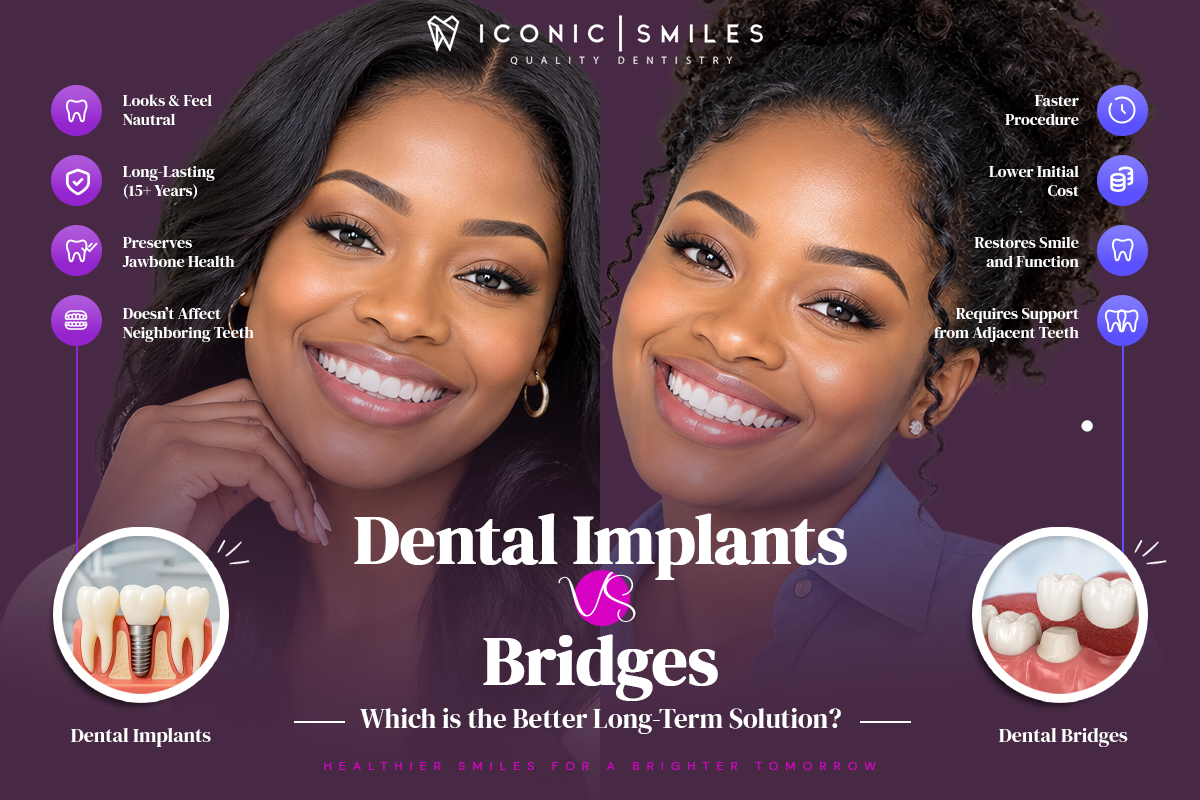
A dental implant replaces a missing tooth without relying on neighbouring teeth for support. A conventional bridge uses adjacent teeth as abutments. Neither is universally preferable: the condition of those neighbouring teeth, available bone, periodontal health, surgical risk, cost and cleaning access often settle the decision.
In this guide
- When preserving neighbouring teeth matters
- How each solution is supported
- Aesthetics and the front tooth challenge
- Risk, time and cost are different
- How to make the decision
- Consider both the teeth and the space
- A useful written comparison
When preserving neighbouring teeth matters
If the teeth either side of a gap are healthy and largely unrestored, conventional bridgework may require removal of useful tooth structure. An implant can avoid that preparation, provided there is appropriate bone and space. If the adjacent teeth already require substantial crowns, a well-designed bridge may accomplish more than one restorative goal without implant surgery. Resin-bonded bridges can provide a more conservative option in selected sites.
How each solution is supported
An implant-supported crown is anchored in jawbone. A tooth-supported bridge passes chewing forces through the abutment teeth and their periodontal support. These mechanics affect design, repair and cleaning. An implant requires sufficient distance from the roots of adjacent teeth and adequate bone and soft tissue. A bridge requires sound supporting teeth, appropriate bite design and an accessible cleaning route underneath the artificial tooth.
Aesthetics and the front tooth challenge
Replacing a front tooth is not only about colour. Gum contour, root prominence, smile line and changes in the ridge after extraction can determine how natural the final restoration looks. Sometimes a bridge delivers a more appropriate appearance with less surgery; other times an implant offers independence from adjacent teeth. Provisionalisation and soft-tissue planning are often more influential than the label of the chosen treatment.
Risk, time and cost are different
Implant treatment involves surgery, biological integration and possible grafting. Bridgework can often be completed sooner, but supporting teeth may later develop decay, endodontic problems or fractures. Implant components can loosen, crowns can fracture and surrounding tissues can become inflamed. Both options require maintenance and may be replaced in the future. Compare the complete treatment costs and possible downstream consequences.
How to make the decision
Ask for a diagnosis of the neighbouring teeth, gum and bone condition, plus a realistic explanation of each option. If a tooth is borderline restorable, first establish whether keeping it is sensible. An informed discussion includes a removable denture or leaving the space where clinically acceptable—not just the two higher-cost choices.
Consider both the teeth and the space
Where surrounding teeth already have large restorations, a bridge may be sensible even if an implant is technically possible. Where they are intact, avoiding preparation can matter more. If space is narrow, adjacent roots diverge or the ridge has changed substantially, an implant may need additional intervention and could be less predictable aesthetically than first assumed.
A useful written comparison
Request a simple explanation of expected tooth preparation, surgery, treatment length, likely maintenance and repair options for each choice. The plan should address function, appearance and feasibility of cleaning—not just the upfront fee. Keeping a clinically stable space open may be an option in some cases.
Before making a decision
Ask for an individual assessment, a written plan explaining the clinically appropriate alternatives, the likely treatment sequence, important risks, maintenance requirements and the complete anticipated cost.
Frequently asked questions
Does an implant stop all bone loss?
It supports surrounding bone under suitable conditions, but it does not prevent every normal or disease-related tissue change.
Is a bridge always quicker?
It commonly avoids implant integration time, although extensive restorative or periodontal work can change the timetable.
Can I floss around a bridge?
Yes, using suitable floss threaders or other recommended aids. Daily access beneath the bridge is essential.
Planning treatment
An individual dental examination is needed to determine whether treatment is appropriate, compare alternatives and explain risks, likely stages and costs. Information here is educational and cannot diagnose your situation.
Evidence and further reading
- Guy’s and St Thomas’ NHS Foundation Trust — Dental implants: overview, treatment and aftercare
- Leeds Teaching Hospitals NHS Trust — Dental implants (patient guidance)
- Cambridge University Hospitals NHS Foundation Trust — Sinus lift procedures
Related guides
- Dental Implants: The Complete UK Guide to Treatment, Costs, Risks and Recovery
- How Much Do Dental Implants Really Cost in the UK? A Complete Price Breakdown
- How Long Do Dental Implants Last? The Evidence Behind Long-Term Survival
- How Many Dental Implants Do You Need to Replace Multiple Missing Teeth?