
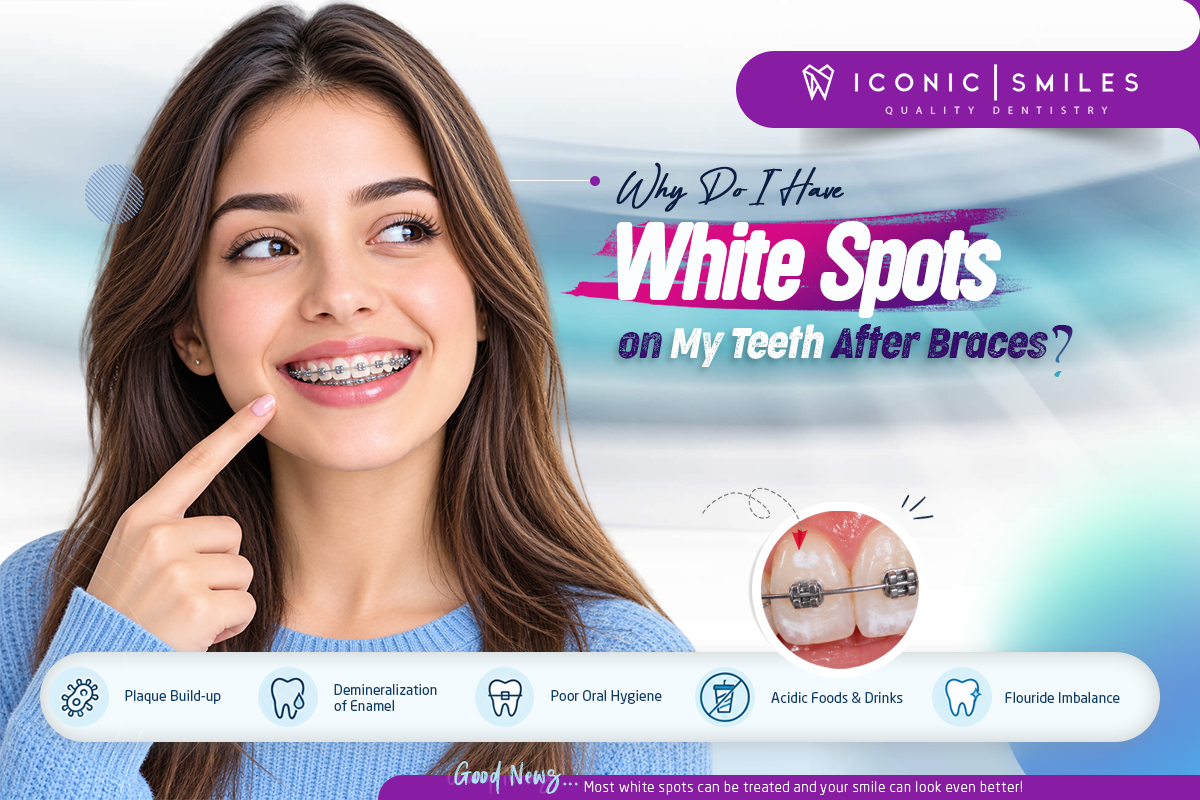
White marks that become obvious when fixed braces are removed are often areas of enamel demineralisation. Plaque can collect around brackets, and repeated acid attacks can draw minerals from the enamel. The surface may remain intact, but the enamel underneath becomes more porous and looks chalky or opaque.
Braces themselves do not create the marks. The risk comes from plaque, frequent sugar exposure and difficulty cleaning around the appliance. Importantly, not every white patch is caused by braces, so an examination is worthwhile before deciding how to treat it.
Are white spots after braces tooth decay?
They can be an early, non-cavitated form of dental caries. At this stage the enamel surface has not necessarily broken down into a cavity. That distinction matters because an early lesion may be arrested, and its appearance can sometimes improve.
Other conditions can also produce white enamel opacities. A dentist should confirm that the marks are post-orthodontic demineralisation rather than assuming this from appearance alone.
Why do they form around brackets?
A fixed brace makes plaque control more demanding. Plaque tends to sit at the edges of brackets and near the gumline. When bacteria in plaque are repeatedly exposed to fermentable carbohydrates, particularly frequent sugary foods and drinks, acids lower the pH at the tooth surface. If mineral loss repeatedly outweighs repair, a white-spot lesion can develop.
This is why two things matter throughout orthodontic treatment: removing plaque properly and reducing how often the teeth are exposed to sugar.
Will white spots disappear after the braces come off?
Some become less obvious with time, particularly once plaque control improves and the enamel is exposed to fluoride and saliva normally again. Others remain visible. The outcome depends on how deep and active the lesion is, its surface texture and how much the colour differs from the surrounding enamel.
It is usually sensible to assess the teeth before rushing into cosmetic treatment. Freshly debonded teeth can change in appearance over the following months.
How are white spots treated?
Treatment should be as conservative as possible. The right option depends on whether the lesion is active, whether the surface is intact and how noticeable it remains once oral health is stable.
1. Remineralisation and fluoride
For early, intact lesions, the first step is usually excellent plaque control, appropriate fluoride exposure and control of dietary sugar frequency. A dentist may recommend additional fluoride or another remineralisation strategy depending on the individual risk.
2. Resin infiltration
Resin infiltration can be useful for selected non-cavitated white-spot lesions. A low-viscosity resin penetrates the porous enamel and can reduce the optical difference between the lesion and the surrounding tooth. It is a minimally invasive option, but suitability depends on the lesion.
3. Enamel microabrasion
Microabrasion removes a very small amount of superficial enamel using an abrasive and acidic technique. It can improve some shallow surface opacities, but it is not appropriate for every white spot and should follow clinical assessment.
4. Tooth whitening
Whitening changes the shade of the surrounding teeth rather than repairing demineralised enamel. In selected cases it can reduce the contrast between a white spot and the rest of the tooth. Timing matters, and whitening should not be the automatic first treatment.
5. Composite bonding
If a lesion remains conspicuous after conservative treatment, carefully placed composite can mask the area. This is generally more conservative than preparing a tooth for a veneer.
What about veneers?
Veneers can mask enamel defects, but they involve a much greater long-term restorative commitment and may require removal of healthy tooth tissue. For isolated post-orthodontic white spots, they would not usually be the first treatment considered.
Can white spots be prevented during braces treatment?
- Brush thoroughly at least twice a day with fluoride toothpaste, paying particular attention above and below every bracket.
- Use interdental or single-tufted brushes where needed to clean around the wire and bracket edges.
- Reduce the frequency of sugary foods and drinks. Frequent exposure matters as much as the total amount.
- Avoid frequent fizzy drinks and sports drinks; acidity can add to enamel erosion risk.
- Attend regular dental and orthodontic reviews so early demineralisation can be identified before it becomes more established.
White spots after braces at Iconic Smiles
If white marks have appeared after your braces were removed, the first step is to work out exactly what they are and whether the enamel is active, stable or already cavitated. At Iconic Smiles we can assess the enamel and discuss the least invasive sensible option, from prevention and remineralisation through to resin infiltration or cosmetic treatment where appropriate.
Useful FAQs
Are white spots after braces permanent?
Not always. Some become less noticeable after treatment, while deeper lesions may remain visible. The appearance and activity of the lesion should be assessed before cosmetic treatment.
Can white spots turn into cavities?
An active non-cavitated lesion can progress if the disease process continues. Good plaque control, fluoride and dietary change can help arrest early lesions.
Can resin infiltration remove white spots?
It can substantially reduce the appearance of selected lesions, but results depend on their depth and structure.