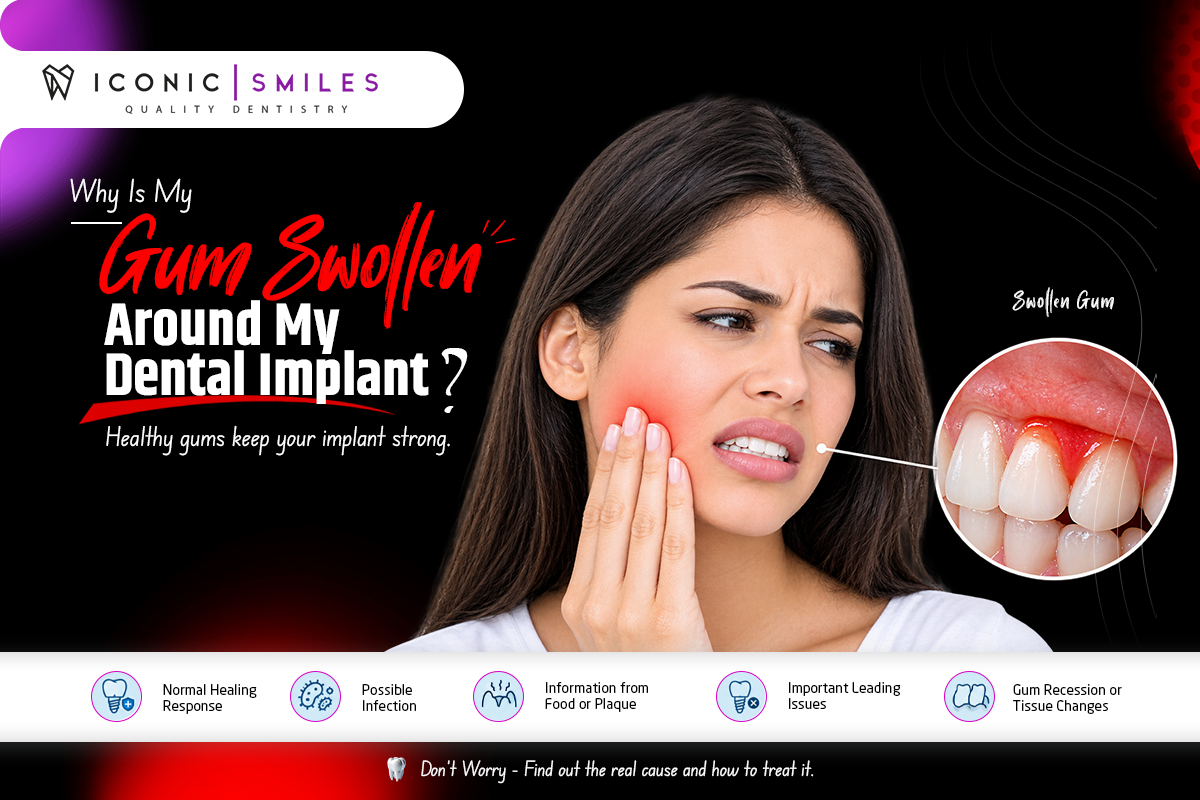
Mild swelling after dental implant surgery is common and usually forms part of normal healing. It often becomes most noticeable during the first 48–72 hours and then starts to settle. Swelling that is worsening rather than improving, returns after initially settling, or develops around an implant month or years later needs a different assessment.
Is Gum Swelling Normal After a Dental Implant?
Immediately after implant surgery, some swelling, tenderness and bruising can be expected. How much you experience depends on the procedure performed, whether grafting was required, the number and position of implants and individual healing response.
The most useful thing to watch is the direction of change. Swelling that peaks during the first few days and then gradually improves is usually reassuring. Swelling that continues to increase, returns after settling, or is accompanied by increasing pain, pus, a bad taste, fever or feeling unwell should be assessed.
Why Does Swelling Occur After Implant Surgery?
- Normal surgical inflammation as the tissues heal.
- The extent of the surgical procedure or any bone or soft-tissue grafting.
- Local irritation from sutures or the healing tissues.
- Food or plaque collecting around the surgical area.
- Less commonly, an early postoperative infection or another surgical complication.
What If the Implant Was Placed Months or Years Ago?
New swelling around a healed implant is not the same as normal postoperative swelling and should be assessed.
Possible causes include plaque-associated inflammation around the implant, food trapping, irritation from the restoration, difficulty cleaning around the implant, excess cement around some restorations, mechanical or prosthetic problems, or peri-implant disease.
What Are Peri-Implant Mucositis and Peri-Implantitis?
Peri-implant mucositis is plaque-associated inflammation in the soft tissues surrounding an implant without progressive loss of the supporting bone. The gums may appear red or swollen and commonly bleed when gently probed by a dental professional.
Peri-implantitis is a plaque-associated inflammatory condition around an implant that is accompanied by progressive loss of supporting bone. It requires proper assessment and management because continuing bone loss can threaten the long-term prognosis of the implant.
Pain is not a reliable way of distinguishing these conditions. Peri-implant disease can be relatively painless, particularly in its earlier stages.
What Makes Peri-Implant Disease More Likely?
- Poor plaque control or difficulty cleaning around the implant.
- A previous history of periodontitis.
- Poorly controlled diabetes.
- Implant or restoration designs that make effective cleaning difficult.
- Irregular maintenance or failure to identify early inflammation.
What Should I Do If My Gum Is Swollen After Recent Implant Surgery?
Follow the specific postoperative instructions given by your implant clinician, as these vary depending on the procedure performed.
- Use cold packs externally during the early postoperative period if you have been advised to do so.
- Eat a softer diet while the surgical area is tender and avoid traumatising the site.
- Keep the mouth clean using the brushing and rinsing protocol prescribed by your clinician.
- Avoid smoking during healing.
- Take prescribed or recommended medication exactly as directed.
- Contact the practice if swelling is worsening rather than settling or if you are concerned about the way the site is healing.
Do not start antibiotics, antiseptic mouthwash or other treatments simply because the implant area is swollen unless they have been recommended for your specific situation.
How Is Swelling Around a Healed Implant Assessed?
The treatment depends on the cause, so diagnosis comes first.
A proper implant review may include assessment of:
- the appearance and condition of the surrounding soft tissues
- bleeding or suppuration on gentle probing
- probing depths compared with previous records where available
- plaque levels and whether the implant can actually be cleaned effectively
- implant and restoration stability
- the bite and any excessive loading
- radiographs where indicated to assess the supporting bone.
This distinction matters because normal postoperative inflammation, peri-implant mucositis, peri-implantitis and a mechanical or restorative problem do not all require the same treatment.
How Is Peri-Implant Disease Treated?
Treatment is individualised according to the diagnosis and severity. The foundation is effective plaque control and professional cleaning of the implant surface using techniques appropriate to the implant and restoration.
If peri-implant mucositis is present, improving professional and home plaque control is central to treatment.
Peri-implantitis can require more complex non-surgical and/or surgical management depending on the amount and pattern of bone loss, implant surface, restoration, cleaning access and response to initial treatment.
Antibiotics are not a routine substitute for mechanical debridement and plaque control, and they are not automatically required for every swollen implant. Their use depends on the clinical situation.
Likewise, lasers and other adjunctive treatments should not be presented as universal or guaranteed solutions. The appropriate treatment is selected after the cause and severity have been established.
Can Swelling Around an Implant Be Prevented?
Normal postoperative swelling cannot always be prevented and is part of healing. The long-term aim is to reduce the risk of plaque-associated inflammation and identify problems early.
- Brush carefully around the implant as instructed.
- Clean between implants and neighbouring teeth using the interdental aids recommended for your individual anatomy.
- Attend regular dental and hygiene maintenance appointments.
- Do not smoke.
- Maintain good control of diabetes where relevant.
- Seek assessment if you notice recurrent bleeding, swelling, discharge, recession or a change in the implant or restoration.
When Is Swelling Around an Implant Urgent?
Contact your dentist promptly if you have:
- swelling that is rapidly increasing or spreading into the face
- pus or significant discharge
- fever or feeling systemically unwell
- significant or worsening pain
- persistent bleeding that will not settle
- an implant or implant-supported restoration that feels mobile
- swelling that had settled and has returned.
Difficulty swallowing or breathing, or rapidly spreading facial/neck swelling, requires urgent medical assessment rather than waiting for a routine dental appointment.
Why Choose Iconic Smiles for Dental Implant Problems?
At Iconic Smiles, we do not diagnose an implant problem from swelling alone. We look at the whole clinical picture.
That can include the soft tissues, bleeding or suppuration, probing findings, implant and restoration stability, your bite, plaque control, cleaning access and radiographic bone levels where appropriate.
The aim is to establish whether you are seeing normal healing, a reversible soft-tissue problem, peri-implantitis, or a mechanical or restorative issue – and then treat the actual cause rather than guessing.
If you have swelling around a dental implant, particularly if the implant has already healed or the swelling is worsening, book an assessment with Iconic Smiles. We see patients across Hertfordshire and North London for implant treatment, maintenance and complications.
FAQs
How long does swelling last after a dental implant?
Swelling commonly becomes most noticeable over the first 48–72 hours and should then begin to improve. The exact duration varies depending on the procedure and the individual. Worsening or recurrent swelling should be assessed.
Does swelling mean my implant is infected?
No. Swelling in the first few days after surgery is commonly part of normal healing. New swelling around a previously healed implant or swelling accompanied by pus, increasing pain, fever or a bad taste requires assessment.
Can peri-implantitis be painless?
Yes. Pain is not required for peri-implant disease to be present. Bleeding on probing, suppuration and progressive supporting bone loss are more important clinical findings.
Can antibiotics fix an infected dental implant?
Not on their own in most cases. Peri-implant disease management centres on diagnosis, plaque control and professional decontamination. Antibiotics may be considered in selected situations but are not a universal treatment.