
Choosing dental care
Crown vs Onlay vs Filling: Choosing an Appropriate Restoration
A filling replaces a localised defect; an onlay restores part of the biting surface and selected cusps; a crown generally covers more of the visible tooth.
Get answers before you decide
Choosing dental care should feel straightforward. A £30 consultation gives you the opportunity to explain your wishes, ask about our approach and understand your options.
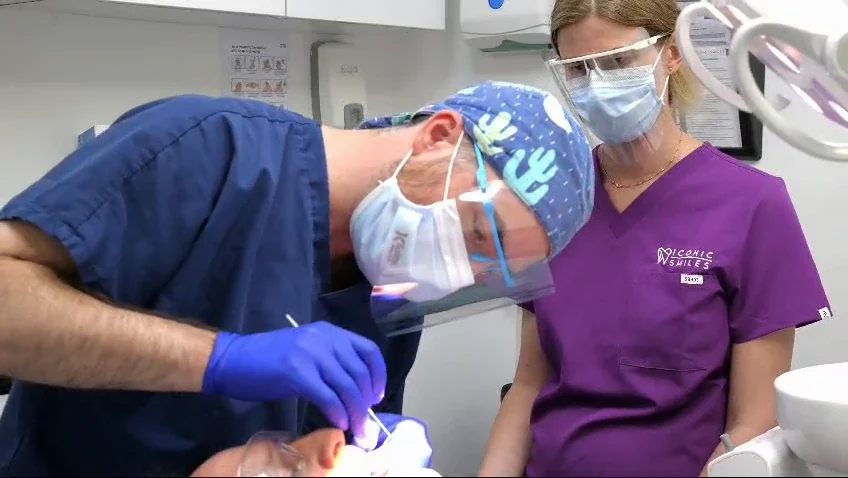
A filling replaces a localised defect; an onlay restores part of the biting surface and selected cusps; a crown generally covers more of the visible tooth. The appropriate choice depends on remaining healthy structure, crack risk, tooth location, bite and how much material must be removed—not on one material being universally stronger.
Start with the remaining tooth, not the product
A small cavity in a sound tooth may be repaired directly. A large existing filling with undermined cusps can require protection against fracture. Examination considers enamel, dentine, cracks, proximity to the pulp, gum position and what contacts the tooth during chewing. A restoration should solve an identifiable structural problem rather than automatically replace all old fillings with crowns.
When a direct filling is reasonable
Composite and other appropriate filling materials can restore localised damage, often in a single visit. Adhesive technique requires moisture control and a suitable margin. Very broad fillings or teeth with thin unsupported cusps may be more vulnerable to fracture, particularly under heavy loading. Repair may be possible when a defect is small and surrounding material is stable.
The role of an onlay
An onlay is commonly made outside the mouth and bonded or cemented onto the tooth, covering damaged cusps while conserving other sound surfaces where feasible. It still needs preparation, adequate material thickness, reliable margins and a manageable bite. A badly cracked or very short tooth may not be suitable simply because a partial restoration sounds more conservative.
When full crown coverage may be discussed
A crown may be indicated where there is extensive structural compromise, selected fractures or a need to achieve a stable restoration around much of the tooth. Crown preparation has biological cost: healthy tissue is not limitless. Margin location, gum health, tooth vitality, material choice and subsequent cleaning access matter as much as immediate fit or appearance.
Compare durability without promising a fixed lifespan
Fillings, onlays and crowns can all chip, leak, fracture, wear or develop recurrent decay at their margins. A history of grinding, poor plaque control, high sugar exposure or little remaining tooth may change the prognosis. Ask what can be repaired locally, what would require complete replacement, and how future treatment affects the underlying tooth.
What an understandable plan should show
The plan should show which surfaces and cusps are damaged, how much tooth needs covering and why the proposed material is suitable. It should also explain whether the margin can stay above the gum and what a smaller restoration would leave at risk. A photograph or X-ray can help clarify the findings. The need for laboratory-made work should follow the tooth's condition, rather than its price.
The amount of tooth left matters more than the label on the invoice
A tooth with a small accessible cavity may be restored with a direct filling if its remaining cusps are sound. Once a cusp is weakened by a crack or a very large old restoration, protecting the remaining structure becomes more important than merely filling the hole. An onlay can cover vulnerable cusps while preserving more untouched tooth than a full crown in suitable cases. A crown may be appropriate when damage is extensive or other clinical features prevent a predictable partial restoration. The decision should follow removal of decay, assessment of the existing restoration and a careful examination for cracks; it cannot be made from a fee list alone.
If a tooth is root-treated, the restorative plan also depends on the remaining walls, whether a sound seal and core can be achieved, the patient's bite and whether the tooth can be isolated reliably during bonding. Ask the dentist to show which part of the tooth needs coverage and what future repair would involve if the restoration breaks.
How a failed large filling changes the conversation
Repeatedly replacing a wide filling can gradually leave less supporting tooth. The dentist may assess the depth of old restoration, whether the marginal ridges are intact, cusp thickness and signs of cracks or recurrent decay. A restoration that looks sound in a photograph might still be undermined internally. Where sufficient enamel remains and the bite is favourable, a partial-coverage restoration can sometimes retain healthy surfaces while protecting weakened areas. A crown may be needed for different reasons, but it should not automatically be chosen solely because the tooth has had root-canal treatment.
Bonded restorations depend on access and moisture control; a margin extending deep under the gum can complicate isolation. A clinical discussion should distinguish the material's advertised strength from whether it can be placed and maintained predictably in that tooth. Ask what finding might make the proposed restoration unsuitable once an old filling is removed.
Sources and professional guidance
Applying the information:
Treatment options · Our practices · Fees and finance
Replacing a Filling with Recurrent Decay
A dark edge beside a filling is not automatically active decay. Assessment can distinguish a surface stain or local defect from decay needing treatment, with the aim of preserving usable tooth and restoration.
Clinical assessment and suitability
The dentist checks the remaining sound tooth, any crack extension, decay activity, pulp health, margins, contacts and forces from the opposing teeth. An examination and justified imaging provide different information, so both may be needed to explain a safe and appropriate choice.
Depending on the findings, options may include monitoring, repairing the existing filling, replacing it directly, an onlay or a crown covering vulnerable cusps. Root-canal treatment is considered only when the diagnosis supports it. The dentist assesses the margin, plaque retention, bitewing X-rays where indicated and your decay risk before deciding whether a local repair or complete replacement is justified.
For example, a stained edge around a painless molar filling may be superficial, while an actual defect with recurrent decay may need treatment. The absence of pain cannot settle that distinction. Bitewing findings and the plaque and decay history help guide the decision; unnecessarily replacing a large filling removes additional sound tissue.
Removing an old filling can reveal a hidden crack or expose the pulp, changing whether and how the tooth can be restored. Sensitivity, new decay at the margins and overload from the bite are also possible. The plan should explain these uncertainties and how unexpected findings would be discussed.
Your next step
Areas we serve: Hertfordshire · Bedfordshire · Buckinghamshire · Essex. Our actual clinics are in Hatfield, Cheshunt and Friern Barnet; Bedfordshire, Buckinghamshire and Essex are patient catchment areas, not additional clinic sites.
Why Contact Points Matter in Back-Tooth Restorations
A back-tooth contact needs to limit food trapping while allowing floss to pass and preserving a natural, cleanable contour.
Rebuilding a contact that can be cleaned
The dentist checks the neighbouring tooth shape, the height and position of the tooth edges beside the contact, and how a matrix and wedge could recreate the contour. Sometimes a partial repair is enough to restore a useful contact; other findings may justify a different restoration.
For example, repeated food trapping beside an old molar filling may come from an open contact or a poorly formed tooth edge, rather than ineffective flossing. A sectional matrix and a correctly positioned wedge can help shape a repair. Floss resistance and the bite still need checking before it is complete.
Research and guidance
- NHS: dental treatment information — background reading
Your next step, when you’re ready
We would be pleased to welcome you for a £30 consultation at your preferred Iconic Smiles practice. Bring your questions, and we can talk through the options that may suit you.
Any additional investigations and their fees will be explained before you decide.