
Repairing your teeth
Dental Crowns vs Onlays: When Is Each Restoration Appropriate?
A crown covers the prepared visible tooth, while an onlay restores selected biting surfaces and cusps.
Talk through your options for repairing teeth
If you would like to understand how a tooth might be repaired or protected, a £30 consultation offers time to discuss your concerns and what an individual assessment may involve.
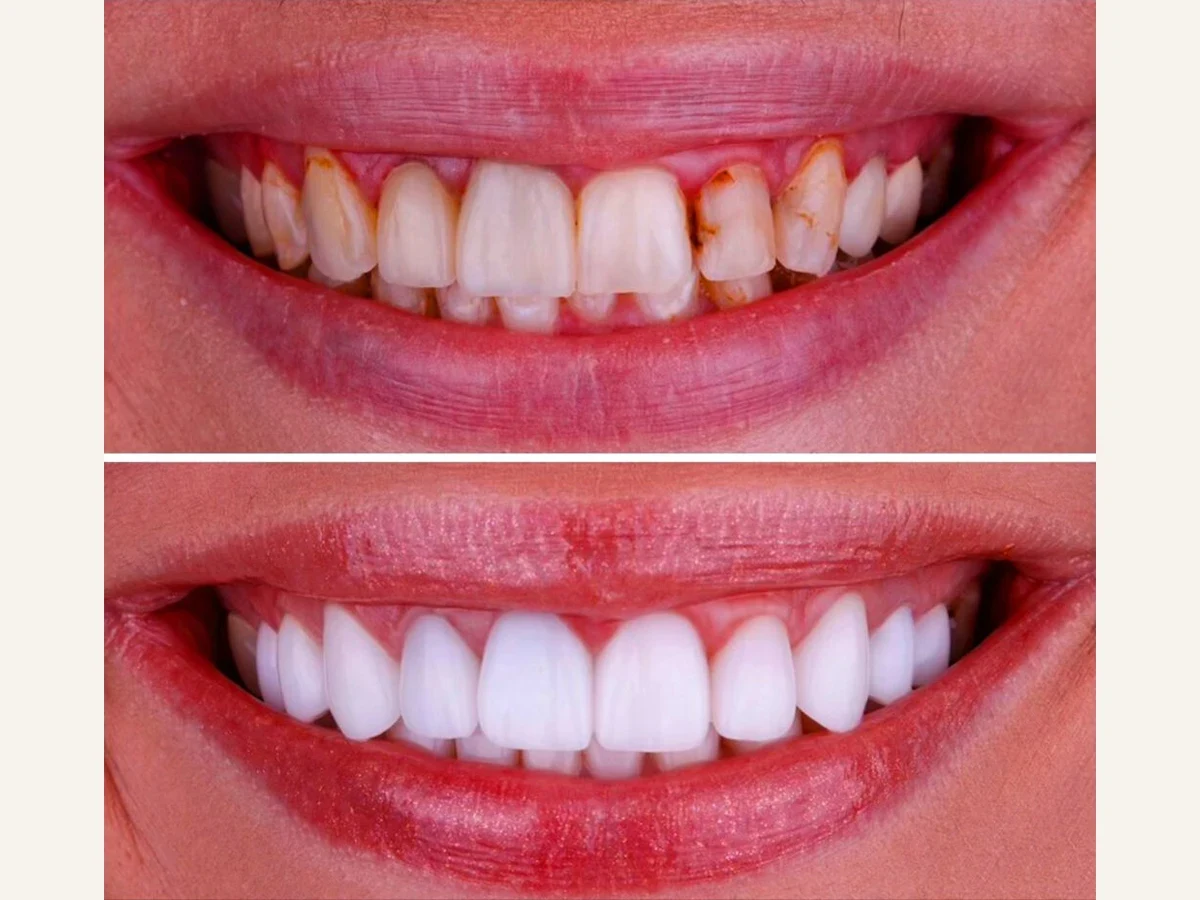
The coverage differs, so the remaining tooth matters
An onlay covers selected biting surfaces and points of a tooth, called cusps; a crown covers the prepared visible tooth more fully. The suitable option depends on the damage and sound structure remaining. Your dentist should explain what each design would protect, remove and preserve, including any root or nerve-tissue question that a photograph cannot answer. [1]
Compare what each preparation is intended to achieve
The clinician should explain why partial coverage is suitable or why more extensive coverage is recommended. Clarify the remaining tooth, existing restorations, planned material and the consequences of the preparation. Preserving tissue is a worthwhile objective, but it should be assessed alongside the function and limitations of the proposed restoration rather than promoted as an automatic guarantee of durability.
Use partial-coverage research within its scope
A systematic review assessed resin and ceramic inlays, onlays and overlays with longer-term follow-up. It reported fractures among the main failures, alongside endodontic problems, caries and debonding. These are several restoration categories, not one uniform onlay design, and the study was not a direct comparison proving that every onlay outlasts a crown. [2]
Use crown evidence for the correct restoration type
A newer review assessed tooth-supported single crowns across material and design groups. It should not be substituted for evidence about implant crowns, multi-unit bridges or every partially covered tooth. Ask which findings apply to the proposed material and situation. A pooled survival estimate describes studied restorations, not a personal guarantee or the absence of complications. [3]
A root or pulp problem needs its own plan
If the tooth has pain, previous root treatment or a suspected crack, discuss how those findings affect restorability and the recommended sequence. A new crown or onlay is not a substitute for diagnosing the underlying problem. Endodontic guidance supports an assessment-led pathway rather than choosing a restoration solely because it is advertised as stronger. [4]
Ask what a later failure would mean
Both options need monitoring of the restoration and the natural tooth. Clarify the cleaning, review arrangements and what a local defect, loosening or new pain would prompt the team to assess. The meaningful comparison includes preparation, expected function and future treatment—not just the material name or the initial fee.
When a filling may leave too little support
A molar can retain a surprisingly small amount of original tooth structure around a large filling. If the filling covers the chewing surface and both neighbouring contact areas—often described as an MOD preparation—the remaining cusps may need careful assessment before the tooth is restored again. Direct composite can be an effective, conservative option in many cavities, including some demanding preparations. An onlay may become attractive when covering a vulnerable cusp offers a clearer structural benefit. The decision is about the tooth left behind, not simply the size of the old filling on a radiograph.
The dentist may begin by removing defective filling material and decay, then inspecting the true extent of the preparation. Sometimes the definitive choice cannot be made with confidence until that exploration is complete. A direct filling can often be completed in one appointment. An indirect restoration may require a provisional stage before bonding or cementation. The estimate should explain potential changes if cracks or decay extend further than imaging suggested. Reviewing the bite after treatment is essential because even a small high contact can make chewing uncomfortable or overload an already weakened structure.
Direct composite may be repaired locally; ceramics and crowns have different replacement and repair considerations. But a repairable material placed in a structurally unsuitable cavity may not be economical in the long run. Ask which cusps need covering and why, how much tooth would be removed under each proposal and what the dentist expects to monitor at recalls. A good restorative plan protects your natural tooth now while leaving future choices open wherever possible.
Iconic Smiles practices are in Hatfield and Cheshunt in Hertfordshire, and Friern Barnet in North London. If travelling from Bedfordshire, Buckinghamshire or Essex, confirm the actual practice for each appointment.
Relevant reading: pubmed.ncbi.nlm.nih.gov · pubmed.ncbi.nlm.nih.gov
Further questions to consider before treatment
- The fit of a new crown or onlay near the gumline is one factor to ask about when comparing restoration choices.
- Some durable restoration options use metal as well as ceramic; ask which materials suit the tooth and your preferences.
- Before a new crown, your dentist should assess the tooth, gumline and proposed fit.
- An onlay can sometimes preserve more natural tooth than a full crown; ask which is appropriate in your case.
Look at the walls that remain after decay is removed
A tooth with an old large filling may appear sturdy until the restoration and any recurrent decay are removed. The dentist then needs to assess the thickness and continuity of the remaining cusps, cracks, enamel margins and the presence of a sound adhesive substrate. A wide preparation crossing the centre and both side contact areas can leave individual cusps thin and vulnerable to flexure under chewing. Merely filling the cavity again may not address that structural problem. However, reducing every cusp for a full crown could also remove tooth tissue that would otherwise be preserved.
Onlays reinforce selected cusps
An onlay typically replaces the missing chewing surface and covers one or more at-risk cusps while leaving other stable surfaces largely intact. Adhesive bonding can help couple the restoration to remaining tooth structure, provided the preparation and moisture control permit an appropriate protocol. The exact design changes with whether the tooth is vital, has been root-treated or has cracks. Ceramic materials also differ, and the laboratory must provide suitable contours and contacts. It is not enough to say an onlay is 'less invasive' without showing which walls are being preserved and why that preservation is useful.
When a crown can be justified
A full crown may be more suitable when very little sound tooth remains, multiple walls are undermined, extensive cracks require a different design or retention and margin placement cannot be achieved predictably with partial coverage. A root-treated tooth does not automatically require the same restoration as every other root-treated tooth. The amount and distribution of remaining structure, rather than the treatment label alone, guides planning. In a heavily rebuilt tooth, the clinician may also need to consider whether there is enough remaining tooth above the gum to support a reliable restoration.
What does the comparative evidence say?
A 2023 systematic review focused on posterior teeth with mesial-occlusal-distal preparations found too few comparable clinical studies to establish a clear outcome advantage for crowns or onlays. Some reports suggested that failures of onlays were more readily repairable, but the evidence was insufficient for a universal conclusion. This is useful precisely because it resists the idea that a particular restoration must always be 'best'. The judgement should be based on detailed assessment of the individual tooth and the consequences if the restoration needs treatment in future.
The appointment sequence and maintenance
After diagnosis, the clinician may remove the old restoration, confirm the tooth is restorable and take a scan or impression for an indirect ceramic restoration. A temporary restoration may be required while the laboratory work is completed. During fitting, contact points, occlusal height and seating are checked before the appropriate bonding or cementation procedure. Over time, margins, neighbouring teeth and the bite need review. Even a well-designed ceramic surface does not make the remaining natural tooth immune to new decay or fracture.
Ask what each option would remove and preserve
Request a visual comparison of the proposed onlay and crown, including why the remaining cusps can or cannot be retained. Ask whether a direct composite would still be credible, which risks are specific to your tooth, and what would happen if the restoration later required replacement. The aim is not to choose the smallest operation at any cost; it is to preserve valuable tooth tissue while achieving a restoration fit for chewing and long-term maintenance.
Why cavity shape matters more than the filling percentage
A broad filling that leaves continuous, thick enamel and dentine walls may behave differently from a narrower-looking restoration with a deep crack or thin undermined cusp. The direction of chewing forces and the location of the contact points also influence what the tooth experiences. An MOD cavity interrupts the marginal ridges—important parts of posterior tooth structure—so the clinician should examine remaining cusp thickness and whether flexure is likely. There is no universally safe percentage at which all fillings should become crowns. Individual anatomy and the quality of the supporting walls matter.
What modern composite can offer
Contemporary adhesive composite can reconstruct a large cavity directly, preserving remaining tissue and permitting relatively straightforward repairs in suitable circumstances. Clinical guidelines recognise composite as a viable option for a range of cavity types, including certain cusp replacements, provided that appropriate adhesive technique and moisture control can be achieved. The difficulty increases when isolation is poor, the defect extends below the gum or the bite places exceptional stresses on a thin remaining wall. Good composite work is not just choosing a material; it is creating effective contacts, curing it adequately and shaping a cleanable surface.
How an onlay changes the design
An indirect onlay, often ceramic, is manufactured outside the mouth from a scan or impression and bonded or cemented to the tooth. It may cover one or more cusps that the dentist considers at risk. This approach can help control shape and contacts for a large restoration while preserving surfaces that do not require removal. It introduces other demands, including suitable preparation geometry, laboratory or milling stages and a reliable bonding environment. The apparent precision of digital milling does not compensate for a poor underlying tooth assessment.
Where a crown fits into the comparison
If most cusps are compromised, there are extensive cracks or little tooth remains for a predictable partial restoration, a more comprehensive crown may be justified. But automatically cutting around every remaining surface because a cavity is large can be unnecessarily destructive. The key question is whether the extra coverage changes the prognosis enough to justify further removal. Evidence comparing onlays and crowns in similarly damaged MOD teeth remains limited, so individual clinical judgement and the expected failure consequences should be discussed openly.
Research and guidance
- Dental treatments — NHS
- Survival Rate of Resin and Ceramic Inlays, Onlays, and Overlays: A Systematic Review and Meta-analysis.
- A Systematic Review and Meta-analysis Evaluating the Survival, Failure, and Complication Rates of Metal-Ceramic, Veneered, and Monolithic All-Ceramic Tooth-Supported Single Crowns-Part 1.
- Treatment of pulpal and apical disease: The European Society of Endodontology (ESE) S3-level clinical practice guideline.
Your next step, when you’re ready
We would be pleased to welcome you for a £30 consultation at your preferred Iconic Smiles practice. Bring your questions, and we can talk through the options that may suit you.
Any additional investigations and their fees will be explained before you decide.