
Repairing your teeth
Crown or Onlay for a Back Tooth: Preserving Sound Cusps
When a back tooth has a large filling or a fractured cusp, it may need more protection than another ordinary filling can provide.
Talk through your options for repairing teeth
If you would like to understand how a tooth might be repaired or protected, a £30 consultation offers time to discuss your concerns and what an individual assessment may involve.
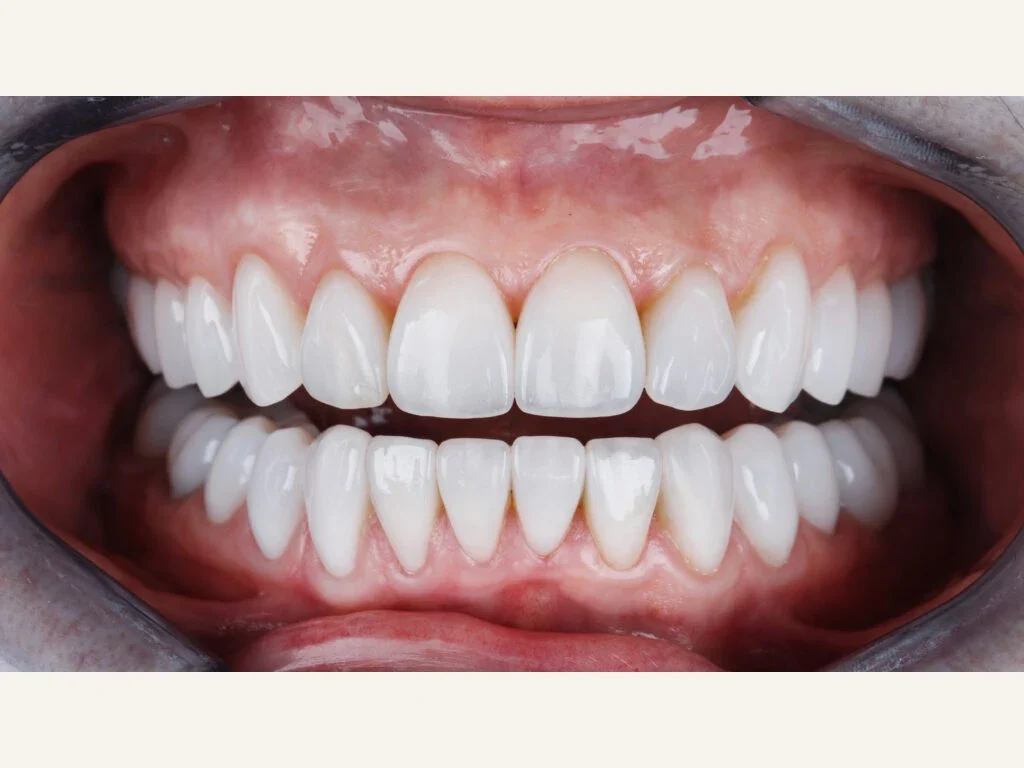
An onlay protects selected cusps of a back tooth, while a crown covers most or all of the visible tooth after preparation. Either may provide more protection than another filling when structure is weakened. The choice depends on healthy tissue remaining, cracks, old restorations and the bite. More extensive coverage does not automatically mean a longer-lasting tooth.
Evaluate the tooth before choosing a shape
The dentist should assess how much sound enamel and dentine remain, whether cusps are undermined and whether previous decay or cracks extend towards the root. A tooth that is heavily restored may benefit from cusp coverage, but not every cusp necessarily needs removal. Radiographs may help assess old fillings and the supporting structures without revealing every crack. A direct clinical examination of the bite, remaining walls and symptoms is still important. Ask which surfaces need protection and why that design is considered proportionate.
What an onlay preserves
An onlay can leave sound side walls untouched while replacing a weakened chewing surface. Ceramic or laboratory-made composite may be suitable. Reliable bonding still needs sufficient tooth structure, material thickness and moisture control. A very thin, undermined cusp may be too fragile to keep. Preserving healthy tissue differs from leaving weakened tissue that would make the design less reliable.
What a crown changes
A full crown can provide comprehensive coverage where existing restorations or cracks make partial coverage unsuitable. It requires sufficient preparation to create material thickness and an appropriate finish line. If the tooth has undergone root canal treatment, the remaining coronal walls and any core build-up become particularly important. A post does not automatically strengthen a weakened root-filled tooth. Patients should understand whether a crown is being recommended for protection, retention, appearance or a combination of those reasons.
Materials and bite loading
Lithium-disilicate and zirconia ceramics differ in bonding, translucency and indications. A restoration for a back molar must accommodate heavy chewing contacts, available occlusal clearance and any clenching pattern. The clinician should examine opposing teeth and decide how contact forces can be managed without removing unnecessary enamel. A material advertised as stronger is not inherently better if achieving its design requires avoidable tooth reduction. Discuss the balance between repairability, appearance, thickness and maintenance.
Compare the complete costs and prognosis
An itemised quotation should explain whether the treatment includes removing an old filling, core work, scanning, provisional protection and fitting. A cracked tooth might prove less restorable than expected once existing material is removed; this possibility deserves discussion beforehand. Patients can ask what happens if a deep crack is found, whether an onlay would preserve a better long-term option and how either restoration is monitored. A carefully planned onlay or crown should protect the remaining tooth while being comfortable and cleanable.
The preparation should match the damaged part
Consider a molar with a large but well-contained filling and one weakened cusp. An onlay that protects the compromised cusp may preserve more unaffected wall structure than a conventional full crown. By contrast, a tooth with several cracked cusps, extensive decay and little remaining sound structure could require broader coverage or a different treatment altogether. The decision cannot be made reliably from the approximate size of the visible filling alone. The clinician must examine the remaining tooth after removing defective restoration material and discuss whether unexpected findings could change the quote. Patients should ask which cusps are expected to remain and how the planned ceramic thickness will be achieved without creating an unusually high bite.
Ceramic Onlay Instead of a Full Crown: Preserving Enamel
The deciding factor is how much sound cusp wall remains after removing defective restoration material.
For example, a molar may have a broad old filling, two strong side walls and one cusp weakened underneath.
An onlay may protect the weakened cusp while retaining unaffected walls. Enamel around its edge supports bonding, and heavy contacts during sideways chewing may need adjustment. The broad filling alone does not establish a need to prepare all the way around healthy tooth.
Compare selected cusp coverage with preparation around the full circumference for a crown. The decision needs to account for enamel available for bonding, how far any crack extends and the bite contacts.
Cracked Tooth Cusps: When to Consider a Crown or Onlay
An incomplete cusp crack may need selective coverage even if radiographs look normal.
One possible presentation is a lower molar with sharp pain as pressure is released after biting hard food.
A cracked cusp may hurt when a test bite is released despite a normal-looking X-ray. Covering the cusp can limit its flexing, but a crack extending towards the root or into the pulp, the living tissue inside, changes the outlook. Establish which findings are confirmed and which may only become clear after an old filling is removed.
The assessment considers crack extent, symptoms from the pulp, the existing restoration and the response to a test bite. The proposed coverage should be explained in terms of how it may improve the tooth's outlook and which uncertainties remain.
Your next step, when you’re ready
We would be pleased to welcome you for a £30 consultation at your preferred Iconic Smiles practice. Bring your questions, and we can talk through the options that may suit you.
Any additional investigations and their fees will be explained before you decide.