
Bonding, veneers and whitening
Natural-Looking Veneers: How to Enhance Your Smile Without an Artificial Appearance
If you love the idea of veneers but want your smile to feel like your own, start with the details that make your teeth distinctive: shape, shade and proportion.
Discover what could suit your smile
Whether you are thinking about colour, shape or a subtle change, a £30 consultation is a welcoming place to share your ideas, ask questions and explore a personalised approach.
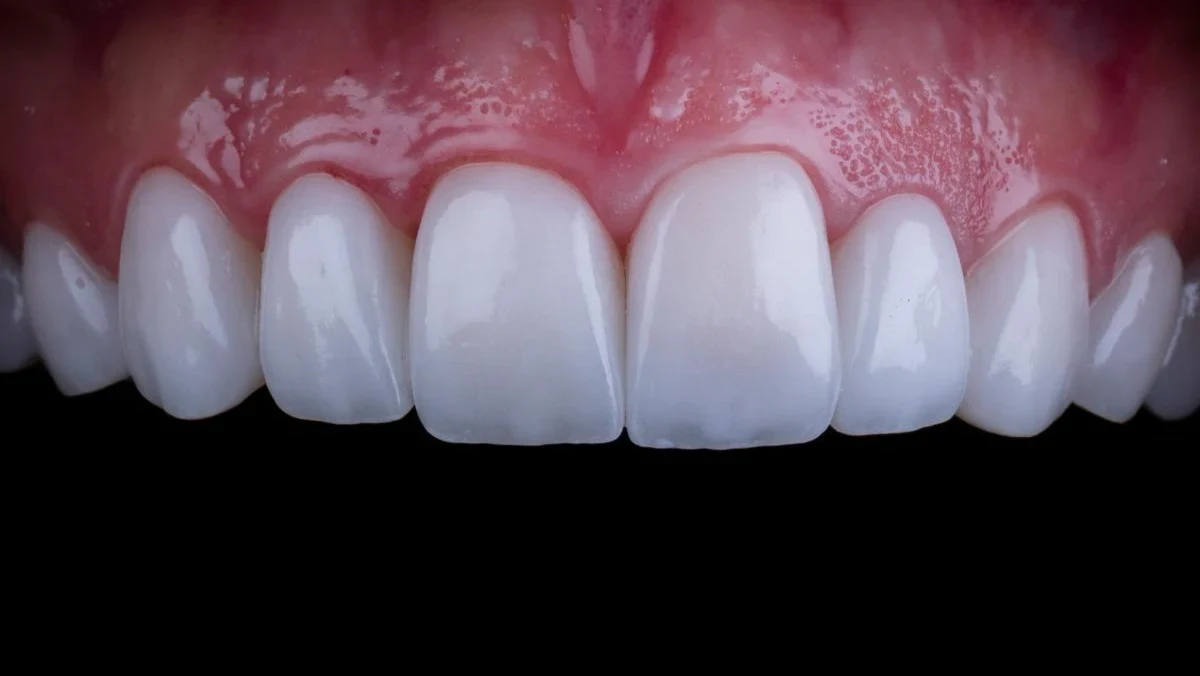
What does a natural-looking smile mean to you?
Natural-looking veneers need to suit your own teeth, smile and preferences. Discuss what you want to keep as well as change: tooth length, shape, colour and how noticeable a difference you would like. Choosing white alone does not settle those details before preparation begins.
Veneers change a surface, not every feature of the smile
A veneer is a thin covering fixed to the front of a tooth. It can change selected aspects of colour, shape and appearance, but the amount of coverage and preparation needs planning. The Oral Health Foundation describes enamel removal in the usual ceramic-veneer pathway to provide space. A no-preparation claim should therefore be assessed against the actual tooth position and proposed contour, rather than assumed from the word ‘veneer’. [1]
Use a preview to discuss the right questions
Ask what the proposed shape would change when smiling and speaking, whether it creates unwanted bulk and which parts of the preview are provisional. A mock-up or digital image can support communication about the plan. It is not the finished clinical result or a guarantee that the teeth and supporting tissues will match a screen image exactly.
Colour needs a plan for natural teeth and restorations together
If whitening of neighbouring natural teeth is wanted, coordinate it before selecting the final restorative shade. Whitening does not lighten existing restorations in the same way. Natural teeth also change apparent colour during dehydration, which can affect comparisons made during a procedure. Ask when the final shade will be assessed and how an unsatisfactory match would be reviewed. [2][3]
A good appearance does not remove the maintenance commitment
Ceramic-veneer studies report both survival and technical, aesthetic or biological complications. A veneer can remain present while needing attention, so ‘survival’ should not be presented as years without any problem. The review found limited long-term information for zirconia veneers, which should not be confused with more extensive long-term evidence for some other ceramic materials. [4]
Compare the extent of intervention tooth by tooth
Discuss whether whitening, alignment, a local composite addition or no elective treatment could meet your priorities. Request the planned preparation, the number of teeth involved, the total estimate and the approach to future repairs or replacement. A natural-looking result should be an agreed design and maintenance plan, rather than a justification for treating more healthy teeth than the goal requires.
Compare direct resin with laboratory ceramic
Composite is sculpted and light-cured directly on the teeth, often allowing selective refinishing or repair. Ceramic veneers are made from an impression or scan and bonded after laboratory or digital manufacturing. The techniques differ in aesthetic possibilities, cost, appointment stages and potential for repair. Ceramic cannot be said to be permanently stain-proof or unbreakable, while composite does not inevitably fail after a fixed number of years. Long-term success is affected by substrate, preparation, bite forces and maintenance.
When a crown becomes the rational choice
A crown may be appropriate if a tooth has a large restoration, important missing edges or needs more complete reshaping. The dentist checks how much sound tooth remains around it and where a reliable crown edge can sit. If most of the visible tooth has been rebuilt, a core build-up or post may need consideration. A post helps retain a build-up in selected teeth; it does not generally strengthen the root. Your plan should explain the alternatives or any referral needed.
Understanding the actual decision
A single central incisor is harder to disguise than a matched pair because translucency, texture and chroma must agree with its neighbour.
Consider professionally supervised whitening where suitable
Leeds patient information describes whitening approaches for different clinical situations and notes that results vary. A 2022 review found an internal-bleaching effect in selected root canal-treated discoloured teeth but identified study-quality and long-term stability limits. Ask which method is relevant to your diagnosis, what improvement is realistic and what risks matter. The evidence does not establish that every dark tooth responds identically or can be treated by the same protocol. Whitening may offer an appearance change without the same preparation as a covering restoration, but suitability and the expected result still need individual explanation. NHS patient informationRead the supporting clinical study (2)
The choice of cement involves more than colour
A resin cement must be compatible with the ceramic, prepared tooth, bonding strategy and expected curing conditions. Different shades or opacity levels can influence the appearance of thin ceramics, but chemical and mechanical suitability remain essential. The dental team also needs to control moisture, remove excess cement near the gums and deliver an appropriate cure. A patient need not choose a cement code, but should understand why the fitting appointment involves deliberate steps. Selecting the brightest paste is not equivalent to selecting the most natural or reliable restoration.
Comparing treatment routes
To match a crown beside natural teeth, the dentist first needs to establish whether you need a full crown, partial covering, an onlay, bonding or observation. If ceramic is appropriate, the options may include lithium disilicate or a layered design. The colour of the tooth beneath and its appearance in different lighting also need recording, rather than choosing a material by name alone.
A no-preparation design still needs room
With no-preparation veneers, the dentist still has to create an acceptable final contour and determine how the ceramic edge will finish against the tooth. Very prominent teeth may look bulkier if extra thickness is placed on top without reduction. A mock-up can demonstrate this before treatment begins. If the patient expects easy future removal, explain which surfaces may still be affected by cement removal and what restoration would be needed if a veneer is later replaced.
Margin placement is a clinical compromise
Keeping veneer margins in accessible enamel and away from unnecessary deep subgingival positions can support bonding and cleaning in appropriate cases. However, a stained restoration or visible colour boundary may alter the design. The clinician should explain how much enamel preparation is planned and whether the edge will be above, level with or slightly beneath the gum. Excessive depth can make moisture control, finishing and hygiene more difficult. There is no ethical reason to hide a margin at all costs if doing so sacrifices healthy tissue or creates a contour that is hard to maintain.
Choose the least destructive sufficient treatment
A comprehensive plan compares diagnosis and treatment of the underlying cause, whitening where appropriate, direct composite, veneer and crown only when indicated. Ask which option retains the most sound enamel while achieving a realistic shade improvement. The clinician should explain the sequence, anticipated maintenance, provisional stages and total fees. A single darker tooth does not automatically justify six cosmetic veneers. Precision and restraint usually matter more than the number of treated teeth.
Compare total value, not a ceramic trade name
Ask how many teeth require treatment, whether a whitening stage is recommended, which existing fillings need replacement and what restoration is proposed for each tooth. A written plan should include preparation, temporaries where relevant, laboratory fees, fitting and review. Discuss the realistic need for repairs, maintenance and eventual replacement without implying an exact lifespan for every veneer. The strongest reason to choose lithium disilicate is that its characteristics support the intended result for your particular teeth, not that 'E.max' appears in the treatment headline.
Why a shade number is insufficient
Natural enamel reflects and transmits light differently across the neck, middle and incisal edge of a tooth. A shade tab can approximate a base colour, but it does not capture the degree of translucency, internal mottling, fine surface ridges or edge characteristics. The laboratory may need photographs taken under controlled conditions, cross-polarised views or a technician's direct shade appointment. Tooth dehydration during treatment can temporarily lighten the apparent shade, so timing matters.
The safest sequence for a new smile
If a patient plans whitening and new bonding together, it is often sensible to whiten natural teeth first, allow the resulting shade to stabilise, then select a composite shade to match. The interval is not an arbitrary marketing delay: bleaching may alter immediate adhesive conditions and the final perceived colour may settle after treatment. The appropriate timeline depends on the product, treatment and clinician's protocol. New porcelain work likewise needs to be colour-matched against the intended final tooth shade. Placing bright restorations first and whitening later can leave an uneven smile if surrounding natural teeth do not reach the chosen shade.
Lighting can change what you see
A veneer that looks attractive under a dental chair light may appear different in daylight, warm household lighting or flash photography. Some dental materials exhibit optical behaviours that differ from enamel, and the underlying tooth can influence final brightness if the ceramic is thin. Evaluating colour under appropriate lighting and obtaining good clinical photographs can improve communication. Patients should avoid making a definitive decision from a highly filtered online photograph alone. Ask whether the planned shade can be reviewed at a try-in or mock-up stage and what changes remain possible before final bonding.
Judge shape and light together
The shape of a tooth’s front surface changes how it reflects light, which can make the colour appear different. Fine texture, edge shape and the contours that create highlights matter alongside the ceramic’s opacity. A temporary tooth or try-in can help you judge the look while speaking and smiling. A technician’s shade appointment may help with a difficult match. The assessment should include relaxed and full-smile views, as well as close-ups.
Choose a design that addresses the actual concern
Ask whether whitening, orthodontic care, composite or monitoring could reasonably meet your priorities, and why a veneer is recommended if it is. Retaining sound tissue and explaining future care are part of the choice. A photograph of the desired smile is useful for discussion but does not determine the appropriate preparation. Supporting source (www.dentalhealth.org)
Research and guidance
- Veneers - Oral Health Foundation
- Teeth whitening — NHS
- A randomised controlled trial to investigate the effects of dehydration on tooth colour.
- Survival and Complication Rates of Feldspathic, Leucite-Reinforced, Lithium Disilicate and Zirconia Ceramic Laminate Veneers: A Systematic Review and Meta-Analysis.
Your next step, when you’re ready
We would be pleased to welcome you for a £30 consultation at your preferred Iconic Smiles practice. Bring your questions, and we can talk through the options that may suit you.
Any additional investigations and their fees will be explained before you decide.