
Repairing your teeth
Replacing Metal-Ceramic Front Crowns with All-Ceramic Crowns
Older front crowns sometimes have a metal substructure covered by tooth-coloured porcelain.
Talk through your options for repairing teeth
If you would like to understand how a tooth might be repaired or protected, a £30 consultation offers time to discuss your concerns and what an individual assessment may involve.
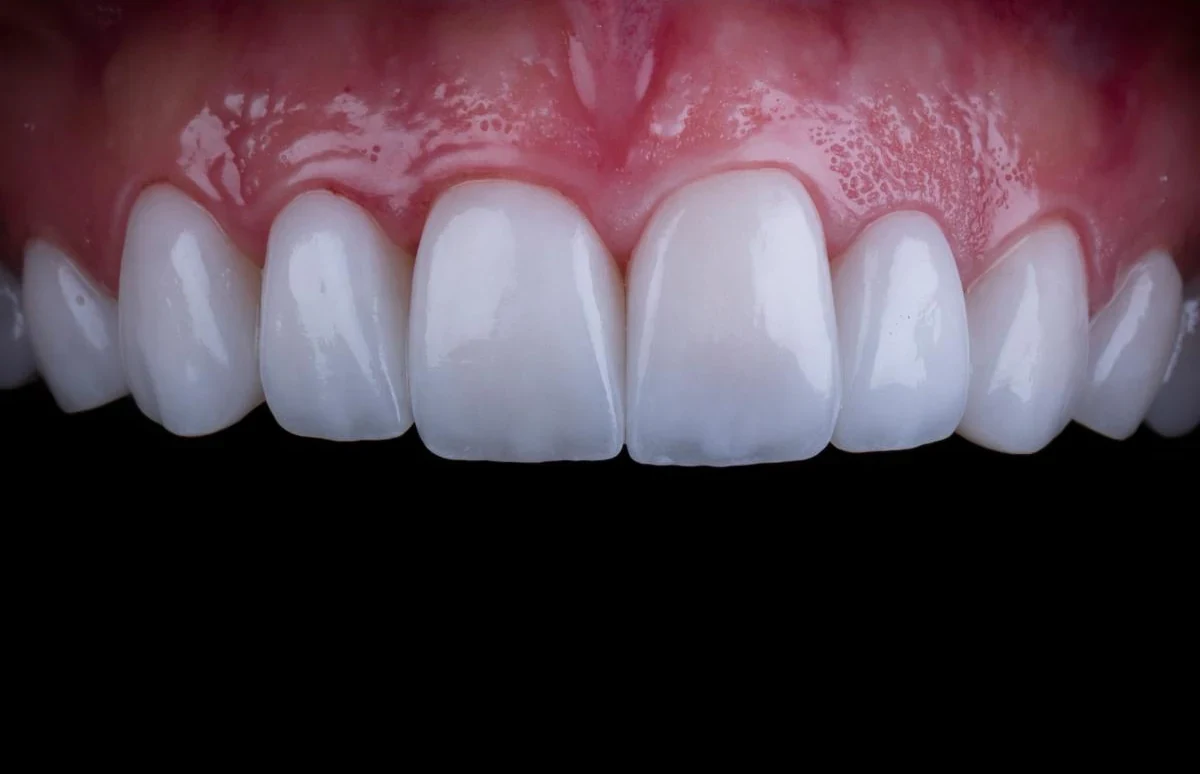
Replacing a metal-ceramic front crown with an all-ceramic one may improve appearance in a suitable case, but a sound older crown may be best retained. A dark margin or opaque surface needs assessment of the crown, gums and tooth beneath. Different ceramic options can change how light is handled, alongside the risks and tissue loss involved in replacement.
What causes the visible dark line?
A metal-ceramic crown may have a dark metal margin, while changes in the gum position can make that margin more visible over time. In other cases, the root or core itself is dark, so merely removing metal from the next crown will not make the underlying colour disappear. The dentist should examine the gum tissue, the position of the margin and the colour of the natural tooth structure. A photograph of the smile can show the aesthetic issue, but clinical examination and appropriate radiographs help establish whether the crown also has a structural or biological problem.
Removing an existing crown deserves planning
Removing a bonded or cemented crown may require cutting it. The dentist can then find an old core, limited tooth, decay or another issue not fully visible beforehand. New preparation should preserve sound tissue while allowing sufficient ceramic space. Understand the need for an interim crown and how the estimate would change if further rebuilding were necessary.
Which all-ceramic material would be suitable?
Lithium disilicate, zirconia and other ceramics have different translucency and mechanical characteristics. A very translucent restoration can appear natural over a healthy, light-coloured stump, but may allow dark core material to show through. A more opaque option can mask better yet needs thoughtful shape, surface character and shade selection to avoid looking flat. The right material also depends on the location of the tooth and the bite. No single ceramic is the best cosmetic answer for every patient with a previous metal-ceramic crown.
The gum may need attention before colour matching
If the old crown has an over-contoured margin, the surrounding gum may be inflamed. The clinician should consider tissue health and cleaning access before fitting the definitive replacement. If the gum has receded, the aesthetic margin of a new crown may still be difficult to hide completely. Sometimes a change in contour and margin location helps; sometimes gum disease treatment or a more restrained cosmetic objective is appropriate. Promising a 'dark-line-free' result without assessing the tissue and stump shade may create unrealistic expectations.
Replacing one crown differs from replacing several
A single front crown needs to match adjacent natural enamel in colour, texture and light behaviour. Replacing two or more crowns may allow the technician to create a coordinated appearance, but it also means treating more teeth. It is worth discussing whether sound neighbouring crowns should remain untouched. A clinician may use photographs, stump-shade measurements and a laboratory try-in to judge the result before final cementation. Natural teeth are not uniform across their surfaces, so a single shade label is rarely a complete instruction for an aesthetic front crown.
Make the decision with a full written comparison
Compare the clinical findings with the appearance change wanted and the benefit expected from replacement. Include the ceramic options, preparation, temporary work and maintenance. Monitoring may be reasonable for a healthy crown with a minor colour concern. If replacement is chosen, it needs to suit the remaining tooth and gum as well as the intended match.
References and further reading
Book an assessment
The practices are in Hatfield and Cheshunt in Hertfordshire, and Friern Barnet in North London. For travel from Bedfordshire, Buckinghamshire or Essex, confirm the actual practice and any sites involved in later stages.
Editorially updated: 27 October 2026.
Your next step, when you’re ready
We would be pleased to welcome you for a £30 consultation at your preferred Iconic Smiles practice. Bring your questions, and we can talk through the options that may suit you.
Any additional investigations and their fees will be explained before you decide.