
Bonding, veneers and whitening
Cosmetic Dentistry with Front Crowns: Your Options
Before planning veneers or bonding, the clinician should identify which teeth have full crowns, veneers, large fillings or root canal treatment.
Discover what could suit your smile
Whether you are thinking about colour, shape or a subtle change, a £30 consultation is a welcoming place to share your ideas, ask questions and explore a personalised approach.
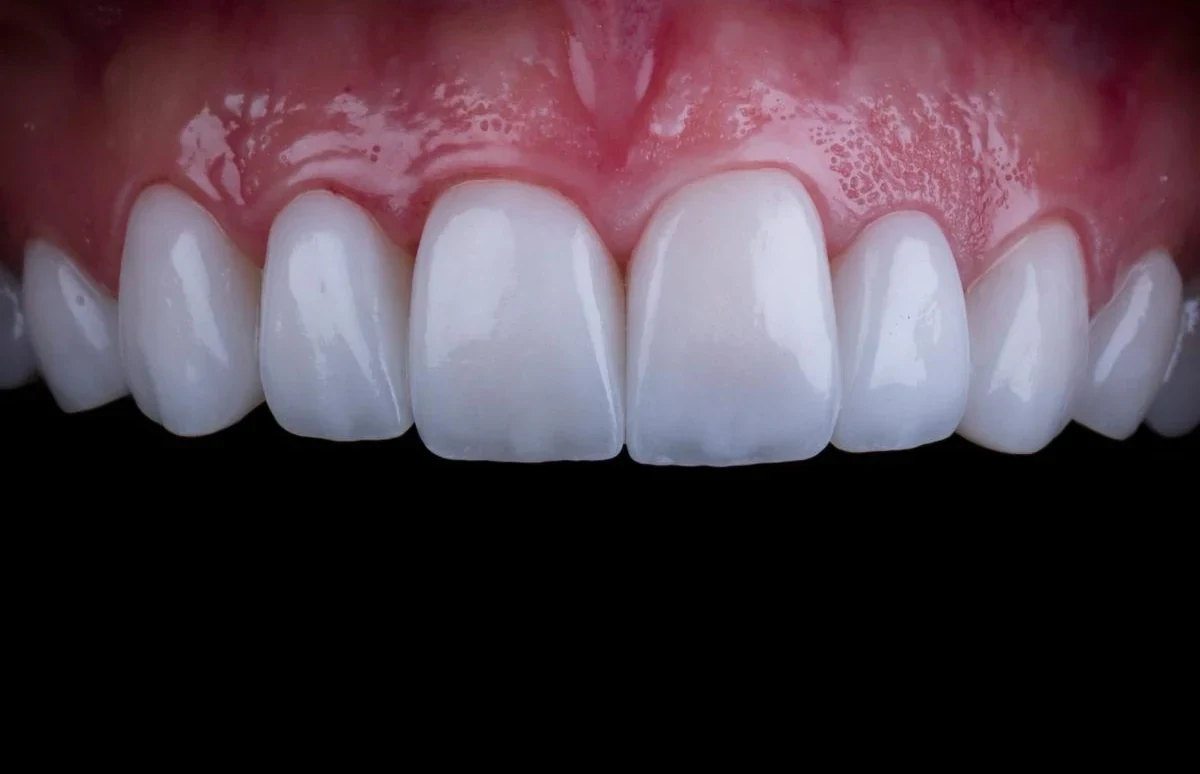
Cosmetic treatment can often be planned around existing front crowns, with sound work retained where it still suits the agreed result. First identify crowns, veneers, large fillings and root-treated teeth. Whitening may lighten natural teeth while ceramics stay the same shade, and differences in opacity, gum margins and light reflection can affect the final match.
Does the crown actually need replacing?
A stable, well-fitting crown should not automatically be sacrificed simply to achieve uniform colour. Alternatives include retaining the crown and matching other treatment to it, whitening natural teeth first and then reassessing, or replacing a deficient crown if there is a clinical or agreed aesthetic reason. Removing a crown can expose limitations in the underlying tooth and may require additional rebuilding. Discuss repairability and the amount of enamel that would be removed from neighbouring teeth.
Think about the gum line and the final bite
Dark margins, recession and asymmetrical gum levels may not be corrected by replacing ceramic alone. The dentist should assess gum inflammation, bone support, contacts between teeth when biting and any grinding before recommending new restorations. The planned smile should work during speech and chewing, not only in a staged photograph. Colour-matching under several lighting conditions and using a temporary mock-up can help clarify expectations when clinically appropriate.
A practical Friern Barnet consultation
Bring the date and material of your existing crowns if known, plus prior treatment photographs. Ask which restorations genuinely need work, which could be retained, and what happens if one fails later. Request an itemised estimate including any temporary crown, shade work, gum care and follow-up; the least invasive option may provide the best long-term balance.
An existing crown changes what whitening can achieve
Before promising an even smile colour, the clinician should identify which visible teeth are natural and which contain crowns, veneers or substantial composite. Professional whitening may brighten natural teeth but does not meaningfully bleach a porcelain crown. If the crown currently matches, whitening could make it look darker by comparison. That does not mean the crown must always be replaced; some patients prefer a more modest whitening endpoint or selective treatment of surrounding teeth. Colour matching should be discussed before purchasing a whitening course or booking cosmetic restorations.
Decide whether replacing a healthy crown is justified
Crowns are not permanent in the sense of never needing repair or replacement, but a stable restoration with acceptable margins and function should not be removed lightly. Replacement risks include further loss of tooth tissue, new sensitivity and complications where little natural tooth remains. On the other hand, a crown with recurrent decay, poor fit, fracture or an unsatisfactory bite may already need restorative attention. A clinical examination and appropriate imaging help distinguish an aesthetic preference from a structural problem. If an old root-treated tooth is involved, its remaining tooth structure and future prognosis matter more than the shade alone.
Look beyond the front surface
The crown's length, edge, gum level and contacts during jaw movement all influence the result. Replacing ceramic may not fully correct exposed root or uneven tissue contours. Alignment or treatment of inflammation may therefore come first. The laboratory needs records of texture and translucency as well as shade. With several crowns, changing one can affect its match to the others, so the plan should consider each tooth.
Ask about the least invasive route to your goal
For a Friern Barnet consultation, bring previous crown records or photographs if you have them. Compare retaining the crown, suitable whitening of natural teeth, limited bonding and a staged ceramic plan. Understand the fees, likely repairs and how much healthy tissue each option would affect. A proposed restoration should offer enough benefit to justify those commitments.
Bonding against an existing porcelain crown: shade mismatch
Decide which colour the new bonding should match
When composite will sit beside a porcelain crown, the reference colour needs agreeing before treatment. The crown, the natural tooth and the proposed resin are separate surfaces. If you are also considering whitening, NHS guidance is clear that whitening acts on natural teeth rather than existing restorations. The crown should not be expected to become lighter in the same way. [1]
Identify the actual mismatch before replacing anything
Describe whether you notice overall lightness, a different colour tone, a dark edge or a difference visible only from some angles. The assessment can separate colour from shape or surface texture. The plan should show which area would change and why; replacing a satisfactory crown is an additional intervention requiring its own justification and consent.
A shade label cannot guarantee identical appearance
Laboratory comparisons show that resin systems and layering combinations can produce different colour and translucency even when intended for similar aesthetic use. That finding explains why material selection requires judgement, but it does not identify a perfect resin match for your crown. Agree how the intended result will be discussed and assessed before irreversible treatment begins. [3]
Avoid judging only while the teeth are dry
A clinical study found that dehydration made natural incisors appear lighter. This can affect the apparent relationship between the tooth and restoration during an appointment. Shade assessment should account for hydration; a temporary contrast under treatment conditions should not automatically trigger replacement of existing dentistry. [4]
Compare the smallest suitable correction
Ask whether the goal can be met by adjusting the planned composite shade or contour, and what additional benefit replacing older dentistry would provide. If a composite defect is localised, repair may be considered after assessment. Evidence comparing repair and complete replacement is uncertain, so the decision should depend on the actual defect rather than an automatic preference for starting again. [5]
Research and guidance
Your next step, when you’re ready
We would be pleased to welcome you for a £30 consultation at your preferred Iconic Smiles practice. Bring your questions, and we can talk through the options that may suit you.
Any additional investigations and their fees will be explained before you decide.