
Repairing your teeth
Planning full-mouth crowns: why the way your teeth meet matters
Considering crowns for several worn or damaged teeth? Learn how your bite is assessed before a larger treatment plan.
Talk through your options for repairing teeth
If you would like to understand how a tooth might be repaired or protected, a £30 consultation offers time to discuss your concerns and what an individual assessment may involve.
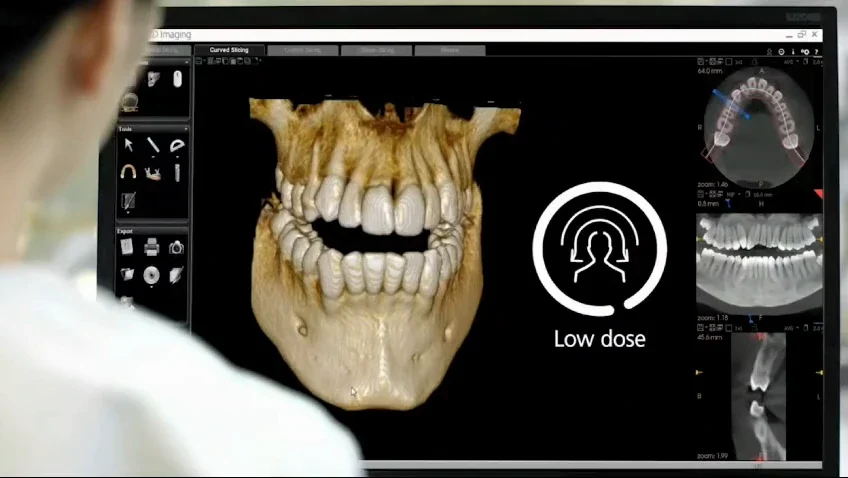
When several crowns are planned, the way your teeth meet needs to be assessed as a whole. A change in one tooth's height or shape affects its contacts with others, so the proposed bite should be planned, tested where possible and reviewed before extensive treatment.
Your teeth work together during chewing, swallowing and sideways jaw movements. Treating each crown as an isolated tooth can overlook how changing several heights or shapes affects that shared bite. For extensive treatment, agreeing the overall design is an essential step before preparation appointments begin.
What a bite analysis actually examines
The dentist checks where teeth meet on closing and how the contacts change as you move your jaw. Wear marks, chips, gaps, jaw muscles and joints are considered alongside any symptoms; a click or wear mark alone does not establish disease. Photographs, mouth scans and models mounted to reproduce the bite can help record the findings. More complex digital equipment may add information in selected cases, but cannot replace the diagnosis.
Why individual crowns interact
A high contact on one restored tooth can alter how forces are distributed across nearby teeth. Restorations that are too flat may impair chewing, while excessive cusp steepness can create troublesome interference in particular movements. The dentist must decide how new crown contours will relate to the existing teeth and to other planned restorations. If the bite is already worn, the available space for ceramic may be limited without changing the occlusal scheme.
Understanding vertical dimension
The distance between the jaws when the teeth meet can be altered during more extensive rehabilitation, but doing so requires justification and assessment. A patient with worn teeth does not automatically have a collapsed bite. Tooth eruption and compensatory changes can preserve vertical relationships despite wear. Increasing restorative height everywhere merely because teeth look short may produce a difficult adaptation period or unnecessary preparation.
Diagnostic provisionals as a trial
Temporary crowns, mock-ups or other provisional restorations can sometimes test a planned change before definitive ceramics are made. The dentist can assess appearance, phonetics, chewing comfort and whether adjustments are needed. These are valuable sources of information when many teeth are involved. A patient should ask which aspects are still experimental during a provisional phase and which changes are intended to be carried into the finished work.
Keeping natural tooth tissue in the plan
Full-mouth crowns are not the only solution to extensive wear or uneven teeth. Selective composite additions, onlays, orthodontic correction and treatment of only the compromised teeth may preserve more structure. The clinical team should explain why a full-coverage crown is needed for each proposed tooth rather than treating an entire arch as one cosmetic package. Existing healthy enamel is a valuable resource.
How success should be measured
A successful rehabilitation allows comfortable function, appropriate hygiene, acceptable appearance and realistic long-term maintenance. Ask how contacts are recorded, how the proposed height will be tested and what adjustments might follow fitting. The final quote should distinguish diagnostic stages, provisional work, definitive crowns and reviews. Confidence in a complex smile comes from thoughtful sequencing and reversible trials where possible, not a guarantee that a computer-designed bite will be perfect at the first fitting.
A sequence rather than 20 disconnected crown appointments
Consider someone with six older upper crowns, worn lower front teeth and missing molars. Making new upper crowns before planning the back-tooth support could leave work that later needs alteration. First, the dentist assesses which existing crowns need replacement and what change in bite height or tooth contacts is proposed. A diagnostic model and temporary arrangement may help test speech and comfort. Gaps might be managed with implants, bridges or removable teeth, while some may not need immediate replacement. A written sequence shows how each stage informs the next and where keeping a sound existing crown may be preferable to replacing it for uniformity.
Your next step, when you’re ready
We would be pleased to welcome you for a £30 consultation at your preferred Iconic Smiles practice. Bring your questions, and we can talk through the options that may suit you.
Any additional investigations and their fees will be explained before you decide.