
Repairing your teeth
Full-Mouth Dental Restoration Costs: What Affects the Price?
Full-mouth restoration is a description of the extent of care, not a single standard procedure with one price.
Talk through your options for repairing teeth
If you would like to understand how a tooth might be repaired or protected, a £30 consultation offers time to discuss your concerns and what an individual assessment may involve.
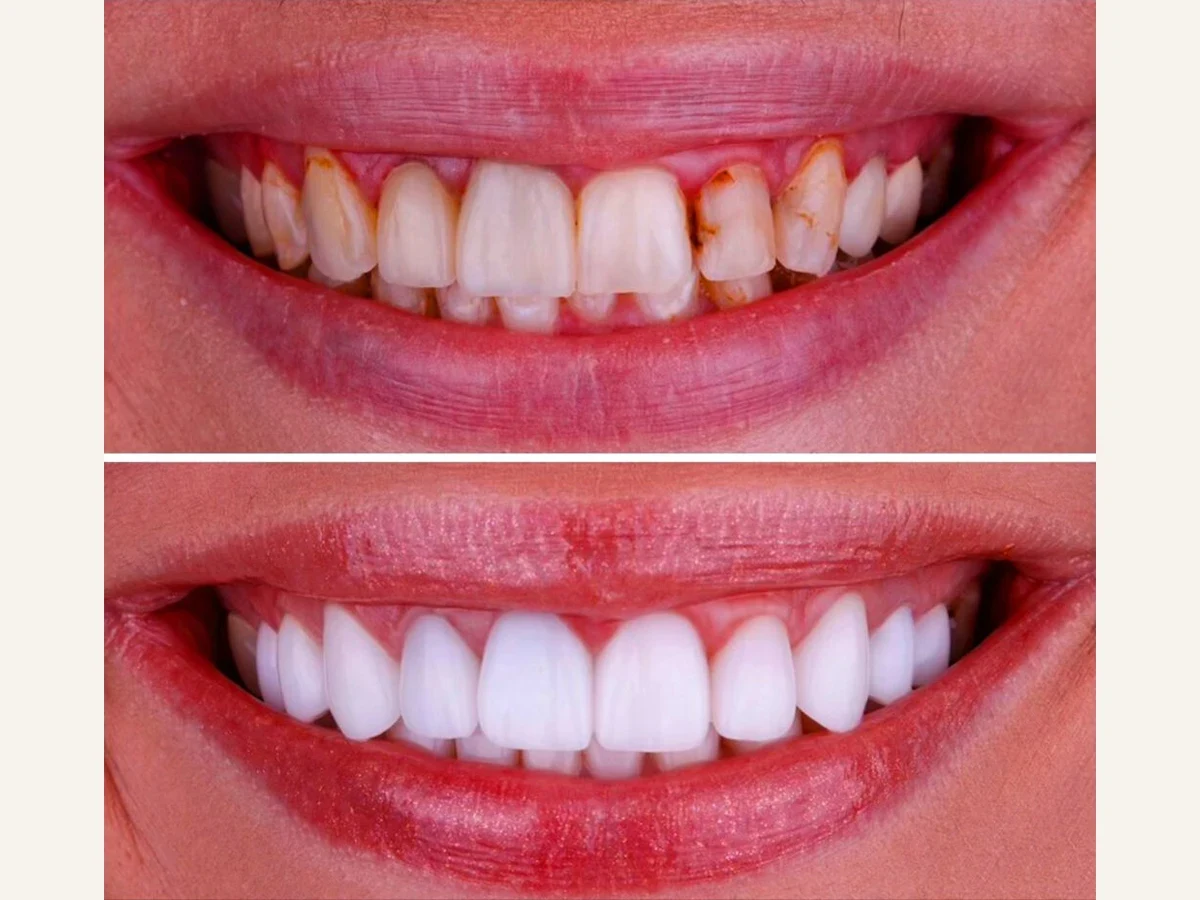
The price depends on what needs restoring
The cost of restoring a whole mouth depends on the teeth being kept, repaired or replaced and the stages needed. Selected repairs are a different plan from extractions, implants and a full-arch bridge. Your estimate should follow the findings, intended result and alternatives, rather than a count of crowns or implants alone. [1]
Separate assessment, stabilisation and definitive treatment
Ask the written plan to distinguish diagnostic work, treatment of active disease, any surgery, temporary teeth and final restorations. It should state which stages are needed and which findings could change them. If the condition of a tooth cannot be confirmed until earlier care is completed, identify that uncertainty rather than hide it inside an unexplained fixed package.
Check what an implant-related quotation includes
An implant fixture and the restoration above it are different components. Where implants are proposed, clarify the assessment, surgery, abutments, temporary and final teeth, possible grafting and review arrangements. A headline price should not be assumed to include every component or stage unless the written quotation says so. [1]
Use published fees for their stated scope
Our published fees describe individual treatment categories. They give you a starting point for the services listed, but cannot establish the cost of combining care across your mouth. After assessment, you should receive the proposed sequence and an itemised estimate for your own plan. [2]
Include the costs of continuing care
Extensive treatment still introduces monitoring and possible repair needs. Peri-implant guidance recommends continuing supportive care, and composite treatment for localised wear may require repairs or replacement. Ask which follow-up is included, what is charged separately and what happens if a supporting tooth, implant or restoration develops a problem. [3][4]
Compare a staged option with the complete plan
If treatment is staged, clarify what must happen first, what can reasonably wait and how function will be maintained between stages. Payment arrangements should be explained separately from clinical suitability. Before agreeing, compare the essential disease-control plan, the proposed definitive plan and the reasonable alternatives, with clear arrangements for obtaining consent to any additional cost.
Comparing finance with the total treatment quotation
Dental implants, orthodontics and cosmetic restorations can represent a substantial private investment. Monthly finance offers may make treatment seem accessible, but a monthly figure tells you little about what is included, the total payable or the future costs of maintenance. A patient choosing high-value treatment should first understand the clinical plan and only then compare payment routes. The responsible question is not how quickly finance can be arranged; it is whether the proposed dentistry meets your needs and whether the quotation reflects the complete pathway from assessment to fitting and follow-up.
Relevant reading: nhs.uk
Is the most extensive treatment necessary?
A smile makeover might combine alignment, whitening and targeted bonding rather than placing multiple veneers on sound teeth. A single missing tooth may be replaced by an implant, bridge or removable option depending on anatomy and patient preference. An itemised plan makes it easier to compare clinical alternatives and stage treatment without sacrificing important priorities. If a less invasive route achieves the main goal, it deserves proper discussion even when its total sale value is lower. The GDC requires advertising to remain accurate and not exploit patient uncertainty or lack of knowledge.
Address disease with the relevant treatment pathway
Periodontal disease and pulpal or apical disease require diagnosis-specific management. EFP periodontal guidance and the European Society of Endodontology guideline address different conditions and treatment decisions. Ask what needs treatment now, who provides it and how the response will be assessed. Do not assume that a tooth needing root canal treatment must be removed, or that completing one treatment automatically resolves every structural concern. The sequence should allow the relevant findings to inform prognosis. Where more than one clinician contributes, clarify how their assessments are brought together rather than left as unrelated recommendations. Read the supporting clinical study · Read the supporting clinical study (2)
Compare cash price and financed total
Finance may be offered at a promotional interest rate, a fixed annual rate or through a separate credit provider. Check any deposit, payment term, interest, fees and the total amount payable. A low monthly repayment over a longer period can result in a higher overall cost than a shorter term. The practice should explain which organisation provides credit and whether a formal affordability check or credit agreement applies. Clinical consent and financial acceptance are separate decisions; agreeing to a consultation should not be treated as agreeing to finance or to irreversible dentistry.
Begin with an itemised treatment plan
An implant quotation may involve diagnostics, extraction, grafting, placement, a provisional tooth, the abutment and a final crown. Orthodontic fees might cover records, attachments, aligners or braces, reviews, refinements and retainers to differing extents. Veneer fees may include laboratory stages, temporary restorations and fitting, but future repairs may be separate. Ask for a written breakdown identifying mandatory, optional and possible additional steps. A lower advertised starting price is not necessarily a cheaper completed treatment. The GDC says patients should receive clear information about dental costs and should be supported in making informed decisions.
Give reassessment an explicit purpose
A review after initial treatment should answer a clinical question and guide the next decision. Ask what findings will support retention, what would lead to another investigation and what could make extraction the preferred option. The patient should know how symptoms are managed while uncertainty remains. A review is not simply a delay before the original plan proceeds regardless of the result. If the recommendation changes, request the reason and the revised alternatives. That explanation helps preserve informed consent through the pathway instead of treating agreement at the first consultation as approval for every later change.
Complete the plan with maintenance for the mixed mouth
The final reconstruction may contain natural teeth, restorations and implants. Ask how each is reviewed, who coordinates care and what changes should trigger earlier contact. Implant guidance recommends structured supportive care, while periodontal maintenance follows the relevant diagnosis and findings. At Iconic Smiles, confirm the clinicians, locations and itemised fees for the stages and ongoing care. A retention-focused sequence should remain flexible enough to respond to new evidence without becoming directionless. The goal is a complete plan in which useful teeth are preserved where reasonable and replacements are introduced with a clear clinical rationale. Read the supporting clinical study · Read the supporting clinical study (2) · Meet the Iconic Smiles dental team · Find an Iconic Smiles practice · See our current treatment fees
Plan for maintenance rather than just fitting
Cosmetic restorations may need future polishing, repair or replacement. Retainers can require renewal or repair after orthodontics. Implants need cleaning and periodic professional review, and a supported crown or bridge may eventually require servicing. These costs do not mean treatment is poor value; they are part of owning and maintaining dentistry over time. Patients should understand that 'warranty' terms may exclude wear, trauma or maintenance and can differ between components. A comprehensive financial decision compares initial treatment, follow-up and reasonable future care, without relying on fixed lifespan guarantees.
Plan the temporary arrangement before irreversible stages
If extractions, restorative preparation or implant stages are necessary, clarify what you will use while treatment continues. The temporary replacement should have a stated purpose, limitations and care instructions. NHS implant information describes possible staged treatment, while the ITI distinguishes placement from loading. Ask how the interim plan changes if a tooth can be retained, cannot be retained or needs further time for assessment. These practical details affect eating, appearance and daily life. They belong in the consent and estimate before the relevant procedure, rather than being improvised after the patient has lost a tooth or an existing restoration. NHS patient informationSupporting source (academy.iti.org)
Questions before accepting a quote
Request the complete cash price, financed total, treatment stages, possible extras, number of visits and what is included in maintenance or any aftercare terms. Ask whether a phased plan is available and whether postponing cosmetic stages creates clinical problems. Check current advertised consultation and treatment starting fees with the practice before relying on them. A good dental consultation should leave you more certain about both your clinical options and financial commitments. The aim is informed choice and sustainable results, not pressure to sign the longest repayment agreement.
List the decisions that are confirmed and those still open
A full-mouth plan should distinguish teeth selected for retention, teeth recommended for removal and teeth whose prognosis needs further assessment. Ask why each decision has been made and what could change it. Consent should explain the purpose, material risks and realistic alternatives of the proposed interventions. A calendar is easier to understand when it is built around clinical decisions rather than a series of procedures with no stated relationship. If an uncertain tooth affects a future bridge or implant position, that dependency should be visible before you agree to irreversible work or a dependent definitive restoration.
Beware of quoting only the first stage
If a treatment pathway involves an implant fixture followed by a separate crown, the patient needs to know both amounts. For Invisalign, a quotation should make clear what happens if extra refinement trays are required and whether retention is included. Composite bonding may be charged per tooth, so an apparently low price can rise when several teeth are proposed. Ask which taxes, laboratory fees or review costs are included where relevant, and how the practice handles changes to the plan after diagnostics. The aim is to avoid financial surprises when the clinical work is already under way.
Coordinate the role of each retained tooth
A tooth may remain as an independent tooth, receive a restoration or have a supporting role within a wider design. Ask how its prognosis affects that role and whether another decision depends on it. The EFP stage IV guideline addresses coordinated rehabilitation in advanced periodontal disease, illustrating why clinical and restorative planning may need to be linked in that defined setting. It should not be applied as a diagnosis to every full-mouth case. The relevant point for a patient is that retention and restoration decisions should support one coherent plan rather than be made in isolation. Read the supporting clinical study
Research and guidance
- Dental implants - Overview | Guy's and St Thomas' NHS Foundation Trust
- Dental Fees & Finance: Treatment Prices | Iconic Smiles
- Prevention and treatment of peri-implant diseases-The EFP S3 level clinical practice guideline.
- Success and Survival of Composite Resin Restorations for the Management of Localized Anterior Tooth Wear: A Systematic Review and Meta-Analysis.
Your next step, when you’re ready
We would be pleased to welcome you for a £30 consultation at your preferred Iconic Smiles practice. Bring your questions, and we can talk through the options that may suit you.
Any additional investigations and their fees will be explained before you decide.