
Repairing your teeth
Dental Inlay or Direct Filling: How to Restore a Larger Cavity
When a cavity or old filling occupies a large part of a back tooth, a dentist may discuss a direct composite filling or an indirect inlay.
Talk through your options for repairing teeth
If you would like to understand how a tooth might be repaired or protected, a £30 consultation offers time to discuss your concerns and what an individual assessment may involve.
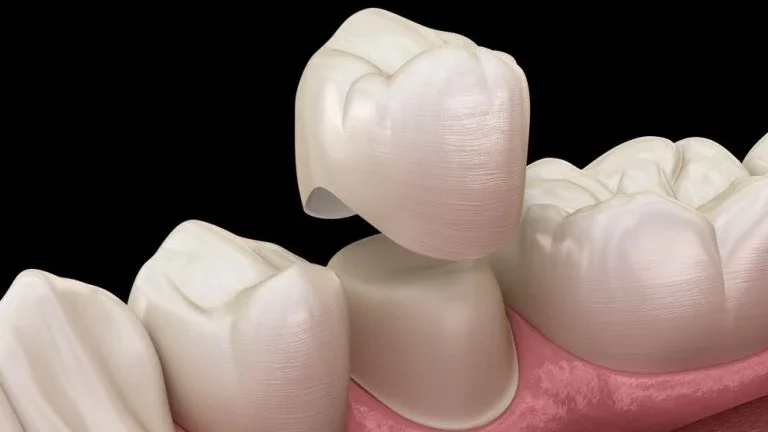
A larger cavity may still suit a direct composite filling, while an indirect inlay is another option in selected teeth. The choice depends on missing structure, remaining enamel, bite forces and whether the area can be isolated for bonding. These are different restoration designs, so the recommendation should explain the benefit and healthy tissue affected as well as cost.
Start with the shape of the cavity, not the product
A small, contained cavity with well-supported surrounding walls may be suitable for a direct filling. A wider preparation with thin margins or difficult contact geometry can be more challenging. The dentist examines remaining cusps, crack lines, the depth of the cavity and whether the tooth contacts its neighbour properly. Radiographs may help establish decay extent or the condition of an existing restoration, but the final choice can depend on what is found after diseased tissue is removed. An inlay is placed inside the cusps; if a cusp itself needs protection, an onlay may be a different and more appropriate category.
How a direct restoration is constructed
Direct composite is placed into the prepared tooth, usually in increments or according to the material's recommended technique, and then shaped and polished. A close-fitting contact with the neighbouring tooth and a correctly shaped chewing surface are important. Composite bonding relies on adequate isolation and preparation of the enamel or dentine surface; contamination can affect the restoration. A direct approach may preserve more tooth structure in selected cases and can often be completed in one visit. Large, complex cavities may make achieving an ideal contour and contact more demanding, although that is not a universal reason to choose an inlay.
How an indirect inlay differs
An inlay is designed from an impression or scan and fabricated outside the mouth, then fitted and bonded or cemented. Laboratory or digital manufacture can help control anatomy and contact shape in suitable cases. The clinician still needs sufficient remaining tooth structure and a preparation that permits an appropriately designed restoration. Because there is a separate fabrication stage, temporary protection may sometimes be required. Ceramic and resin-based options have different properties and bonding requirements. The material name alone cannot determine longevity without considering preparation design, bite forces and the patient's oral health.
Distinguish an inlay from an onlay or crown
An inlay sits within the natural cusp outline. An onlay covers one or more cusps when those areas require protection, while a crown extends over substantially more of the external tooth surface. A heavily restored tooth with a cracked cusp may need coverage rather than a larger inlay placed between weakened walls. Conversely, preparing every surface for a full crown can be excessive when sound enamel remains. Ask the dentist to show which parts of the tooth are structurally supported and which are vulnerable, using photographs or an annotated diagram if helpful.
Long-term value includes repair and cleaning
Any restoration has a margin where it meets natural tooth. Good oral hygiene, a low-caries diet and appropriate reviews remain important. A restoration can fail because of new decay, fracture, wear or loss of adhesion, with causes varying by material and patient. Repairs may be feasible in some circumstances, whereas extensive failure can require a larger restoration. The clinician should discuss not only the fee and appearance but also expected maintenance, the ease of cleaning the contact and what future replacement might involve if the tooth loses more structure.
Questions that distinguish a justified recommendation
Before choosing, establish whether the remaining cusps are strong enough to stay uncovered, how much tissue each option would remove and whether moisture can be controlled. The plan should also cover deeper decay found during treatment. Where both an inlay and direct filling are reasonable, access, preference and cost can help decide. The aim is a well-sealed restoration that functions within the remaining tooth.
References and further reading
Book an assessment
The practices are in Hatfield and Cheshunt in Hertfordshire, and Friern Barnet in North London. For travel from Bedfordshire, Buckinghamshire or Essex, confirm the actual practice and any sites involved in later stages.
Editorially updated: 27 October 2026.
Your next step, when you’re ready
We would be pleased to welcome you for a £30 consultation at your preferred Iconic Smiles practice. Bring your questions, and we can talk through the options that may suit you.
Any additional investigations and their fees will be explained before you decide.