
Repairing your teeth
How are new dentures designed for comfortable chewing?
Considering your first set of dentures? Learn why fit, bite and design influence how they may feel when eating and speaking.
Talk through your options for repairing teeth
If you would like to understand how a tooth might be repaired or protected, a £30 consultation offers time to discuss your concerns and what an individual assessment may involve.
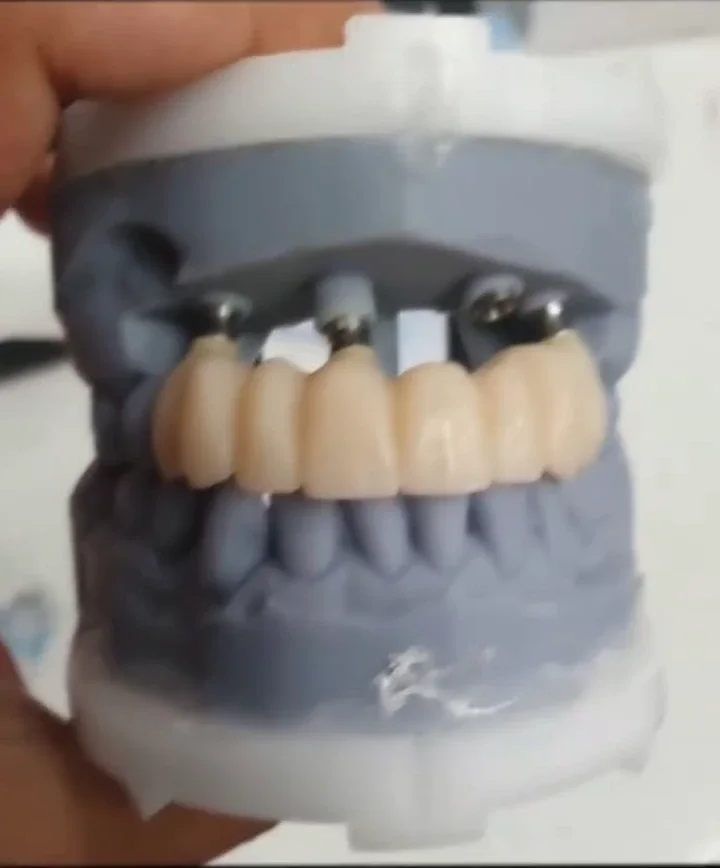
Comfortable chewing starts with planning how your new dentures fit the gums and how the upper and lower teeth meet. Your dentist assesses the supporting tissues, jaw relationship and space for the teeth, so appearance, speech and function can be considered together.
A full denture can look attractive on a model yet move when you chew. Unlike natural teeth, it rests on soft tissues. Its stability depends on how far the base extends, its contours, the remaining ridge and how your muscles work around it. Tooth contacts matter too: an unfavourable bite can tip or lift the denture. Recording the jaw relationship and arranging the teeth therefore deserve as much attention as choosing their shade.
Artificial teeth need a stable position
The dentist assesses jaw shape, soft-tissue support, available vertical space and the relationship between upper and lower ridges. A stable denture does not simply place the teeth where a laboratory technician thinks they look straight. Tooth positions must work with the tongue, cheeks and lips while allowing the prosthesis to rest comfortably on its supporting surfaces. A lower complete denture can be especially challenging because it has less available supporting area and moves in a space influenced by the tongue. The patient's experience of an old denture, if any, can provide useful information about what works and what does not.
Vertical dimension changes appearance and function
The dentist needs to establish a comfortable facial height when the artificial teeth meet, known as the vertical dimension of occlusion. If the jaws are held too far apart, the teeth may feel too tall and closing may be uncomfortable. Too little separation can affect lip support, facial appearance and chewing. Speech, swallowing, the resting jaw position and other clinical records help establish a suitable relationship; no single measurement decides it. A fuller-looking face in a photograph is not enough if the jaw position feels wrong in daily use.
What occlusal balance means
Occlusal balance describes the way tooth contacts help a denture stay stable as the jaw moves. Some designs aim for useful contacts on both sides during particular movements; others use different tooth shapes or contact patterns. The choice depends on the supporting ridges, artificial teeth and how you use the denture. There is no bite arrangement that suits everyone. Your dentist and technician check that the chosen pattern supports the appliance without creating strong contacts that tip it.
A trial denture is a practical rehearsal
Wax trial dentures can allow assessment of tooth position, lip support, speech and the proposed bite before the final acrylic is processed. The patient should speak, smile naturally, close into the planned bite and report any sense that the teeth are too long or too far forward. Some details of the final fit will still change after processing and adjustment. The aim of the trial is to resolve obvious design questions before they become harder to alter. A beautiful tooth arrangement should not be approved solely while smiling with lips closed or without testing speech and function.
Ridge support and muscles limit what occlusion can fix
As bone remodels after tooth loss, the supporting ridge may become less favourable for conventional dentures. No occlusal adjustment can create bone or fully compensate for extremely poor retention. Extensions, impression technique, saliva, soft-tissue condition and patient coordination also influence stability. A reline or new denture may be necessary as tissues change. For selected patients, implant-retained overdentures can improve retention, though they introduce surgical assessment and maintenance requirements. The clinician should explain when an instability problem is mainly related to fit, bite or underlying anatomy, rather than promising that changing tooth shapes will solve everything.
What to ask before ordering new dentures
Before the dentures are made, establish how the jaw relationship will be recorded, whether you will have a wax try-in and which adjustments are included afterwards. You also need a cleaning routine for the base and teeth, and an explanation of future relines. Even well-made dentures can take time and review to feel comfortable when eating. Appearance, speech, support and the bite belong in the same design discussion.
Evidence and further reading
The practices are in Hatfield and Cheshunt in Hertfordshire, and Friern Barnet in North London. If travelling from Bedfordshire, Buckinghamshire or Essex, use the actual clinic address on your confirmation.
Your next step, when you’re ready
We would be pleased to welcome you for a £30 consultation at your preferred Iconic Smiles practice. Bring your questions, and we can talk through the options that may suit you.
Any additional investigations and their fees will be explained before you decide.