
Repairing your teeth
Interproximal reduction: what to understand before enamel is removed
Interproximal reduction, usually called IPR, removes enamel from the sides of selected teeth.
Talk through your options for repairing teeth
If you would like to understand how a tooth might be repaired or protected, a £30 consultation offers time to discuss your concerns and what an individual assessment may involve.
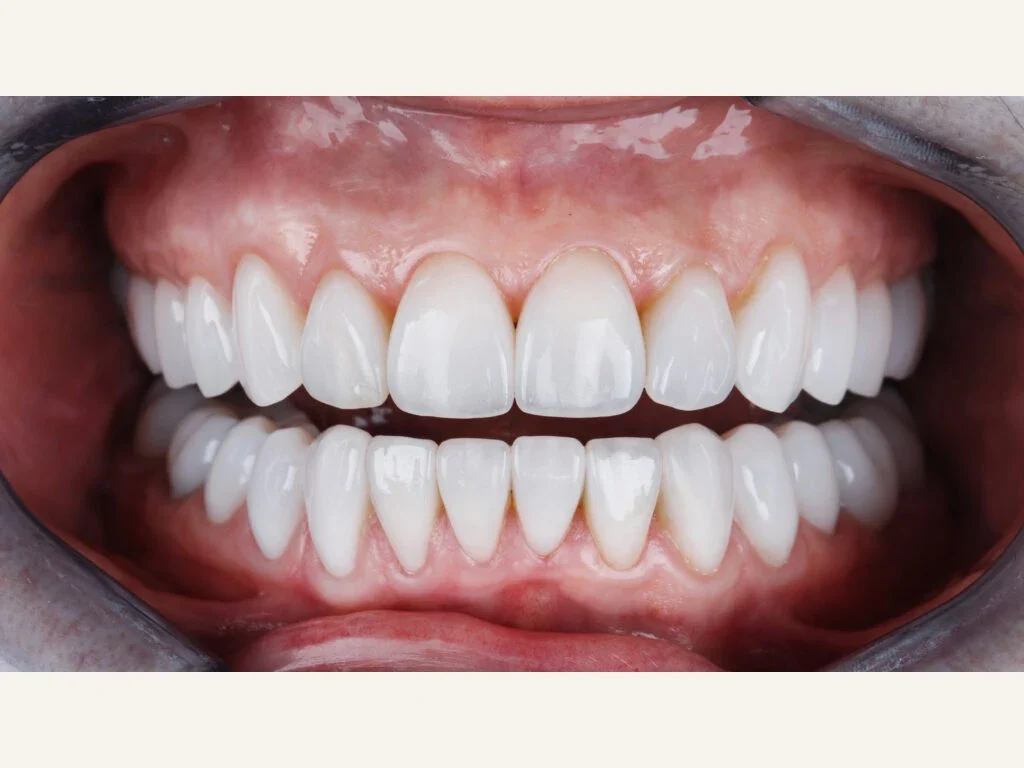
Understand the procedure in plain language
Interproximal reduction, or IPR, removes a small, planned amount of enamel between selected teeth to create space or adjust their shape. The enamel does not grow back, so you should understand why it is proposed before agreeing. Your clinician can show you the contacts involved and how the change fits your teeth-straightening plan. IPR needs professional assessment and skill; it is never a procedure to attempt yourself. [1]
Connect the amount and location to a full assessment
The BOS states that a full clinical examination should precede an orthodontic plan and that IPR requires care, skill and experience. Excessive removal can harm teeth. A general published description is not a universal safe amount for every tooth or a target the patient should request. Ask how the clinician has assessed the relevant teeth and why the proposed locations suit the intended movement. The plan should identify the purpose of the enamel change rather than treat it as a standard extra that everyone receiving a particular appliance must automatically accept. [1]
Separate space creation from the appliance choice
Clear aligners and fixed braces are tools for movement, while IPR is one possible component of the space strategy. BOS aligner guidance describes selected use of tooth-width reduction and other methods, with more severe or complex situations sometimes needing additional techniques. Choosing a discreet appliance does not itself establish that enamel reduction is appropriate. Ask how much space is needed, how the overall plan addresses it and which alternatives are realistic. The important decision concerns the intended final positions and the interventions required to reach them, not whether the procedure appears on a standard package checklist. [2][1]
Interpret safety evidence without a zero-risk claim
A systematic review of clinical IPR studies reported no observed adverse effects in its included evidence, but the evidence was rated low or very low quality. This cannot establish that every application is harmless or that excessive removal is safe. The BOS explicitly warns about harm from removing too much enamel. Ask about the material risks and limitations relevant to your teeth, along with how the procedure will be carried out and assessed. A balanced explanation recognises that a routinely used technique can still require individual judgement, appropriate execution and informed consent before an irreversible change. [3][1]
Confirm who owns the plan and performs the procedure
The BOS advises that the clinician responsible for the orthodontic plan should carry out the IPR. Its statement addresses concerns about isolated procedures requested after remotely planned treatment without a full in-person assessment. Ask who is responsible for your overall care, how the procedure relates to the appliance sequence and who reviews the result. Do not arrange enamel removal as a disconnected service because a remote image or appliance instruction appears to require it. If more than one clinician is involved, the responsibility and communication need to be clear before treatment proceeds. [1]
Compare alternatives and the complete commitment
Depending on the diagnosis, another space strategy, a different treatment objective or no active correction may be relevant; selected situations may also involve extraction decisions. Ask the clinician to explain the realistic options and their own trade-offs, rather than assume avoiding IPR means avoiding every irreversible intervention. At Iconic Smiles, confirm the responsible clinician, review arrangement and itemised estimate, including retention. You should leave knowing what enamel change is proposed, why it is justified, what the alternatives would mean and how it fits into the full orthodontic pathway, without a promise of guaranteed alignment or zero future care. [4][5][6][7]
In practical terms:
Before agreeing to IPR, understand which teeth are involved, why space is needed, the irreversible change and the alternatives. General guidance cannot determine the appropriate amount for your own teeth.
Consent and follow-up
Ask about possible sensitivity, how the enamel will be finished, hygiene advice and what symptoms should prompt review. Confirm who is responsible for the whole orthodontic plan. BOS advises that the clinician responsible for the plan should carry out the IPR; it cautions against DIY orthodontic pathways lacking proper assessment. [source]
Establish the orthodontic objective before the procedure
IPR removes enamel from between selected teeth to help create space or alter shape. The BOS describes it as a technique requiring a full clinical assessment and skilled care. It should follow an explained orthodontic plan rather than be the starting assumption. Ask what movement or form change it supports and which alternatives have been considered. If the treatment objective is limited, understand that compromise before enamel is removed. A clear sequence connects the irreversible procedure to the intended final positions and the patient’s priorities, rather than treat it as an isolated appointment required by an appliance brand. [source]
Remember what the procedure has and has not completed
IPR removes enamel from selected tooth surfaces as part of an orthodontic plan. It can help create space or alter shape, but it does not itself complete alignment or establish the final bite. Ask the treating clinician how it fits the next stage and which appliance instructions now apply. The BOS advises that the clinician responsible for the plan should carry out IPR. That continuity matters afterwards too: questions about space, fit or progress should return to the coordinated treatment team rather than lead to an isolated request for more enamel removal or an attempt to change the teeth yourself. [source]
Clinical examination must precede the plan
BOS advises full clinical assessment by an appropriately experienced orthodontic clinician before treatment planning. It recommends that the person responsible for the orthodontic plan carries out the IPR. A remote simulation alone does not establish the condition of the enamel or justify an irreversible procedure. Supporting source (bos.org.uk)
Put the safety evidence and no-treatment option in context
A review found no observed adverse effects in its included IPR studies, but the evidence was low or very low quality. That should inform a balanced explanation, not a guarantee of harmlessness. You may also choose no active orthodontic correction after discussing the findings and consequences. Ask whether any separate disease or symptom still needs care and what would be monitored. An acceptable appearance compromise is not the same as leaving a diagnosed health problem untreated. The decision should reflect your priorities and actual clinical findings, with uncertainty acknowledged rather than used to pressure you towards or away from one procedure. Read the supporting clinical study
Complete treatment with retention and clear records
NHS and BOS guidance explain the need for retainers after active orthodontics. Ask what result has been achieved, which instructions apply and how a later fit problem will be assessed. Tell future treating clinicians about relevant orthodontic treatment and ask where the records are held if care changes. At Iconic Smiles, confirm the responsible clinician, review location and fees, including retention arrangements. A good handover links the irreversible procedure to the completed treatment and continuing care. It should not promise that IPR alone guarantees stable alignment or leave you to manage a changed appliance without access to advice. Supporting source (bos.org.uk)NHS patient informationMeet the Iconic Smiles dental team · Find an Iconic Smiles practice · See our current treatment fees
Connect the procedure to the actual appliance stage
Ask when the clinician intends to carry out IPR and how it relates to the movement plan. The appropriate sequence follows the assessment and the clinician’s instructions; an online calendar cannot determine it for every patient. With aligners, the BOS describes movement through a planned series and the importance of appropriate wear. Do not skip ahead, force an appliance or seek extra enamel reduction yourself if fit or progress seems different from a preview. The next action should follow professional assessment of the current teeth, available space and appliance response within the agreed pathway. Supporting source (bos.org.uk)Supporting source (bos.org.uk)
What research says about adverse effects
A systematic review examined clinical IPR studies and assessed how reliable their findings were. The results do not establish that every use is risk-free. Your dentist still needs to consider the technique, amount removed, surface finishing and condition of your teeth. Read the supporting clinical study
Evaluate extraction proposals as a different irreversible choice
The BOS adult leaflet notes that teeth may need removal in some orthodontic situations and that a detailed assessment is always necessary. If extraction is proposed as an alternative, request its own clinical rationale, benefits, important risks and consequences. Avoid assuming that it is automatically required because you declined IPR, or that it can never be appropriate. The clinician should explain how the complete plan changes, including the intended movements and practical stages. A preference to preserve enamel deserves consideration, but it should be weighed against the actual intervention and compromise of each realistic route rather than a simplified choice between labels. Supporting source (bos.org.uk)
Ask about symptoms without accepting a zero-risk reassurance
A clinical review of IPR studies reported no observed adverse effects in its included evidence, but the certainty was low or very low. That does not mean every new symptom can be dismissed. The BOS warns that excessive removal can harm teeth and emphasises skilled care. If you have persistent sensitivity, discomfort, a rough area or another concern, describe it to the treating clinician and ask what assessment is appropriate. Do not diagnose the cause yourself or assume that an article can determine whether a particular surface needs treatment. The response should follow the actual findings and the treatment history. Read the supporting clinical studySupporting source (bos.org.uk)
Compare the complete commitment before deciding
Ask for the suitable alternatives, their objectives, irreversible steps, expected stages, retention needs and itemised costs. NHS and BOS guidance explain that retainers are needed after orthodontics, so avoiding IPR does not remove that commitment. At Iconic Smiles, confirm who is responsible for the treatment plan and how further questions can be reviewed. A second opinion can help resolve a specific clinical uncertainty when the relevant records are available. The strongest decision is one you understand and accept, without assuming either that IPR is compulsory for every patient or that declining it leaves the original plan entirely unchanged. Supporting source (bos.org.uk)NHS patient informationMeet the Iconic Smiles dental team · See our current treatment fees
Use reviews to assess progress rather than assume the space solves everything
Creating space is not the same as completing alignment or guaranteeing the final bite. Reviews should assess the actual movement, appliance use and dental health and explain any proposed change. NHS guidance emphasises cleaning, regular dental check-ups and reporting appliance problems. If the response differs from the plan, ask what is being assessed and what the realistic options are. Another irreversible step should have its own rationale, not be presented as an automatic answer to every tracking concern. The patient should understand whether a recommendation adjusts the existing plan or changes its objective. NHS patient informationSupporting source (bos.org.uk)
Consent should cover the planned reduction
Enamel removed during IPR does not grow back. Ask where reduction is intended, how much space is needed and how the choice compares with reasonable alternatives. BOS stresses that patients should understand the procedure before agreeing to it and that excessive removal can harm teeth. Supporting source (bos.org.uk)
What IPR does
Interproximal reduction removes a planned amount of enamel between teeth to create space or alter tooth shape during orthodontic treatment. It is irreversible: the removed enamel does not grow back. BOS guidance emphasises full clinical assessment, an explanation of the procedure and responsibility within the orthodontic treatment plan. Supporting source (bos.org.uk)
Research and guidance
- BOS Statement: Interproximal reduction - British Orthodontic Society (BOS)
- Clear aligners - British Orthodontic Society (BOS)
- Effects of interproximal enamel reduction techniques used for orthodontics: A systematic review.
- Primary professional guidance — bos.org.uk
- Dental Team | Meet the Iconic Smiles Clinicians
- Dental Fees & Finance: Treatment Prices | Iconic Smiles
- Retainers - British Orthodontic Society (BOS)
Your next step, when you’re ready
We would be pleased to welcome you for a £30 consultation at your preferred Iconic Smiles practice. Bring your questions, and we can talk through the options that may suit you.
Any additional investigations and their fees will be explained before you decide.