
Repairing your teeth
When might a dentist raise your bite to repair worn teeth?
Patients with short or worn teeth sometimes hear that their bite has 'collapsed' and needs to be raised.
Talk through your options for repairing teeth
If you would like to understand how a tooth might be repaired or protected, a £30 consultation offers time to discuss your concerns and what an individual assessment may involve.
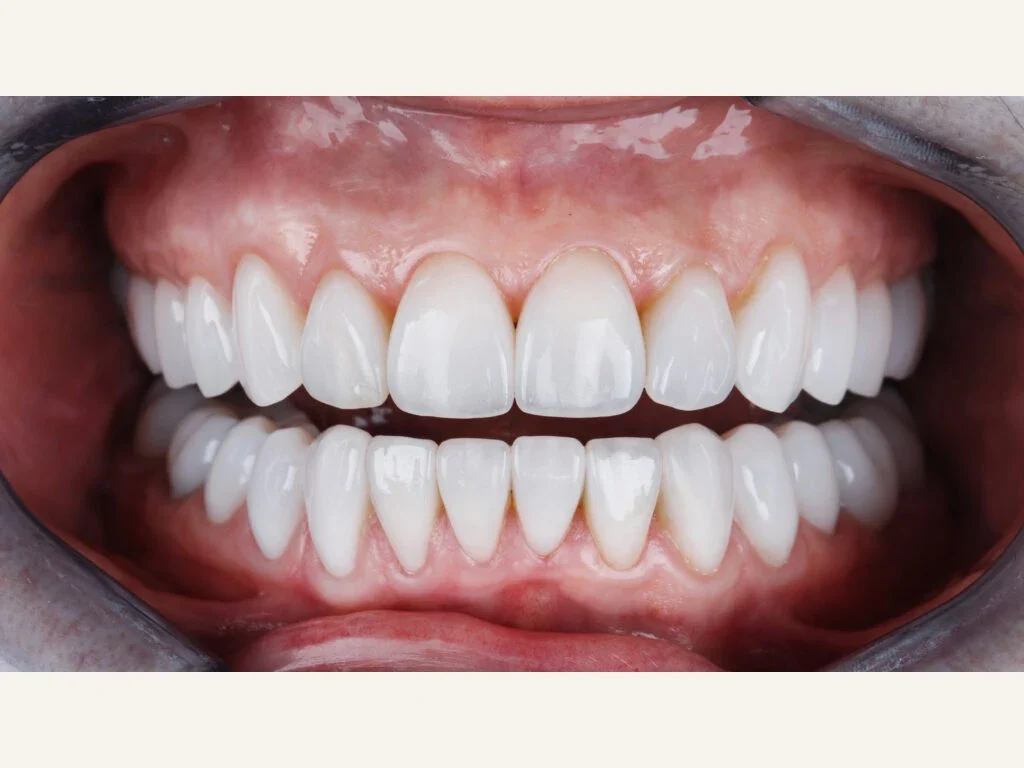
A dentist may consider raising the bite to create space for restorations, but worn or short teeth do not automatically mean your bite has collapsed. Teeth can continue to erupt and supporting tissues adapt as surfaces wear, maintaining the distance between the jaws. Before changing that relationship with bonding, onlays or crowns, the dentist needs to establish what has changed and what additional room the treatment requires.
What the measurement represents
The vertical dimension of occlusion is the vertical relationship between the jaws when teeth meet in the chosen position. It differs from the visible height of the front teeth. Facial proportions, resting jaw position, existing contacts and space for restorations all inform the assessment. No single photograph or measurement establishes how many millimetres should be added. The proposed change has consequences for function as well as appearance.
How wear can occur without true bite collapse
Teeth and supporting structures may adapt as chewing surfaces wear, maintaining contact despite shorter visible crowns. That can leave little room for new material without a marked loss of overall bite height. Adding height to every tooth is not the only possible response: selected restorations or tooth movement may create the room needed for conservative care.
Why a change might be considered
Where several restorations require additional thickness, a planned alteration in vertical relationship may create space and allow more appropriate anatomy. The dentist needs to assess the entire occlusal scheme and consider whether this approach reduces or increases irreversible preparation. The proposed change should be proportionate to the intended treatment rather than chosen to create an exaggerated facial effect. Patients should understand that facial appearance can be influenced by many features beyond bite height.
Testing the design before final crowns
Mock-ups or provisional restorations can help judge chewing comfort, phonetics, aesthetics and practical adaptation. Monitoring a trial does not guarantee that every patient will tolerate any proposed change, but it can reveal concerns before definitive ceramics are made. The clinician checks whether contacts are appropriately distributed and whether new edges interfere with speech. The patient should know what feedback to provide during the trial stage.
The role of individual tooth prognosis
If only a handful of teeth are structurally compromised, placing crowns on every tooth to change the bite may be excessive. Additive resin, overlays or targeted restorations can sometimes be used within a broader plan. The dentist needs to explain which teeth genuinely require treatment and whether the desired increase can be achieved more conservatively. A complete plan also considers gum health, jaw symptoms and any wear-driving factors.
Questions to ask about 'raising the bite'
Which clinical findings indicate that a change is necessary? How many teeth need intervention, what temporary test is possible and how would the new occlusion be maintained? Can a conservative staged solution be compared with full-mouth crowns? A carefully designed change may be valuable, but it should be presented as an individual restorative decision supported by records and a trial where appropriate, not a universal anti-ageing procedure.
Compare two worn smiles before raising either bite
Two short-looking smiles may need different plans. Someone with substantial front-edge wear but stable back contacts and usual lower facial proportions may suit selected additions and monitoring. Someone with missing back teeth, unstable contacts and limited restoration space may need more extensive rebuilding of support. The findings should explain why a height change is proposed and how alternatives compare. Where possible, temporary restorations can test speech, comfort and contacts before final crowns are made. The amount of change should follow those needs rather than an arbitrary promise of facial rejuvenation.
Your next step, when you’re ready
We would be pleased to welcome you for a £30 consultation at your preferred Iconic Smiles practice. Bring your questions, and we can talk through the options that may suit you.
Any additional investigations and their fees will be explained before you decide.