
Repairing your teeth
Rebuilding Severely Worn Teeth: Treatment Options
Severely worn teeth need assessment of what has been lost, whether the process is active and which symptoms or functional problems matter.
Talk through your options for repairing teeth
If you would like to understand how a tooth might be repaired or protected, a £30 consultation offers time to discuss your concerns and what an individual assessment may involve.
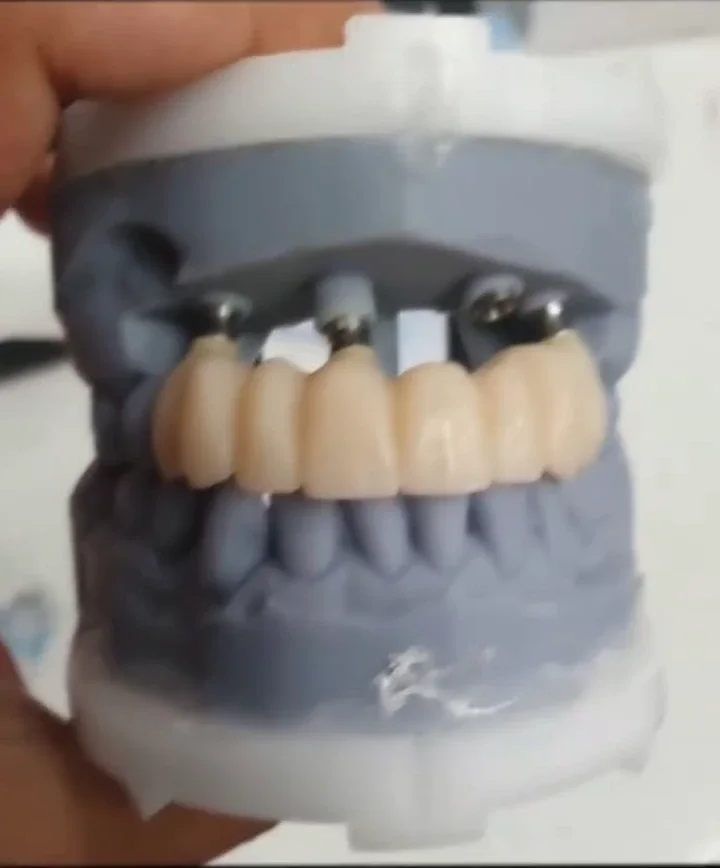
Establish the pattern and progression before rebuilding
Rebuilding worn teeth may involve selected repairs rather than crowns on every tooth. The assessment first needs to establish what has been lost, whether wear is continuing and its effect on comfort and chewing. Chemical and mechanical causes can act together, so repairing the outline needs to sit alongside prevention. [1]
Not every worn surface needs immediate coverage
Ask which areas require treatment and which could be monitored with prevention. The proposed intervention should relate to symptoms, progression, remaining tissues and the intended function. A dramatic-looking photograph does not establish that every tooth needs a crown, just as a wish to avoid preparation cannot establish that a small addition is sufficient everywhere.
Distinguish localised front-tooth treatment from whole-mouth rehabilitation
Composite can be considered for selected localised anterior wear. A systematic review found substantial variation across the included studies and stressed monitoring and possible repairs. These findings should not be advertised as a guaranteed result for every severe full-mouth case. The location and extent of wear affect how relevant that evidence is to the proposed plan. [2]
Explain any planned change in the bite
If tooth height or the contact pattern is to change, ask how the intended result will be assessed and monitored before and after definitive treatment. Some localised wear studies use a Dahl approach; this creates restorative space by letting selected teeth meet first while the bite is monitored as it adapts. It is a defined treatment strategy, rather than simply making every short tooth longer. Your plan should explain any intended change in tooth height or contacts and how it will be reviewed, alongside the appearance you want. [2]
Prevention continues after the new surfaces are fitted
Discuss possible acid exposure, relevant medical history and mechanical contributors with the clinician. The restorations do not themselves remove every cause of wear. Any advice or medical referral should follow the actual findings, with an agreed method of comparing progression over time. Report new damage or symptoms rather than assuming the reconstruction has permanently resolved the underlying process. [1]
Compare maintenance as part of the initial choice
Ask what would be repaired locally, what could need replacement and how the proposed treatment can be cleaned and reviewed. Where several treatment types are being combined, request one coordinated sequence and complete estimate. Future care should be discussed before irreversible preparation, especially if the plan involves many otherwise retainable teeth. [3]
A reconstruction does not automatically stop the cause of damage
A plan can improve the form of worn teeth and replace missing teeth without removing every factor that caused the damage. The government prevention toolkit describes tooth wear and the need to address contributing factors. Ask what the assessment suggests in your case, which preventive actions are appropriate and how continuing wear will be monitored. Do not accept a photograph of an improved smile as evidence that an underlying process has been controlled. If medical assessment is relevant, clarify that pathway as well. The reconstruction and prevention plan should make sense together before extensive irreversible treatment is accepted. [source]
Define the problems before choosing the sequence
A rehabilitation plan may need to address wear, missing teeth, active disease and damaged restorations at the same time. The starting point is a diagnosis and a clear list of objectives. Ask which teeth can be retained, which findings need further assessment and why each proposed replacement is needed. A treatment calendar without that explanation can make extensive work appear inevitable. Consent should connect every important intervention to its purpose and alternatives. In particular, deciding that a tooth is worn is not by itself the same decision as establishing that extraction is the appropriate next step. [source]
Make retention part of the discussion
Severely worn teeth can look dramatically different from unworn teeth, but appearance alone does not establish that all of them should be removed. Ask for a diagnosis and a prognosis for each tooth that is proposed for extraction. The clinician should explain whether the concern is wear, decay, a crack, disease around the tooth or another finding, and how it affects the options. Consent requires discussion of relevant alternatives and consequences. A full-mouth plan is easier to judge when useful teeth are considered individually instead of being treated as obstacles to a uniform set of replacements.
Get a map of what has been restored
A reconstructed mouth may contain natural teeth, different types of restorations, implants and a removable or fixed prosthesis. Ask the team to explain what each part is and which care responsibilities apply. You do not need to memorise every component, but you should know who holds the records and whom to contact if something changes. NHS information notes that implant components can loosen or wear. A useful handover therefore covers the restoration as a system with several supporting structures, rather than imply that fitting the final teeth has removed all future dental needs. [source]
Put the appearance in the context of change
Some wear occurs with age, while the significance of the findings depends on the patient and clinical situation. Government guidance supports assessment and monitoring and notes that sensitivity alone does not establish progression. Ask what records help distinguish the current amount of wear from evidence that it is continuing. A single photograph cannot tell the whole history. This matters because a short-looking tooth, a sensitive area and a documented change are different findings. The recommendation should explain which needs prevention, investigation, monitoring or restoration rather than assume every visible sign requires the same immediate intervention. [source]
Do not confuse replacement form with control of the cause
Restorations can change lost form, but their presence does not establish that the contributing process has stopped. Government guidance describes wear as multifactorial and includes prevention within management. Ask what the assessment suggests, what practical measures apply and whether further health assessment is needed. A restorative plan should not promise that one material cures every effect of acid exposure or physical damage. Equally, a preventive measure should not be described as regrowing all tissue already lost. The patient needs to understand the distinct purposes of prevention, monitoring and reconstruction before evaluating the full commitment. [source]
Define the problem and the benefit being sought
The pathway should begin with an assessment of wear, symptoms, relevant history and the condition of individual teeth. Government guidance supports identifying contributing factors and monitoring change. Ask what the proposed treatment is intended to improve in function, comfort or appearance and what remains uncertain. A calendar of procedures is easier to judge when each step has a purpose. The initial plan should distinguish confirmed decisions from teeth that need further assessment. A patient should not be committed to identical restoration of every worn surface simply because the overall proposal is called full-mouth rehabilitation. [source]
Monitoring needs an active purpose
Where monitoring is reasonable, ask what records will inform the review and what would lead to treatment or further assessment. Government guidance notes that sensitivity alone does not establish progression, so the decision should not depend only on how the teeth feel that week. A monitored choice should still address appropriate prevention and any separate health concern. It is not an unexplained promise that nothing will change. Conversely, a visible amount of wear does not by itself make identical immediate restoration of every tooth inevitable. The clinician should explain the significance of the findings in your situation. [source]
Further clinical details: Worn Teeth Without Full-Mouth Crowns: Conservative Rehabilitation Choices
Worn teeth do not automatically need full-mouth crowns. Selected bonding, partial-coverage restorations or orthodontics may provide a more conservative way to restore appearance and function, depending on the damage. The plan starts by investigating tooth-to-tooth wear, acid erosion, abrasion or a combination, recording what has been lost and identifying the smallest durable changes that meet your needs.
Identify where and why tissue has been lost
Attrition usually reflects tooth-to-tooth contact, often producing corresponding wear facets. Erosion chemically softens tooth tissue, with patterns influenced by diet, reflux or other acid exposure. Abrasion describes mechanical wear from external factors. The examination looks at tooth surfaces, sensitivity, existing fillings, bite relationships and whether the damage is progressing. Photographs and scans can create a baseline, helping distinguish current deterioration from long-standing stable wear.
Not every worn tooth needs a crown
Composite can rebuild selected worn edges while preserving remaining enamel. Onlays or overlays cover damaged chewing surfaces without covering every visible surface, and orthodontics may improve positions that make restoration difficult. Crowns remain useful for extensively damaged teeth. Each proposed crown needs its own justification, particularly if substantial healthy tooth remains.
Space is a central constraint
Restoring height needs enough room for material between opposing teeth. Sometimes that space already exists; sometimes the teeth and bite have adapted as wear occurred. Depending on the findings, selected tooth movement or planned changes in restoration height may create room. A mock-up or temporary trial can help test a proposed change before irreversible preparation.
The front-to-back sequence matters
Anterior guidance, posterior contacts and the intended smile shape should be considered together. Sometimes building the back teeth first establishes a stable platform; in other plans the anterior design guides subsequent work. There is no universal order that suits every pattern of tooth wear. The clinician needs to explain which teeth are being used to test the proposed bite and how later restorations will relate to them.
Managing future wear without overpromising
Restoring a tooth does not remove the factors that originally caused wear. The team may advise changes to acid exposure, cleaning habits or protective appliances where indicated. Patients should know that composite may require polishing or repair, while ceramic also needs review of margins and bite contacts. The maintenance plan must reflect the chosen materials and the individual's risk rather than promising permanent resistance to all future wear.
What to ask before accepting a large treatment plan
Can some teeth be monitored rather than restored? Which need full coverage, which could accept additive composite and how will the proposed bite be tested? Is the primary aim appearance, comfort, chewing efficiency or prevention of further damage? Request a staged, itemised plan with realistic alternatives. An impressive result is not measured by the number of crowns fitted, but by how much function can be restored while conserving sound tissue.
A conservative case example without promising one technique
For example, flattened front edges and moderate wear behind the upper teeth may coexist with comfortable, stable back-tooth contacts. Preparing many teeth for crowns could remove substantial remaining enamel. Selected composite additions, appropriate prevention or protection and monitoring may instead address the concerns. The decision depends on space and whether wear is progressing, rather than a rule that bonding is always preferable to ceramic. If room is limited, movement or controlled bite changes can be considered before extensive preparation. The plan should identify which teeth will be restored, which will be observed and what findings would justify a change.
Consider a mixed plan and the continuing commitment
A realistic plan may combine different approaches according to individual tooth findings. Ask how the components fit together, whether staging has a clinical purpose and what the temporary and maintenance arrangements involve. If an appliance is relevant, clarify its role and compatibility after tooth form changes. At Iconic Smiles, identify the clinician coordinating care and request itemised fees. The strongest choice connects the diagnosis, patient priorities and future responsibilities. It should not require every tooth to receive the same material, promise that reconstruction removes every cause of wear or disguise ongoing review and possible repair behind a lifetime-result claim. Supporting source (bos.org.uk)Meet the Iconic Smiles dental team · See our current treatment fees
Make irreversible choices visible tooth by tooth
Preparation, extraction and different restoration designs have consequences that need explanation. Ask why each proposed intervention is proportionate and which reasonable alternatives preserve suitable structure. A whole-mouth label should not make individual decisions disappear. Veneer guidance describes the intervention and care considerations for that category, while consent guidance requires relevant benefits, risks and alternatives. A broad package or idealised image cannot establish that every tooth needs equal coverage. Conversely, avoiding all preparation at any cost is not automatically appropriate if the assessed tooth has a different structural or disease-related requirement. Supporting source (www.dentalhealth.org)
Understand the scope of additive composite
Direct composite can sometimes restore lost form without following the same preparation route as a full crown. A systematic review of selected localised anterior wear cases supports a short- to medium-term role, while reporting substantial variation and a need to consider maintenance. It is not proof that every severely worn mouth can be rebuilt by the same technique or kept indefinitely without repairs. Ask which teeth and objectives the proposed composite approach addresses, what compromise is expected and how chipping or wear would be managed. A conservative option deserves balanced expectations, not a promise that less intervention means no future treatment. Read the supporting clinical study (2)
Connect prevention and necessary health treatment
Where a contributing process is identified, clarify the appropriate advice, management and review before or alongside reconstruction. Government guidance describes chemical and mechanical influences and the role of risk-factor assessment. Restoring visible form does not automatically remove them. If disease, a fracture concern or another health question needs attention, ask how it affects readiness and sequence. Preparation should answer a clinical question rather than be a set number of visits leading automatically to clearance. The patient needs to understand who coordinates relevant care and which finding could change the proposed next intervention. Supporting source (www.gov.uk)Read the supporting clinical study (2)
Make tissue health and access part of the risk plan
The EFP recommends preventive measures before implant treatment and supportive care after restoration. A full-mouth proposal should therefore consider whether the patient can clean and maintain the actual design, not only how it looks. Ask for the intended home routine, review arrangements and a contact plan for new bleeding, swelling or component movement. At Iconic Smiles, request an itemised estimate that includes the relevant stages and identifies additional care where possible. A balanced plan explains risks in a way that helps you choose; it neither minimises them nor assumes that every complex case must end badly. Read the supporting clinical study · See our current treatment fees
Plan the restoration before choosing implant positions
The intended teeth and bite help determine what implant support is required. NHS information describes implants supporting different restorations, while full-arch consensus considers prosthetic design and available clinical conditions together. Ask how the proposed positions relate to the final crowns or bridge, cleaning access and any retained teeth. Starting with a fixture count alone can conceal the actual restorative objective. If the proposal changes the way the teeth meet, request an explanation of the clinical reasoning, alternatives and how the intended arrangement will be assessed before accepting the definitive reconstruction. NHS patient informationRead the supporting clinical study (2)
Coordinate the implant and restorative appointments
Implant placement, healing and connection of a restoration are separate stages, even when some are combined in selected patients. The ITI distinguishes placement and loading protocols and recommends planning alternatives if the preferred conditions are not met. Ask how retained teeth and temporary replacements are managed while the implant stages proceed. A patient should know which teeth or appliances are being used at each point, who supplies them and what changes would affect timing or cost. This is especially relevant when several clinicians contribute to the same mouth rather than completing independent treatments. Supporting source (academy.iti.org)
Compare restorative extent using evidence that fits
A review supports direct composite as a short- to medium-term option in selected localised anterior wear cases, with maintenance needs and important evidence limitations. That does not establish the same outcome for every widespread reconstruction. Partial restorations and crowns also have distinct evidence and indications. Ask what amount of intervention is appropriate for each tooth and why. A conservative choice should not be promised to solve every case, while a full set of crowns should not be assumed necessary merely because wear affects several teeth. The comparison needs the actual diagnosis and intended function. Read the supporting clinical study · Read the supporting clinical study (2)
Take tissue changes and infection symptoms seriously
Persistent bleeding, swelling, discharge or another new tissue change deserves assessment. Peri-implant mucositis affects the soft tissues, while peri-implantitis includes supporting-bone loss. Appearance alone cannot establish the diagnosis. For suspected dental infection, seek urgent dental advice; NHS guidance directs patients to emergency care for serious symptoms such as difficulty breathing or swallowing, substantial mouth swelling or eye involvement. The presence of an extensive reconstruction does not make these symptoms something to tolerate until a routine review, and a technical concern should not automatically be assumed to explain every painful or inflamed area. Periodontology guidanceNHS patient information
Waiting and treating both need a clinical reason
A decision to monitor wear should explain what is being assessed and which changes would lead to action. A decision to restore should explain the problem the intervention addresses. Government guidance supports identifying risk factors and monitoring, rather than deciding from sensitivity or appearance alone. Neither waiting nor extensive treatment is automatically appropriate for everyone. Ask what the current findings mean for your teeth, symptoms and priorities. A balanced recommendation makes the expected benefit and uncertainty visible, without implying that every worn tooth needs an urgent crown or that significant documented change can safely be ignored indefinitely. Supporting source (www.gov.uk)
Compare complete plans rather than material labels
A realistic plan may combine prevention, retained teeth, different restorations and replacement only where necessary. Request the sequence, expected limitations, repair strategy and full costs for each suitable approach. A less invasive option may have different maintenance needs; a more extensive reconstruction also requires continuing care. At Iconic Smiles, identify the clinician coordinating these decisions and ask how unresolved findings will be reviewed. The most useful comparison makes the amount of irreversible treatment visible and connects it to the benefit you want, without assuming that every patient must choose either no treatment or complete tooth replacement. Meet the Iconic Smiles dental team · See our current treatment fees · Read the supporting clinical study (3)
Understand the cost of irreversible choices
Extraction removes a tooth, and preparing a tooth for a restoration changes it. The reason for each proposed intervention should be explicit, particularly when some teeth might be retained or treated more conservatively. Consent requires discussion of benefits, important risks and realistic alternatives. Ask whether the proposed change is necessary for disease management, structural reasons or an elective appearance goal. That distinction helps you weigh the intervention against other options. A large combined plan should not make individual decisions disappear behind a package name or imply that a more extensive procedure is automatically the most durable or appropriate choice.
Compare responses to the actual diagnosis
Widespread wear can lead to different plans because the teeth, symptoms, progression and patient priorities differ. Government guidance supports assessing contributing factors and monitoring change. Ask what has been established and what each realistic option is intended to achieve. A plan may combine prevention, monitoring and selected restoration rather than give every tooth the same treatment. Neither the smallest intervention nor the most extensive reconstruction is automatically the right answer. The comparison should make the objective, amount of irreversible change and expected benefit understandable before material names or a package price dominate the decision. Supporting source (www.gov.uk)
Compare the complete burden before deciding
Request the stages, practical restrictions, important risks, temporary arrangements where relevant and maintenance plan. At Iconic Smiles, ask who coordinates care and request itemised fees for the actual proposal. Explain your priorities around function, appearance, intervention and ongoing appointments. A decision should remain open to reassessment if the findings change. It should not depend on an arbitrary treatment deadline, a guaranteed lifespan or pressure to accept the most extensive plan as proof of quality. The aim is a proportionate response whose benefits and continuing commitments you understand, whether that means monitoring or active reconstruction. Meet the Iconic Smiles dental team · See our current treatment fees
Review the actual result before declaring completion
The relevant assessment should consider the current teeth and restorations against the agreed goal, including concerns raised by the patient. A first preview or the end of the planned appointments is not the whole completion decision. Ask what has been achieved, which limitation remains and whether another intervention offers worthwhile benefit. If a retainer or protective appliance is involved, the final tooth form and current instructions need coordination. Do not force or modify an older device to fit. Responsibility should be clear where more than one clinician contributes to the same reconstruction. Supporting source (bos.org.uk)
Learn the cleaning approach for each part
The routine for natural teeth and the spaces around an implant reconstruction may need different aids or techniques. Ask for a demonstration on your actual mouth and tell the team what is difficult. Access, dexterity, vision and discomfort can affect whether instructions are practical. The EFP recommends prevention across the implant pathway and structured supportive care afterwards. A full-mouth restoration should be assessed for maintainability, not only appearance. If you cannot reach an area, request advice rather than forcing an aid, ignoring the surface or assuming a more expensive device will necessarily solve the problem. Read the supporting clinical study (2)
Complete the reconstruction with a maintenance handover
Before the plan is considered complete, confirm the accepted restoration, any remaining concerns and the care arrangements for natural teeth and implants. The EFP recommends structured supportive implant care with periodic tissue assessment. Ask how technical repairs will be assessed and who holds the relevant records. At Iconic Smiles, confirm the responsible clinicians, locations and itemised fees for the stages. A well-explained sequence leaves you understanding both the final goal and the decision points on the way, including the options if preparation, provisional assessment or healing changes the recommendation. Read the supporting clinical study · Meet the Iconic Smiles dental team · Find an Iconic Smiles practice · See our current treatment fees
Wear describes lost tissue, not one universal cause
Government guidance describes tooth wear as the cumulative loss of mineralised tooth tissue through chemical and mechanical factors. Acid exposure, tooth contact and other physical effects can contribute in combination. Lost tooth form should therefore not automatically be labelled grinding or treated as a single cosmetic problem. Explain what you have noticed, relevant symptoms and earlier changes. The useful starting point is a diagnosis and an assessment of what matters now, rather than selecting a material or a full-mouth package before the extent, history and likely contributors have been discussed. Supporting source (www.gov.uk)
Map two problems instead of assuming they have one solution
Severely worn teeth do not automatically need removing or replacing with implants. Your assessment should first establish why they have worn, which can be repaired and whether any separate missing teeth need replacing. Worn, decayed, cracked and heavily restored teeth may each need a different approach. Every proposed extraction should have a clear reason within the wider plan. NHS patient informationSupporting source (www.gov.uk)
Partial restorations deserve their own explanation
Inlays, onlays and overlays cover different portions of a tooth and are not simply smaller versions of every full-mouth plan. A systematic review evaluated those defined restorations and reported both survival and complications. It does not determine the right design for every worn tooth. Ask what the proposed coverage preserves, what it changes and why it is suitable for the remaining structure. If a full crown is recommended instead, request the reason the additional intervention is needed. The comparison should identify the particular tooth and intended function rather than use a general label such as durable or premium as the rationale. Read the supporting clinical study
Give any provisional stage an explicit purpose
If temporary or provisional work is proposed, ask what it is intended to demonstrate, protect or manage and what decisions follow its review. Clarify eating, cleaning, contact arrangements and any limits of use. The patient should understand whether the phase can change the definitive recommendation and what that means for costs. A provisional arrangement should not be presented as proof that the final reconstruction will never need maintenance. Equally, an additional stage should not be accepted without a clinical purpose. Consent should remain meaningful as the current response informs later decisions, particularly before irreversible preparation or a dependent definitive restoration.
Research and guidance
Your next step, when you’re ready
We would be pleased to welcome you for a £30 consultation at your preferred Iconic Smiles practice. Bring your questions, and we can talk through the options that may suit you.
Any additional investigations and their fees will be explained before you decide.